Death Penalty Ineffective in Reducing Homicide Rates, Study Finds
The Death Penalty Information Center’s “What to Know” report concludes that decades of research have failed to produce credible evidence that the death penalty reduces homicide rates.
Fair and Just Prosecution has filed an amicus brief with the Texas Court of Criminal Appeals to stop the execution of Cedric Allen Ricks, arguing that newly disclosed prosecution notes show unconstitutional racial discrimination during jury selection in his capital trial.
The use of the death penalty as a strategic bargaining tool in criminal cases raises questions about whether prosecutors are pursuing justice or using the threat of execution to gain leverage in negotiations.
Alabama Governor Kay Ivey is being urged to grant clemency to 75-year-old death row inmate Charles “Sonny” Burton, who did not kill anyone, before his scheduled March 12 execution, as the victim’s daughter and a majority of the still-living jurors have spoken out against the execution.
The Pennsylvania Supreme Court has ordered a new penalty-phase hearing in the case of Wayne A. Smith, after finding that his resentencing counsel was ineffective in failing to object to evidence and arguments portraying him as a “serial killer”, which was deemed to have minimal probative value but substantial prejudicial impact.
The practice of “death qualification” allows prosecutors to dismiss potential jurors who oppose the death penalty, raising concerns about fairness, racial exclusion and the integrity of capital juries.
Catholic organizations are calling on Gov. Gavin Newsom to commute the death sentences of those currently on California’s death row before his term expires and are organizing a Prayer Walk and Vigil to End the Death Penalty later this week.
Billy Kearse’s execution is scheduled for March 3, 2026, with just 33 days between the signing of his death warrant and the execution date, raising concerns over due process rights in Florida’s capital punishment system.
Charles “Sonny” Burton, a 75-year-old Black man, is scheduled to be executed on March 12, 2026 for his role in a 1991 robbery in Alabama that turned fatal, despite the fact that he did not fire the fatal shot, and advocates are petitioning Alabama Gov. Kay Ivey to grant clemency in his case.
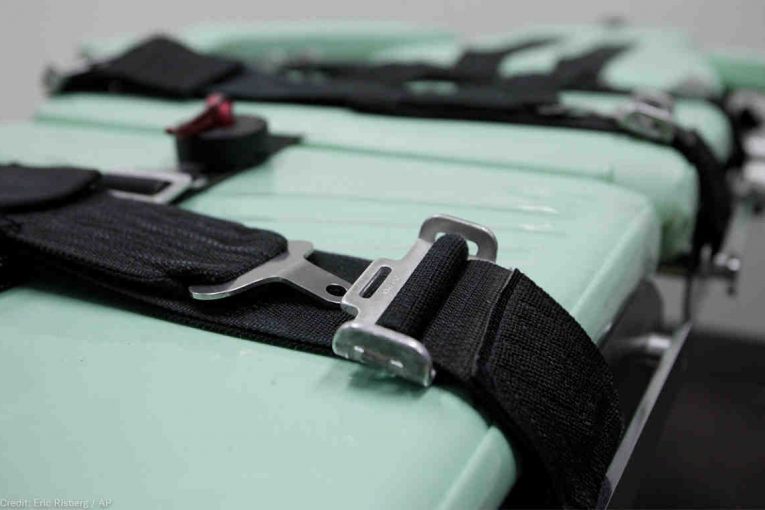
Kendrick Simpson was executed by lethal injection in Oklahoma on Thursday, prompting protests and renewed criticism of capital punishment from advocacy groups, despite his diagnosis of PTSD and apology to the victims’ families.
Kendrick Simpson was executed by the State of Oklahoma for the 2006 drive-by shooting deaths of Glen Palmer and Anthony Jones, despite his diagnosis of severe PTSD and his efforts to make amends for his actions, drawing condemnation from his legal team, death penalty opponents, and his spiritual advisor.
A coalition of prosecutors, law enforcement leaders and former judges has filed an amicus brief with the U.S. Supreme Court, urging it to take a firmer stand against racial discrimination in jury selection and warning that weak enforcement of constitutional safeguards threatens the legitimacy of the justice system nationwide.
Ronald Heath was executed by the State of Florida for the 1989 murder of Michael Sheridan, marking the state’s first execution of 2026, despite his attorneys arguing that Florida corrections officials had mismanaged the state’s death penalty protocols and that jurors did not recommend the death penalty unanimously.
Indiana lawmakers are reconsidering the use of the firing squad as an alternative to lethal injection, amid concerns over cost, fairness and the risk of executing innocent people.
Charles Burton, a 75-year-old man convicted in a 1991 robbery that turned fatal, is scheduled to be executed in Alabama next week, despite opposition from jurors, the victim’s family, and advocates who argue his sentence should be commuted.
The United States recorded its highest number of executions since 2009 in 2025, with 47 people executed across 11 states, as the Supreme Court denied every request to delay an execution during a nationwide surge in death penalty cases.
A Tennessee Chancery Court judge ruled that members of the press have the right to witness executions from beginning to end, granting a temporary injunction that expands media access and reframes executions as a continuous judicial process.
A former juror and the daughter of the victim are urging Alabama Governor Kay Ivey to halt the impending execution of Charles “Sonny” Burton, who was convicted of felony murder but did not fire the fatal shot.
Arizona’s botched executions have sparked a national debate over the use of lethal injections, with questions raised about the humanity of capital punishment and the need for alternative execution methods.
Civil rights advocates are urging California to make Clarence Ray Allen’s execution the last by permanently ending the state’s death penalty, citing its high cost and ineffectiveness as a deterrent.