
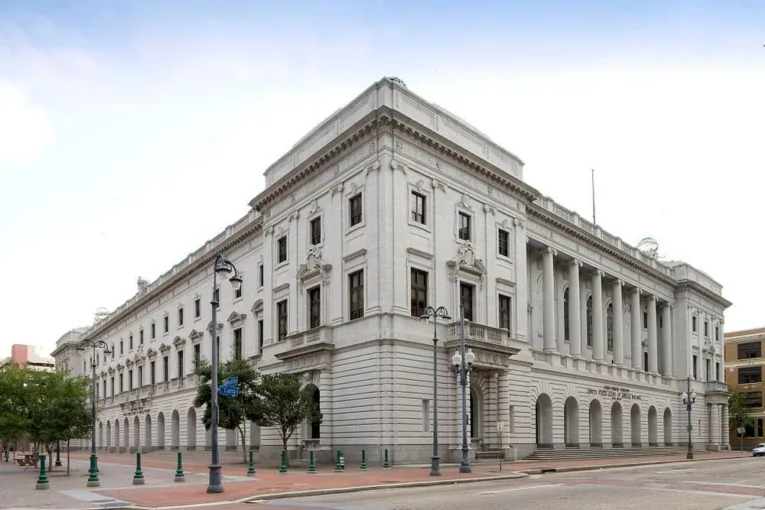
WASHINGTON — The U.S. Court of Appeals for the Fifth Circuit ruled Friday that immigrants who entered the United States without inspection are not entitled to individualized bond hearings under the Constitution, reversing lower court decisions that had allowed three longtime Texas residents to challenge their continued immigration detention.
The Oct. 23 ruling in Sosnava Rodriguez v. Ortega upheld the federal government’s authority to detain certain immigrants without providing them an opportunity to seek release on bond, even when they have lived in the United States for years and have no criminal history.
The case involves three men — Ignacio Sosnava Rodriguez, Alejandro Villegas Angel and Miguel Angel Gomez Alvarado — who are longtime Texas residents, have no criminal histories and are fathers of U.S. citizen children.
According to the National Immigration Project, all three men were arrested following routine traffic stops and subsequently detained by immigration authorities without an opportunity to appear before an immigration judge to demonstrate that they posed no flight risk or danger to their communities.
Federal district courts in Texas granted each man’s petition for habeas corpus, finding that detention without an individualized hearing violated the Due Process Clause of the Fifth Amendment.
The federal government appealed those decisions to the Fifth Circuit, which consolidated the three cases.
The dispute centered on whether immigrants who entered the country without inspection retain a constitutional right to seek an individualized determination of whether their continued detention is necessary.
The government argued that immigrants who had never been formally admitted to the United States were subject to mandatory detention under federal immigration law and were not constitutionally entitled to bond hearings.
On July 2, a three-judge panel of the Fifth Circuit ruled in favor of the men, finding that certain immigrants detained in Texas, Louisiana and Mississippi were entitled to bond hearings within 90 days.
Under that ruling, the government would have been required to justify continued detention before an immigration judge. Individuals who did not receive hearings within the required period would have been entitled to release.
However, on July 10, the Fifth Circuit vacated the panel’s decision and agreed to rehear the case en banc, allowing the court’s active judges to reconsider the constitutional questions.
The court issued its new decision Oct. 23, reversing and vacating the district court orders that had granted relief to the three men.
The majority concluded that immigrants who entered the United States without inspection were not constitutionally entitled to the individualized bond hearings sought in the case, even after living in the country for extended periods.
The ruling applies within the Fifth Circuit’s jurisdiction, covering Texas, Louisiana and Mississippi, where federal immigration authorities operate numerous detention facilities.
The decision does not eliminate the ability to file habeas corpus petitions challenging detention on other grounds, but it forecloses the constitutional claim to individualized bond hearings recognized by the lower courts in these cases.
The National Immigration Project and American Immigration Council issued a joint statement criticizing the decision and warning that it would affect immigrant families and communities across the three states.
“This case is about three fathers who have lived in the United States for years, contributing to their communities and supporting their U.S. citizen children,” said Ellie Norton, supervising attorney at the National Immigration Project. “They were torn from their families and locked up without ever being given the chance to go before an immigration judge to seek release.”
Norton said the consequences could extend beyond the three men involved in the litigation.
“Their circumstances are far from unique. At a time when conditions in immigration detention are increasingly dangerous, this ruling opens the door to more people being locked up for no reason, with devastating consequences for them, their loved ones, and their community.”
The National Immigration Project is a membership organization of attorneys, advocates and community members that provides legal representation and advocates for the rights of noncitizens.
The American Immigration Council is a nonprofit organization that conducts immigration research, provides legal services and advocates for immigration policy changes.
Rebecca Cassler, a senior litigation attorney at the American Immigration Council who argued the case before the Fifth Circuit, criticized the court’s decision.
“Today’s ruling is an affront to the U.S. Constitution. The principle at stake here is simple: if the government wants to detain someone, it has to explain why depriving them of their liberty is necessary,” Cassler said.
“And anyone who is detained has the right to ask a judge for review of that detention. Instead, this ruling allows the government to lock people up when detention plainly serves no purpose, and without any way to challenge it,” she added.
Cassler said the ruling would have consequences for immigrants throughout the Fifth Circuit.
“The right to due process is a fundamental constitutional protection, and it is meant to protect every person in this country,” she said. “Because of today’s decision, that right is hollow for immigrants in Texas, Louisiana, and Mississippi.”
She also warned that the decision could have implications beyond immigration detention.
“But the logic of the Fifth Circuit’s decision threatens everyone in this country: when courts degrade the meaning of liberty for some, we all suffer the consequences.”
Cassler said the organizations would continue challenging federal detention policies.
“We will continue fighting to ensure that no one, not even this administration, is above the Constitution.”
To comment please go to one of these social media platforms:
Facebook: https://www.facebook.com/DavisVanguard
LinkedIn: https://www.linkedin.com/company/peoples-vanguard-of-davis-inc/
Instagram: https://www.instagram.com/davisvanguard/
X: https://x.com/davisvanguard
Bluesky: https://bsky.app/profile/vanguardnewsgroup.bsky.social
Subscribe to the Vanguard News letters. To make a tax-deductible donation, please visit davisvanguard.org/donate or give directly through ActBlue. Your support will ensure that the vital work of the Vanguard continues.
