National Issues

Supreme Court’s Conservative Majority May Overturn CT Assault Weapons Ban

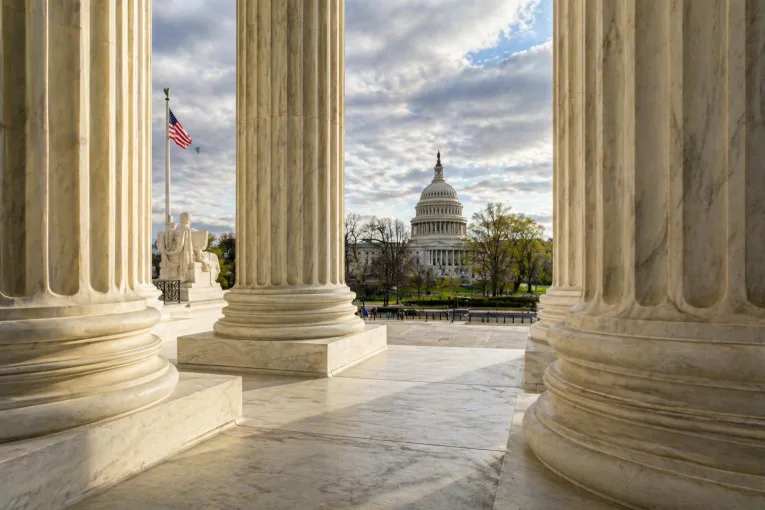
The U.S. Supreme Court has agreed to hear an appeal challenging Connecticut’s assault weapons ban, setting the stage for a potentially landmark Second Amendment ruling that could determine the future of similar laws nationwide. Gun regulation advocates express concern that a conservative ruling could lead to an increase in mass shootings and gun deaths.

Supreme Court Ruling on Transgender Athletes Reflects Broader Legal Restrictions, Scholar Argues

An opinion published by MS. magazine argues that the U.S. Supreme Court’s decision upholding state bans on transgender athletes in school sports reflects a broader legal effort to restrict transgender individuals’ participation in public life. Authored by Suzanne B. Goldberg, the analysis contends that the ruling, which affirmed laws in states such as Idaho and West Virginia, represents a component of a wider legislative movement impacting transgender people across various societal domains.

Supreme Court Upholds Birthright Citizenship, Rejects Trump Administration’s Constitutional Challenge

On Tuesday, the U.S. Supreme Court affirmed birthright citizenship for children born in the United States, irrespective of their parents’ immigration status. The 6-3 decision, authored by Chief Justice John Roberts in Trump v. Barbara, rejected President Donald Trump’s executive order seeking to narrow the 14th Amendment’s Citizenship Clause and reaffirmed over 150 years of constitutional precedent.

Advocates Warn of Growing Criminalization of Homelessness Two Years after Supreme Court Ruling

Housing advocates contend that the criminalization of homelessness has accelerated nationwide since the U.S. Supreme Court’s Johnson v. Grants Pass decision. This development has resulted in hundreds of cities and states implementing statutes that penalize individuals for sleeping outdoors, even in circumstances where alternative shelter options are unavailable.

LDF Urges NYC to Reject AI Surveillance Expansion in Public Schools

The NAACP Legal Defense and Educational Fund (LDF) urged New York City officials to reject the expansion of artificial intelligence-powered surveillance and policing within public schools. In testimony presented for a joint oversight hearing, the organization contended that such technology imperils students’ civil rights, privacy, and constitutional protections. LDF further cautioned that these systems disproportionately impact Black, brown, immigrant, and other vulnerable student populations.
Op-ed | A Bus Ride to Woodland?

The City of Davis has encountered significant challenges in its response to homelessness, marked by a perceived absence of a cohesive plan and communication from city leadership. Critics assert that the city’s current policies, which include enforcement actions, have not adequately addressed the systemic issues. Delays in decisions, notably concerning the Respite Center, have prompted calls for a reorientation towards strategies emphasizing living wages, affordable housing, and comprehensive healthcare provisions.

‘A Huge Grab of Power’: Trump Is Defying Congress on Foreign Aid

The Trump administration’s deployment of a “pocket rescission” to impound funds appropriated by Congress has drawn legal challenge. The Government Accountability Office (GAO) has declared this maneuver illegal, citing violations of the Impoundment Control Act. Legal experts contend such actions risk a constitutional crisis and could impede critical foreign aid efforts in vulnerable nations.

Letter: Congress Is About to Trade Away Our National Security

Representative Mike Thompson has been called upon to address Section 219 of the National Defense Authorization Act, a provision designed to integrate Israeli military technology into U.S. defense programs. This measure, critics argue, introduces substantial intellectual property and espionage risks to national security.

Oklahoma Voters Confront Two Decades of Minimum Wage Stagnation

Oklahoma voters cast ballots Tuesday to decide on State Question 832, a measure proposing to raise the state’s minimum wage from $7.25 an hour to $15 by 2029. This initiative, representing the first potential increase in Oklahoma’s minimum wage in nearly two decades, has generated considerable debate among voters and various stakeholders.

Monday Morning Commentary: Why Inequality Still Matters

While some analyses contend that deprivation, rather than inequality, constitutes the primary societal challenge, a counter-argument posits that the fundamental issue resides in whether an economy generating unprecedented wealth at its apex simultaneously fosters broad opportunity and security for the general populace, particularly amidst widespread struggles concerning housing, healthcare, and economic stability.