Elections

New CEQA Study Says Housing and Infill Projects Dominate Appeals, Drawing Pushback from Prop. 45 Opponents

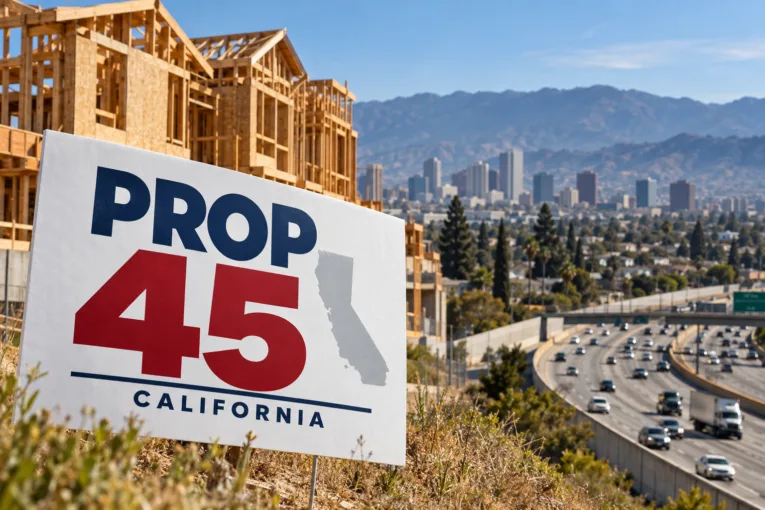
A recent Holland & Knight study, asserting that the California Environmental Quality Act (CEQA) disproportionately impedes housing development, has emerged as a key point of contention in discussions surrounding Proposition 45. Proponents of the ballot measure leverage the study’s findings to advocate for regulatory reforms, while opponents contend the research overlooks legislative changes enacted in 2025 that exempt qualifying infill housing projects from environmental review.

California Lawmakers Say Recent Housing Reforms Undercut Case for Proposition 45

California lawmakers and environmental advocates formally opposed Proposition 45, asserting that recent legislative reforms have already substantially streamlined environmental review for housing construction. They cautioned that the November ballot measure would extend expedited environmental review to categories beyond housing, encompassing sectors such as energy and transportation, potentially weakening existing environmental protections.

California Voters to Decide $36 Billion in Housing Bonds as Affordability Crisis Drives Propositions 1 and 37

California voters are scheduled to decide in November on Propositions 1 and 37, two distinct ballot measures proposing the authorization of over $36 billion in housing bonds. These initiatives aim to address the state’s housing affordability crisis by funding subsidized rental units and providing down payment assistance for middle-income homebuyers.

UC Davis Environmental Law Expert Argues Prop. 45 Could Speed Data Center Development

A UC Davis environmental law expert has warned that Proposition 45 could accelerate data center development across California by allowing some projects to utilize streamlined environmental review and more limited court challenges. This interpretation is disputed by supporters of the November ballot measure, who argue its broadband provisions apply exclusively to retail internet services.

Equality California Announces Positions on Eight Statewide Propositions

Equality California announced its positions on eight statewide propositions for California’s Nov. 3 ballot, backing measures related to affordable housing, state budget reserves, education and health care funding, and medical research. The organization also opposed proposals involving voter identification, a billionaire wealth tax, local tax thresholds, and spending requirements for community health clinics.

California Voting Rights Act of 2026 Heads to Governor’s Desk

The California Legislature has advanced Senate Bills 1164 and 1360, collectively known as the California Voting Rights Act of 2026, to Governor Gavin Newsom. The legislation, authored by Senator Sabrina Cervantes, expands protections against voter discrimination and enhances language assistance services, with gubernatorial action anticipated before the September 30 deadline.

Op-ed | Xavier Becerra Can Bring California Back to Its Mexican Raíces

California’s impending election could see the state elect its first Mexican American governor, Xavier Becerra. This development would represent a significant shift toward representative leadership, addressing the historical underrepresentation of the state’s substantial Latino population, which comprises 41% of residents despite its considerable economic contributions.

ACLU Files Brief against Shasta Measure B, Warning of Voter Disenfranchisement

The American Civil Liberties Union of Northern California, alongside law firm Cooley LLP, filed an amicus brief in support of California’s legal challenge to Shasta County’s Measure B, contending that the proposed ballot initiative would significantly restrict voter access by eliminating vote-by-mail and early voting options, while mandating photo identification at polling places.

Is ‘Taxing the Rich’ Possible in California? Many Scholars Think So

California voters are poised to consider a November ballot measure proposing a one-time 5% tax on residents with a net worth exceeding $1 billion. Proponents assert the levy, projected to generate $100 billion over five years, would fund state healthcare, education, and food support programs. The measure seeks to mitigate anticipated funding shortfalls attributed to recent federal legislative changes.

FPPC Complaint Targets Steyer Campaign over Undisclosed Influencer Payments

A complaint lodged with the California Fair Political Practices Commission alleges Tom Steyer’s gubernatorial campaign violated state transparency statutes by failing to properly disclose paid political influencer content across social media platforms. Filed by attorney Nick Rowley on behalf of social media creator Margaret “Maggie” Reed, the complaint asserts the campaign engaged influencers without informing them of mandated disclosure obligations, thereby obscuring paid political communications from public view.