
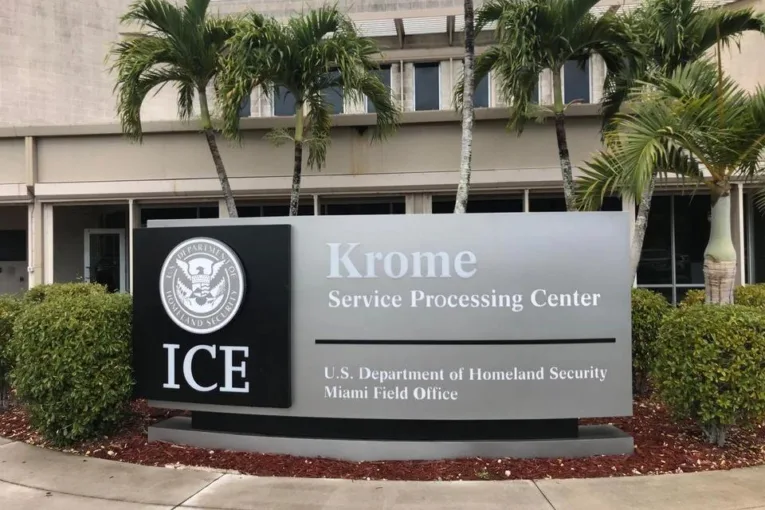
MIAMI, Fla. — Immigration advocates and families are raising concerns about plans to deport seriously ill detainees from two Florida immigration detention facilities to African countries where they have no established connections, citing deteriorating medical conditions and uncertainty about access to treatment following removal.
According to an Oct. 21 report by The Guardian, detainees held at the privately operated Krome North Service Processing Center in Miami and Broward Transitional Center in Pompano Beach have been informed of possible deportations to African countries despite serious medical complications.
The Workers Circle, an advocacy organization involved in monitoring immigration detention conditions, reported that detainees were told they could be deported to African countries because Mexico had allegedly refused to accept individuals with severe medical conditions.
Arianne Betancourt, an immigrant rights organizer with the Workers Circle, said detainees contacted the organization after learning that their medical conditions reportedly prevented their deportation to Mexico and that immigration authorities were considering sending them to Africa instead.
Among those facing possible removal is Noslén Sendra, a 41-year-old Cuban national with uncontrolled diabetes and acute pancreatitis.
According to his wife, Anisley Cortés, Sendra has been held in immigration detention since November 2025. He was initially detained at the facility known as Alligator Alcatraz before being transferred to the Krome North Service Processing Center in April 2026.
Cortés said Sendra’s health deteriorated significantly during his detention, including a weight loss of more than 50 pounds and multiple hospitalizations lasting several weeks.
She also alleged that Sendra did not consistently receive necessary medications or adequate food while in ICE custody, despite his medical conditions requiring ongoing treatment.
According to Cortés, Sendra was informed that he could be deported to Africa after both Cuba and Mexico declined to accept him. She said Mexico’s refusal was attributed to the amount of medication he required to manage his illnesses.
Immigration attorney Shalyn Fluharty told The Guardian that deportation flights could begin as early as Oct. 22 or 23, potentially transporting detainees to the Central African Republic or Burundi.
Fluharty raised concerns about the medical risks associated with international flights that could last up to 24 hours, particularly for individuals requiring regular medication, insulin, adequate nutrition or continuous medical supervision.
The Department of Homeland Security disputed the allegations, maintaining that detainees are medically cleared before departure and provided with necessary medications.
DHS also stated that Sendra had received medical evaluations and had been discharged from hospitals following treatment.
According to DHS, Sendra has been subject to a removal order since September 2015.
The reported deportation plans follow findings by federal inspectors documenting overcrowding and violations of detention standards at the Krome North Service Processing Center.
A September 2026 report by the Department of Homeland Security’s Office of Inspector General, identified as OIG-26-29, documented numerous deficiencies during an unannounced inspection conducted May 28 and 29, 2025.
Inspectors found 1,102 detainees being held at the facility, which had a maximum capacity of 882 people, placing it approximately 25% over capacity.
The inspection also identified inadequate access to functioning toilets, sinks and showers, along with deficiencies in medical grievance procedures, staffing plans and other detention requirements.
Inspectors documented additional problems involving food storage, detainee requests and the use of force. ICE concurred with the report’s nine recommendations for corrective action.
Although the inspection findings documented broader problems with detention conditions at Krome, they did not independently establish the specific allegations about Sendra’s medical treatment or the care provided to other detainees identified by advocates.
The proposed removals involve the federal government’s practice of third-country deportation, under which individuals are transferred to countries other than their countries of origin, including nations where they may have no personal, familial or cultural connections.
Immigration advocates have questioned whether detainees with serious medical conditions would have access to necessary treatment after arriving in unfamiliar countries, particularly when their illnesses require ongoing medication and specialized care.
DHS maintained that individuals facing third-country removal receive notice and that diplomatic assurances concerning their safety upon arrival are obtained.
Advocates remain concerned that such assurances may not address the specific medical needs of individuals with serious illnesses, including access to insulin, prescription medications and continuing treatment.
Additional reporting by Axios on Oct. 22 documented similar allegations from advocates and a denial from ICE that sick detainees were being deported without medical clearance.
As of Oct. 25, there was no independently verified confirmation in the reporting reviewed that the anticipated Oct. 22 and 23 deportation flights had taken place or that Sendra had been removed from the United States.
To comment please go to one of these social media platforms:
Facebook: https://www.facebook.com/DavisVanguard
LinkedIn: https://www.linkedin.com/company/peoples-vanguard-of-davis-inc/
Instagram: https://www.instagram.com/davisvanguard/
X: https://x.com/davisvanguard
Bluesky: https://bsky.app/profile/vanguardnewsgroup.bsky.social
Subscribe to the Vanguard News letters. To make a tax-deductible donation, please visit davisvanguard.org/donate or give directly through ActBlue. Your support will ensure that the vital work of the Vanguard continues.
