
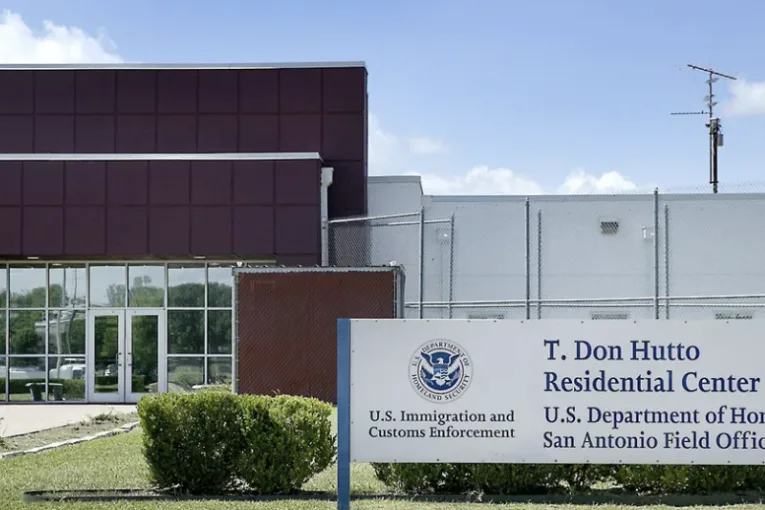
TAYLOR, Texas — Nearly 200 pages of handwritten testimony, drawings and personal accounts from immigrants detained at a privately operated Immigration and Customs Enforcement facility in Texas describe allegations of physical abuse, inadequate medical care, prolonged detention and conditions that detainees say have stripped them of their dignity.
The accounts, published Oct. 31 in an investigation by The Guardian, came from men held at the T. Don Hutto detention facility in Taylor, Texas, which is operated by the private prison company CoreCivic under contract with ICE.
The men described the facility as “la perrera,” Spanish for “the dog pound,” and said they felt they were being treated as inventory rather than human beings.
The collection includes writings and drawings produced between July and September 2026. According to The Guardian, the materials were mailed to a detainee’s relative, shared with the advocacy organization Center for Popular Democracy and subsequently provided to the newspaper.
The Guardian reported receiving testimony from at least five detained men, withholding most identifying information because of concerns about their safety.
The handwritten accounts describe experiences ranging from arrests by immigration officers to alleged mistreatment inside the facility, including confrontations with guards, inadequate food and medical care, and prolonged separation from family members.
One account came from a Honduran father who described being detained by ICE agents in San Antonio after living in the United States for seven years.
The man, who said he had no criminal record, worked at a mechanic shop and had traveled to a convenience store during a work break when an unmarked vehicle approached him.
He described fearing that the occupants intended to harm him before several individuals emerged from the vehicle and pepper-sprayed him.
According to his account, he lost consciousness and awoke as officers splashed water on his face. He said he did not initially realize the individuals were immigration enforcement agents.
The Guardian reported that it could not independently confirm his account.
Other testimony described alleged physical abuse by guards inside the detention center.
In one incident, a detained man described witnessing a confrontation involving a Cuban detainee who attempted to take a piece of bread from the cafeteria to his cell.
According to the account, guards refused to allow him to remove the bread, prompting him to eat it immediately.
The confrontation allegedly escalated, with guards beating the man until he was on the floor and bleeding.
CoreCivic disputed the allegation of excessive force, telling The Guardian that the incident had been reviewed in coordination with ICE and that investigators determined excessive force had not been used.
The company also defended its broader detention practices.
A CoreCivic spokesperson said the company does not determine who is detained, how long individuals remain in custody or when they are released.
The spokesperson maintained that the company’s responsibility is to provide safe and humane care while immigration proceedings continue.
The Department of Homeland Security also rejected allegations of misconduct and inadequate conditions at the facility.
In a statement to The Guardian, DHS characterized the allegations as false and said detainees receive meals, clean water, clothing, bedding, showers and hygiene supplies.
The department also said detained individuals have access to telephones to communicate with family members and attorneys.
However, DHS declined to address the specific allegations raised in the handwritten accounts, dismissing the newspaper’s reliance on unnamed sources.
The drawings accompanying the testimony depict detention cells, hallways, communal areas, security gates and an immigration courtroom.
According to The Guardian, the images provide a visual account of the environment described by detainees, including the physical barriers separating them from other areas of the facility.
A review of detention records cited in the investigation found that 497 men were being held at T. Don Hutto in late September, approaching the facility’s capacity.
Most had entered the facility during 2025 or 2026, although two men had reportedly been detained since September 2023.
Alejandro Caceres, an organizer with the Austin Sanctuary Network, told The Guardian that his organization had received repeated complaints about conditions at the facility.
Those complaints included allegations of retaliation by guards, inadequate medical treatment, poor food quality and the use of solitary confinement.
The detainees also submitted a list of demands seeking faster immigration proceedings, reunification with family members and the release of children held at other immigration detention facilities.
They additionally called for the release of detained people with developmental disabilities and investigations into deaths occurring in ICE custody.
The demands reflect broader concerns raised by immigration advocates about detention conditions and the consequences of prolonged confinement while immigration cases remain pending.
The Guardian’s investigation also described the experience of Julian Osorio Garcia, a Colombian asylum seeker who had been detained at the facility since May 2026.
Osorio entered the United States in 2023 on a tourist visa and subsequently applied for asylum after reporting threats from criminal groups in Colombia.
According to The Guardian, he received employment authorization while his asylum application remained pending.
Osorio said he was arrested in Texas in May after local law enforcement officers working with ICE stopped a vehicle in which he was traveling.
His attorney filed a federal habeas corpus petition in June seeking his release while his immigration proceedings continued.
A federal judge denied the petition in late October, leaving Osorio in ICE custody.
DHS said Osorio had overstayed his authorized period of admission and would remain detained while his removal proceedings continued.
The department also cited a 2023 arrest in Texas for driving while intoxicated.
However, court and arrest records reviewed by The Guardian showed that Osorio was never convicted in connection with the charge and that the case was inactive.
The Guardian reported that DHS did not respond to follow-up questions concerning those records.
While detained, Osorio wrote protest songs describing the experiences of immigrants in custody and performed them during telephone conversations with the newspaper.
The writings and artwork also documented efforts among detainees to maintain solidarity despite their confinement.
According to The Guardian, detained men described gathering to applaud and shout when someone was released, recognizing the difficulty of obtaining freedom from immigration detention.
The investigation concluded with an account of those farewells, illustrating the significance detainees attached to each person’s release.
To comment please go to one of these social media platforms:
Facebook: https://www.facebook.com/DavisVanguard
LinkedIn: https://www.linkedin.com/company/peoples-vanguard-of-davis-inc/
Instagram: https://www.instagram.com/davisvanguard/
X: https://x.com/davisvanguard
Bluesky: https://bsky.app/profile/vanguardnewsgroup.bsky.social
Subscribe to the Vanguard News letters. To make a tax-deductible donation, please visit davisvanguard.org/donate or give directly through ActBlue. Your support will ensure that the vital work of the Vanguard continues.
