
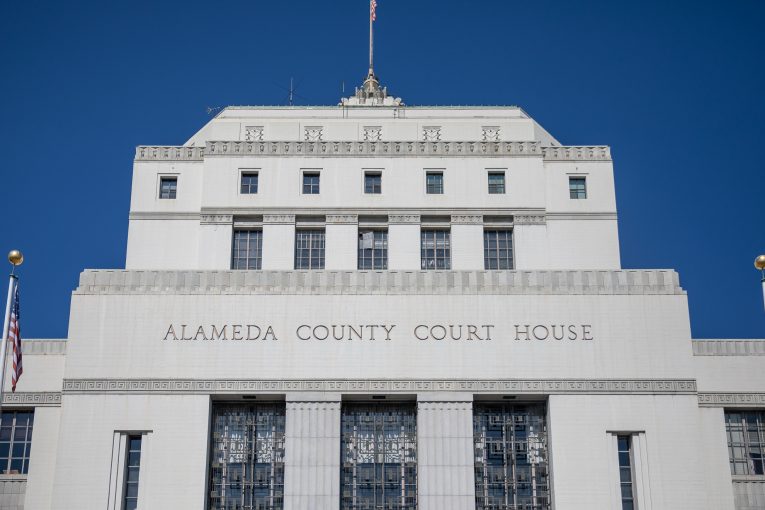
DUBLIN, Calif. — A Bay Area defense attorney’s discovery of a recording of a confidential conversation with her client while reviewing evidence in a murder case has raised new constitutional concerns about attorney-client communications, according to the Mercury News.
Just weeks before trial, Deputy Public Defender Sara Star came into possession of a recording of a meeting with her client, Crystal Espinoza, that was “pulled from more than 150 jail audio files.”
Espinoza, who had no prior criminal history, is charged with murder in the death of her estranged boyfriend, Jesus Gallegos, inside a Dublin apartment. Following the revelation, Espinoza was released from jail without bail on April 14, and defense attorneys questioned whether Alameda County authorities improperly recorded privileged attorney-client communications.
Under the U.S. Constitution and state and federal laws, private conversations between attorneys and their clients are protected. Any breach could carry serious implications for other criminal cases.
After questioning Alameda County sheriff’s personnel, attorneys said they were repeatedly assured that the private meeting booth where Star and Espinoza met inside Santa Rita Jail was not being recorded and that all disclaimers stating otherwise should be disregarded.
Chief Public Defender Brendon Woods said, “This isn’t the first time the sheriff’s office has illegally recorded privileged communications.”
He added that his office would take the necessary steps to “ensure this never happens again,” calling the conduct by the sheriff’s department “inexcusable.”
A similar issue arose in 2018, when a sergeant illegally recorded a meeting between a juvenile and his lawyer.
The judge in that case denied a motion to dismiss, finding sufficient evidence from body-camera footage showing the sergeant knew the recording would occur during a privileged and confidential conversation.
In Espinoza’s case, the judge ordered prosecutors and the Alameda County Sheriff’s Office to stop listening to any recordings tied to the matter.
According to court records, Deputy District Attorney Edward McGarvey, the prosecutor assigned to the case, told Star he never listened to the file.
Following the discovery, defense attorneys located another recording they contend supports their argument that the circumstances establish a case of justified self-protection.
“Attorneys are routinely given a choice between two meeting booths” inside Santa Rita Jail, including the booth where the alleged unlawful recording occurred, said Daniel Shriro, an Oakland-based private attorney not connected to the case.
If the Alameda County Sheriff’s Office cannot guarantee “that no one is listening in on … privileged conversations,” they are violating Sixth Amendment rights and undermining an attorney’s ability to provide legal representation, Shriro said.
In 2019, Sheriff Gregory Ahearn responded to accusations that illegal recordings had been made, stating that “none of the attorney-client conversations were recorded.”
He said his office contacted private phone service company Global Tel Link to ask it to “correct” the issue.
The discovery of the Star-Espinoza recording later revealed that GTL had the sole ability to switch off jail meeting booth recordings.
According to GTL’s website, the company contracts with jails and prisons that hold nearly 75% of the country’s incarcerated people, including the California state prison system, which shares data with law enforcement.
Even if the recordings were made unintentionally, retired Santa Clara County Judge LaDoris Cordell said they could still be prosecuted as a felony under California law.
Media reports also indicate that Orange County and GTL admitted to 1,000 illegal attorney-client meeting recordings when sued by plaintiffs in 2019, while blaming tens of thousands of other recordings on human error and a software glitch.
Espinoza’s attorneys also found a secret recording on her phone in which “she confronts him about past physical abuse,” now a central element of the defense request to dismiss the charges.
The recording states that Espinoza told Gallegos, “you f—— raped me … [w]hat you did was illegal.”
Although she is charged with bludgeoning and stabbing Gallegos to death during an argument, defense attorneys argued that “[s]he’s innocent and is being wrongfully prosecuted” because she acted in self-defense.
Police allege Espinoza demanded $150,000 from Gallegos and, when he refused, became abusive. Her attorneys, however, argued investigators withheld evidence and may have ignored other proof of physical abuse.
While defense attorneys described the recording as their “missing link,” McGarvey argued it did not provide definitive proof of rape, saying Espinoza berated Gallegos for more than 20 minutes and that he struggled to speak.
Judge Scott Jackson said he was uncertain whether the recording would be admissible, but approved Espinoza’s release with GPS monitoring.
The trial has been postponed, and no new date has been set.
Follow the Vanguard on Social Media – X, Instagram and Facebook. Subscribe the Vanguard News letters. To make a tax-deductible donation, please visit davisvanguard.org/donate or give directly through ActBlue. Your support will ensure that the vital work of the Vanguard continues.
