
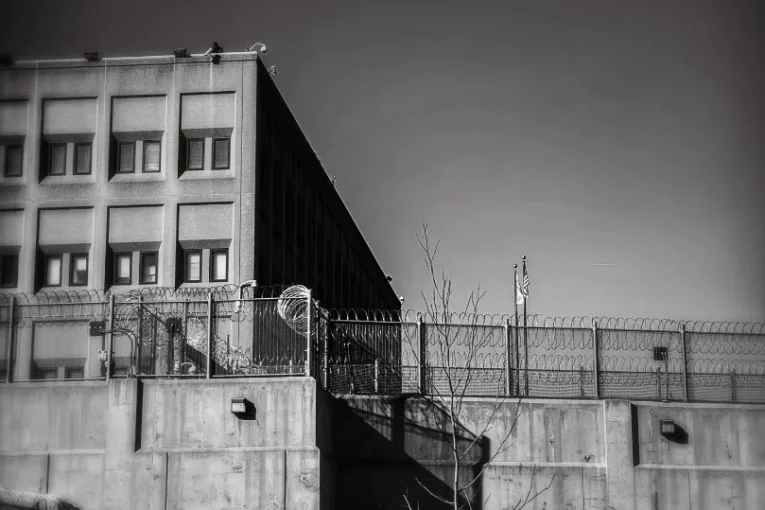
WASHINGTON, D.C. — The Council for Court Excellence (CCE), in partnership with the Office of the D.C. Auditor (ODCA), has released a damning new report titled Urgent Need for a New D.C. Jail, which paints a grim portrait of deteriorating conditions, chronic understaffing, escalating violence, and a rising death toll inside the D.C. Jail. The report audits the period from July 1, 2023, through June 30, 2024, and issues findings and recommendations across eleven core issue areas—from facility conditions to healthcare to legal access.
“For anyone who has been recently incarcerated in D.C. or who knows someone who has been, nothing in this audit will be surprising,” said CCE Executive Director Misty Thomas Zaleski. “But today’s report reflects a comprehensive look at the failures in D.C.’s corrections system, and how to begin fixing them.”
The audit draws on agency data, legal filings, interviews, surveys, and correctional best practices to assess conditions in the 49-year-old Central Detention Facility (CDF) and the 33-year-old Correctional Treatment Facility (CTF)—collectively known as the D.C. Jail. The findings indicate systemic dysfunction, persistent safety hazards, and an urgent need for replacement of the aging jail infrastructure.
The report details over 1,595 emergency maintenance issues, including broken locks, extreme temperatures, vermin infestations, and mold. Nearly 60 percent of the facility inspections found mold present, and sanitation standards were regularly unmet, with reports of feces backing up through toilets and cell doors failing to open or close properly.
Deaths in custody have spiked, with eight residents dying in the jail during the audit period. Five of those deaths were overdose-related, while others resulted from suicide, homicide, or medical emergencies. The jail’s mortality rate was more than three and a half times the national average, and DOC failed to conduct or publish any systemic analysis of these deaths. In several cases, staff did not activate required body-worn cameras, impeding potential accountability.
Violence remains widespread. There were 790 assaults reported in one year—more than two per day—along with 400 documented uses of force by correctional staff, often involving pepper spray. Most of the violent incidents occurred at CDF, where outdated design exacerbates tensions and makes it difficult to safely separate individuals.
Healthcare access was another area of critical concern. At the beginning of the audit period, 70 percent of residents were identified as having a mental health issue at intake. Yet 37 percent of behavioral health positions were vacant by year’s end. Narcan was administered 148 times during the year to counter overdoses, and there were widespread reports of delayed or denied medical care, missed appointments, and failure to provide prescribed medications. One resident died by suicide, and 571 residents were placed on suicide watch.
Understaffing at the jail has reached crisis levels. The Department of Corrections spent $30.9 million on overtime in fiscal year 2024—174 percent over budget. At the same time, the department significantly cut its training budget and failed to follow through on plans to improve staff preparation. Staff morale and resident safety were further undermined by reports of misconduct, harassment, and the smuggling of contraband by staff.
The report also reveals an overreliance on restrictive housing. At the end of the audit period, 11.1 percent of residents were being held in conditions that meet the definition of solitary confinement—twice the national average. Some individuals were held in isolation for up to 30 consecutive days, and this practice was used both for discipline and for separating vulnerable individuals.
Food conditions in the jail were repeatedly cited as unsafe and inadequate. Residents reported receiving meals that were spoiled, moldy, or contaminated with inedible materials such as screws. The jail’s food vendor was paid just $6.56 per person per day, and religious and medical dietary needs were not consistently met. While D.C. passed the SECURE DC Act to improve dietary standards, the act was not funded in the fiscal year 2025 budget.
Legal access was hampered by malfunctioning tablets, restricted law library access, and delays in transporting residents for legal visits. Attorneys frequently reported waiting 30 to 90 minutes for clients to be brought to meeting rooms, and residents in restrictive housing were required to make written requests for basic legal resources. The lack of consistent access to legal forms and research tools undermined incarcerated individuals’ ability to exercise their rights.
Programming and visitation were also inadequate. While some residents were able to participate in high-quality programming, most were not. Only 15 percent of surveyed residents reported being in a designated programming unit. Many described the recreational space as insufficient, the library and classrooms as unsatisfactory, and religious accommodations as lacking. Visitation options were limited and uneven between facilities, with nearly all residents surveyed expressing a desire for in-person visitation.
The grievance process was found to be convoluted and ineffective. Residents filed over 4,200 informal complaints during the audit period, nearly 40 percent of which involved improper staff conduct. Yet almost one in five grievances were dismissed, often due to procedural errors such as incorrect form usage. Residents reported difficulty accessing the necessary materials to file complaints and expressed fear of retaliation for doing so.
These findings are especially alarming in light of a 41 percent increase in the jail population during the audit period, rising from 1,384 residents in July 2023 to 1,945 in June 2024. Despite the surge, average stays far exceeded national norms—96.5 days for men in D.C. versus 38.8 days nationally. The jail remains overwhelmingly populated by Black men, with 88 percent of residents identifying as Black and 93 percent as male.
The report notes that while the District has previously allocated hundreds of millions of dollars to build a new jail, shifting plans and inadequate investment have stalled progress. The current plan calls for a partial facility with only 384 beds to open in 2031, with no funding allocated for the completion of a full replacement facility before 2035.
“We are deeply concerned that the Mayor’s proposed FY2026 capital budget would gut the District’s investment for a new jail facility,” said Thomas Zaleski. D.C. Auditor Kathy Patterson added, “A new jail has been discussed for more than 20 years, and it’s past time to act.”
CCE and ODCA are urging the Mayor and the D.C. Council to prioritize construction of a publicly owned, locally controlled correctional facility well before 2035. They also emphasize that operational reforms—such as improving healthcare, food quality, visitation, and legal access—must begin immediately and do not require waiting for new construction.
