
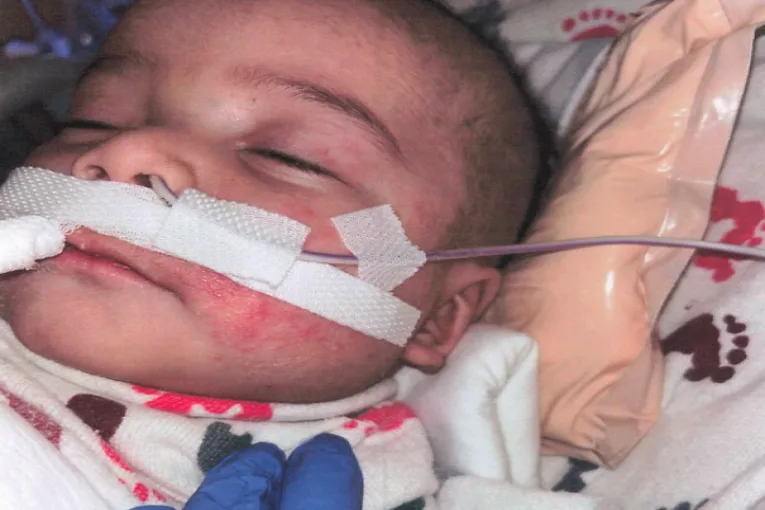
SAN JOAQUIN, Calif. — A new lawsuit filed Tuesday in San Joaquin County Superior Court alleges that county agencies failed to act on known and repeated signs of child abuse, resulting in the catastrophic injury and permanent disability of a one-year-old child.
The lawsuit was filed on behalf of Sebastian Hernandez, a minor, by his guardian ad litem Jessica Perl. It names the County of San Joaquin, the San Joaquin County Department of Child Support Services (DCSS), and the San Joaquin County Human Services Agency (HSA) as defendants, along with unnamed individual employees and agents of the county.
According to a press release from Trial Lawyers for Justice (TLJ), Sebastian was just one year old in April 2024 when he was violently assaulted by his father, Roberto Hernandez, who had a well-documented history of child abuse, domestic violence, and substance abuse. Despite multiple red flags and a previous abuse and neglect case involving Hernandez’s two other children, county agencies failed to follow their own mandated protocols and legal obligations to intervene and protect Sebastian.
“These grossly and recklessly negligent officials had every opportunity and the legal obligation to intervene and protect Sebastian,” said Nick Rowley, a nationally recognized trial attorney and co-founder of Trial Lawyers for Justice. “A one-year-old who hadn’t even learned to speak lost his ability to walk, talk, see, and live a full life. When those entrusted with protecting our most vulnerable recklessly fail to act, they must be held accountable for the consequences.”
Sebastian’s injuries were described as “permanent and life-altering,” including a traumatic brain injury, crushed trachea requiring a tracheostomy, blood in his spinal canal, and fractured ribs. Doctors also found signs of chronic subdural hematoma, brain swelling, brain infection, and older rib fractures from past incidents of abuse.
Now less than two years old, Sebastian is virtually blind, cannot walk or talk, and will require around-the-clock medical care for the rest of his life.
The complaint outlines a devastating timeline of system failures. On Jan. 25, 2024, DCSS and HSA received a cross-report from law enforcement indicating suspected physical abuse and neglect of Sebastian, as well as a domestic violence incident involving Roberto Hernandez. According to court filings, this triggered numerous legally mandated duties—including a Safety Assessment (SA), Risk Assessment (RA), a Criminal Offender Record Information (CORI) check, and development of a Safety Plan.
However, according to the complaint, none of these critical actions were taken with regard to Roberto Hernandez. While officials assessed the mother’s home, they failed to evaluate Hernandez’s home or conduct any meaningful follow-up. Just days later, encouraged by agency workers, Hernandez petitioned the Family Law Court and was awarded full custody of Sebastian, while the mother was granted only supervised visits.
Less than three months later, Sebastian was hospitalized with severe and irreversible injuries. Doctors determined that while the most acute injuries occurred around April 6, 2024, Sebastian had sustained earlier injuries—including brain trauma and rib fractures—dating back to late January, shortly after Hernandez obtained full custody.
According to the lawsuit, Hernandez had previously pled guilty to criminal charges related to the abuse and neglect of his two other children and had been ordered to complete anger management and substance abuse rehabilitation. Despite failing to complete those requirements, and despite being actively known to both DCSS and HSA for years, Hernandez was never subjected to renewed scrutiny when he became Sebastian’s primary caregiver.
The complaint alleges that DCSS and HSA failed to follow mandatory protocols under state law and departmental policy, including required monthly face-to-face visits, background checks, home visits, and safety planning. The lawsuit cites dozens of specific violations of the California Welfare and Institutions Code, Health and Safety Code, and regulations set forth in the Department of Social Services Manual of Policies and Procedures.
The suit also highlights systemic issues within the county’s child welfare apparatus, noting that San Joaquin County’s rate of “Evaluating Out”—the dismissal or closure of abuse and neglect reports without investigation—is 53%, which is 20% higher than the statewide average. Attorneys argue this high rate reflects a dangerous culture of inaction and administrative neglect.
“The fact that this child’s abuse report was evaluated out—despite overwhelming red flags—is a damning indictment of the entire system,” said Bobby Thompson, founder of TLO Law and one of Sebastian’s attorneys. “San Joaquin County had clear protocols in place to protect children like Sebastian. But those safeguards mean nothing if no one follows them.”
Thompson added that agency workers went so far as to assist Hernandez in pursuing full custody of Sebastian in family court, despite their internal knowledge of his violent history and open dependency case involving two other children.
“Sebastian fell through every crack in a system that was supposed to protect him,” Thompson said. “It’s negligence, a betrayal of public trust, and we intend to hold them fully accountable.”
The complaint seeks compensatory damages for medical care, pain and suffering, and loss of future earning capacity, as well as statutory penalties and attorneys’ fees. It also invokes California Civil Code Sections 52.1 and 51.7, which provide civil remedies for violations of constitutional rights and violence motivated by discriminatory factors, including age.
Plaintiffs argue that Sebastian’s rights under the California Foster Youth Bill of Rights were violated, including his right to live in a safe, healthy, and comfortable home free from abuse and neglect. They also argue that DCSS and HSA’s inaction constitutes a breach of the state’s highest duty of care toward children in its protective custody system.
The case is Sebastian Hernandez v. County of San Joaquin, et al. It will proceed in San Joaquin County Superior Court.
