
NEW ORLEANS — A federal appeals court has officially blocked a controversial Texas law that would have enforced extreme anti-immigration measures, in what advocates are calling a major victory for immigrant communities.
The Fifth Circuit Court of Appeals sided with previous rulings, all of which found that the provisions of Texas Senate Bill 4 conflict with federal immigration authority. As noted in the law, “For nearly 150 years, the Supreme Court has recognized that the power to control immigration — the entry, admission, and removal of aliens — is exclusively a federal power.”
The ACLU emphasized that any removal powers lie solely with Congress and not with the executive branch or individual states. The ruling reaffirms that immigration enforcement is not within state jurisdiction.
Under the blocked law, Texas sought to criminalize undocumented individuals who crossed the U.S.-Mexico border, empowering state and local law enforcement to detain and remove individuals based solely on immigration status.
Texas argued that it should be allowed to enforce the law independently, especially after the federal government dropped its initial lawsuit against the state. But the court confirmed that private plaintiffs still have standing and that SB 4 remains unconstitutional under federal immigration law.
This decision is the latest in a string of judicial defeats for similar laws in states including Florida, Oklahoma, Idaho, and Iowa. Courts have consistently found that state-level immigration enforcement efforts violate constitutional boundaries.
The Fifth Circuit upheld the injunction, keeping SB 4 blocked as litigation continues. Oral arguments have already taken place, and a lower federal court had previously granted a preliminary injunction that Texas then appealed.
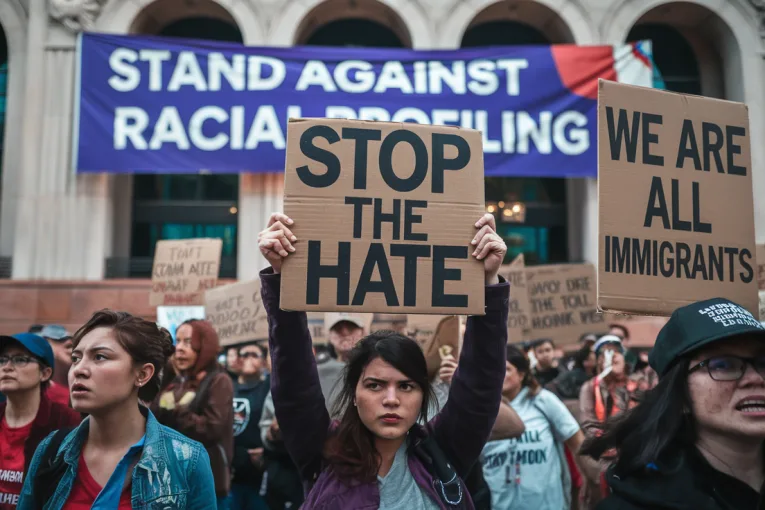
Critics of the law warn that its implementation would trigger widespread discrimination and harm to immigrant communities across Texas.
The ACLU of Texas, the Texas Civil Rights Project, and El Paso County filed suit, arguing that the law violates the Supremacy Clause of the U.S. Constitution and is preempted by federal law.
Cody Wofsy, deputy director of the ACLU’s Immigrants’ Rights Project, said, “Courts around the country have repeatedly and emphatically rejected these state immigration laws. These illegal schemes violate 150 years of Supreme Court precedent and are deeply harmful to our communities.”
David Donatti, senior staff attorney at the ACLU of Texas, added, “The Fifth Circuit’s decision affirms the longstanding and simple rule that the United States speaks with one voice about when and how to regulate immigration. S.B. 4 is plainly unconstitutional in all its applications, and it does not reflect the values of Texans. We are and always have been a border state. Immigrants belong here.”
Rochelle Garza, president of the Texas Civil Rights Project, said, “This ruling proves that no state, not even Texas, has the power to create its own immigration laws. The court has affirmed decades of precedent making clear that immigration is within the sole dominion of the federal government. S.B. 4 threatens to upend our Constitution, tear apart our democracy, and oppress our Texas communities through racial profiling.”
She continued, “We, at the Texas Civil Rights Project, remain dedicated to protecting the constitutional rights of all Texans and stopping S.B. 4, or any law like it, from ever going into effect.”
Christina Sanchez, El Paso County Attorney, said, “As the largest border county in the State of Texas, the County of El Paso has held steadfast in its opposition to this law because the county prioritizes pushing back on unconstitutional actions that seek to bankrupt our community and divert local law enforcement resources away from other priorities.”
She added, “We remain in this fight for justice and the rights of all individuals in our community and continue to urge the courts to uphold the protections guaranteed by the Constitution and to continue rejecting measures like S.B. 4 that undermine local law enforcement and create unfunded mandates for counties to handle federal immigration matters.”
Plaintiffs also voiced their support for the ruling.
Jennifer Babaie, director of advocacy and legal services at Las Americas Immigrant Advocacy Center, said, “What this decision does is recognize the value of the work conducted daily by the staff of organizations like Las Americas. When government officers use their power to directly and illegally threaten immigrants, they not only place those individuals directly in harm’s way, they also directly interfere with our ability to simply do our job and meet our mission — to deliver quality legal services to the most vulnerable among us.”
She added, “S.B. 4 is unconstitutional, out of touch, and dangerous. Even as we write this, baseless and violent attacks against immigrant communities continue. Our communities deserve so much better.”
Rebecca Lightsey, co-executive director of American Gateways, said, “We are pleased to see that this hateful, anti-immigrant law will not take effect. There is so much fear and misinformation throughout the immigrant community, and we need to do everything we can to welcome people who are fleeing persecution and give them a right to make their claims and avoid harm.”
