
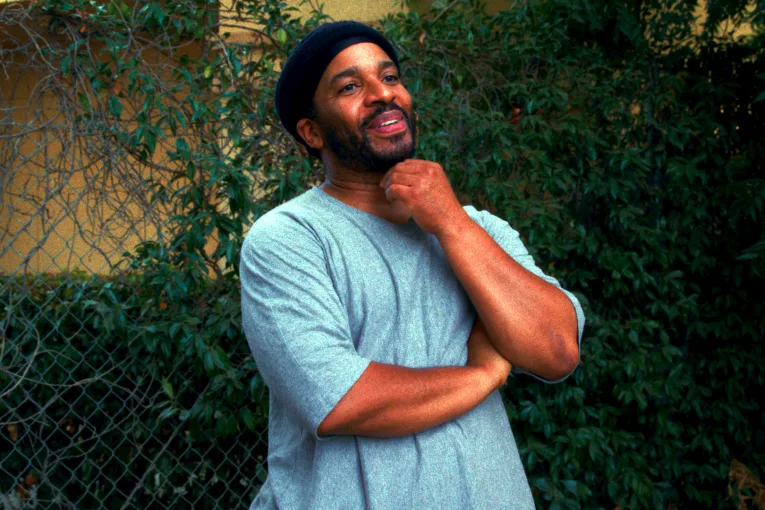
The last time a free world theater production of any kind was performed before a confined audience in California, it was 1957, nearly seventy years ago (Waiting For Gadot, San Quentin). Before actor André Holland (Moonlight, 42, Castle Rock), the star of Academy Award-winning screenwriter Tarell Alvin McCraney’s modern classic The Brothers Size, decided to conclude the play’s New York theatrical run before residents of the carceral state housed at Valley State Prison (VSP), in collaboration with the Yale Institute on Incarceration and Public Safety (YIIPS), an all-Black ensemble had never staged a live theater event – in the round, no less – within the Golden Gulag. For the members of our Carceral Studies Journalism Guild community, and those invited guests fortunate to have had the rare opportunity to share space in such a paradoxically intimate setting, what we witnessed, became immersed in, and transformed by, wasn’t just a dose of the best of what high art offers a contained body starved of stimuli, it was Black history in the making.
It started with booming drums. Drums close enough to wake a lifer’s pep-rally muscle memory from the forgetful slumber of isolation; and yet, simultaneously reverberating ala call and response throughout the cavernous and quickly shapeshifting gymnasium. Munir Zakee’s instrumentation (Black Panther, Eryka Badu), transformed the place where sneakers echo and hard fouls become get-off-first quick-hands fades at the foul line, into a visceral hip-hop worship service calling all the broken souls to the altar of art. His masterful soundscape did more than just draw us in – nah bruh – it broke the yolk of the trauma spell confinement casts upon those constricted by its encompassing and all-infecting toxin of absence. The sound was medicine. The rhythm was a metronome of connection, in a place where human connection is considered contraband.
Randall Horton — our nation’s only formerly incarcerated and tenured English professor with seven felony convictions to his banned-by-the-box name and one of the most acclaimed living poets, whose interpretive framings of carcerality and Black life have earned him two American Book Awards, one of which was for his spoken word performance on Heroes Are Gang Leaders, called The Brothers Size — “the manifestation of what August Wilson attempted to do with Fences.” Horton credited McCraney, the screenwriter of Moonlight, with “achieving the challenging duality of harnessing the tragic performative depth of James Baldwin’s story Sonny’s Blues, with the universal accessibility of the themes presented in his play.”
“Tarell, much like how Moonlight was his cinematic gift to humanity, has given us the quintessential every person’s play,” Horton added.
Calling VSP’s refusal to permit the performance to be filmed and screened for audiences on lock “a travesty,” Horton, founder of the Mellon-funded nonprofit Radical Reversal, an organization that builds media spaces and recording studios inside jails and prisons, said he believes The Brothers Size, without a doubt, should be required viewing for everybody on the inside.”
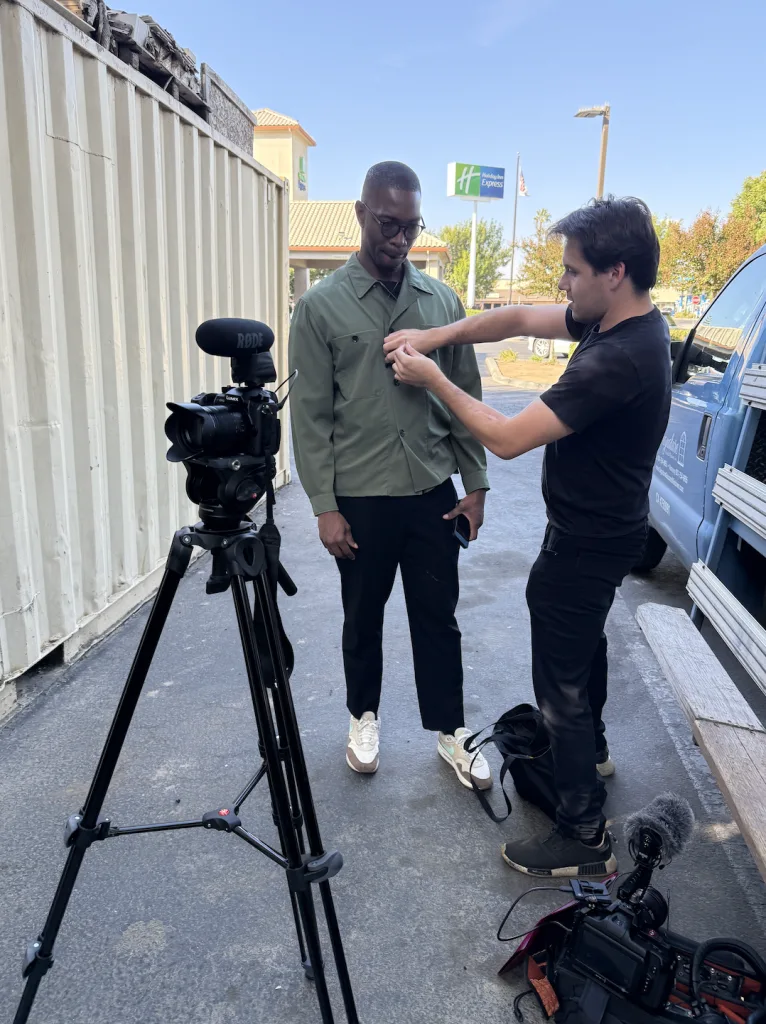
McCraney’s exploration of suffering, reflected in each character’s skirmish with the dissonant foes of brotherhood, rejection, and freedom (whatever that might even look like for a Black man), offers up a uniquely relatable Nietzschean arc of transcendence for those of us – many of whom are, for the first time in our lives, sitting in college classes – learning to swim in the riptides of philosophy, dismantle our bruised ethnographies, and navigate the complicated politics of self. Watching these characters wrench themselves through conflict, cleave the weight of condemnation, and negotiate Black life, isn’t mere entertainment. This is the full spectrum sensorial personification of that thing most elusive in prison: inside knowledge.
“Self-abuse is its own harm,” Stewart Skuba observed, “more harsh than celled captivity, I think. Yet, this play turned our circumstance inside out in a way few things here really can. Because prison itself isn’t built for the healing this form offers, and actively works to prevent the normalization our community requires in order for us to even convene in safety, that this happened at all, is a blessing.” For Skuba, a youth offender mentor, poet, and Rebirth of Sound graduate, music avails healing. “There is a rare multisensory power in art, and for me, this experience was absolutely soul-quaking,” he said.
“It was a hypnotic, visceral, and cunningly authoritative lacing of Yoruba deities and exacto-knife slices of the burdens, fears, and hopes that body-bag our daily grind,” said George B., “brilliantly lived out nakedly before us, inches away, no props, unveiled, and relatable. I saw my life – family, temptation, substance abuse, trauma, recidivism, pride, resentment, sabotage – every savage and sad exemplar of what haunts me, gargoyling in the round. It was terrifyingly profound, yet spiritually inspiring.”
A peer literacy mentor, George related how he immediately craved his family and pined for solidarity as he watched the play unfold. “What I walk away with that has most fed me, is the humanity with which these artists treated me. By sharing the commodity of their craft, for free, they affirmed us all as more than society’s offal. They shared their art, and all of its inherent meaning, with us, for us. Merely saying ‘thank you,’ will forever feel pedestrian. I hope they saw in our faces, heard in our shares, and felt in our hugs, the impact of their gifts. I hope Professor Hinton and her team left here knowing how grateful we are for having had this experience.”
Describing André Holland, YIIPS founder Elizabeth Hinton said that “he is a friend of the Institute, and a kindred spirit, for whom social justice and liberation informs his work commitments. He was determined to join us at VSP for an event in April, which became cancelled after its host became banned from the prison, and when we convened our own Inside Knowledge Journalism Symposium event in July, he was working and couldn’t make the trip. After seeing some of our My Teachable Moment footage from July, while rehearsing for the twentieth anniversary run of The Brothers Size at The Shed, he offered to bring it to California and close the show with the men of VSP.”
Leading up to the event, André, Tarell, the cast, and production staff were cognizant that their finale would land them in a prison, which Hinton noted “was deeply important into each of them.”
“They put their blood, sweat, and tears into this project,” she said. “They really wanted to honor the audience in a meaningful way.”
After the play, Hinton told a circle of us gathered in the gym that “this was history in the making, that could have been able to live outside this room – on demand – in order to impact half of the folks living in confinement throughout the U.S.” Indeed, the teachable moments that should have been captured, preserved, and shared as knowledge, sadly, were not.
Hinton and YIIPS executive director Yaseen Eldik attended the play with Horton and the Challenging Discrimination in the Law Project’s Elizabeth Ross and Elsa Lora. They were also joined by Legal Services for Children and All Of Us Or None’s Dr. Tanisha Cannon and Alissa Moore, Anti-Recidivism Coalition’s Chris Acosta, Senator Dave Cortese’s legislative staff, Loyola Marymount professor Vanessa Díaz. With the play’s cast and crew — McCraney, Holland, Munir, Alani iLongwe, Israel Erron Ford, and Daisy Peele — these guests convened with residents in a meaningful series of rotating processing circles, filled with honest conversation, and imbued with what the logic of prison works to eradicate: community.
Steven Sunny, a veteran Red Ladder performer, described how “confinement strips from us the very tools we need to be able to make connection with people, move past the sterility endgame penal classifications desire for us, close the artificial distances carcerality imposes, and nurture the emotional inputs that cultivate the empathy idling at the intersection of possibility. Our very capacity for growth, is what is choked out when these types of engagements are not the norm here – perhaps that’s why our Warden refused to let it be filmed? Could it be the same reason none of our Red Ladder theater program graduation ceremonies can be photographed using our yard camera, in the same manner academic graduations can?”
A state-certified Peer Support Specialist, Sunny noted “an evil logic drives the optic suppression of all things artistic, and Black, at VSP. It’s a shame, because art is how we can best reach some of our clients. Only twenty-seven of us got to see this – why? Over three thousand people live here.”
In addition to having had previous text message engagement with Holland, who, along with UCLA professor and RAP Lab founder Adam F. Bradley, generously supported our guild’s work publicly at a recent Harvard Hip-Hop Archive event produced by Hinton and Harvard professor Brandon Terry, celebrating the life of Malcolm X, and making time in between his travels and work on set to chop it up with us by phone, Holland also sent us via GTL, an endearing video message of gratitude that we have since played for everybody on the yard.
Standing before a portrait of Frederick Douglass, André Holland looked into the camera, and said “thank y’all so much for having us. It was such a powerful, profound experience. I really enjoyed it, and can’t wait to come and spend some more time with y’all. I left feeling nourished, excited, and inspired – and that’s all down to y’all, man. Thank you so much. Stay strong. Much love.”
We’ve been in the room with dozens of celebrities, artists, and political animals of all stripes, across many prison landscapes, levels of security, and administrative atmospheres of projected state power over the past two decades, making film documentaries, staging plays, conducting interviews, screening movies, making music, creating collaborative art, and learning from one another as mentors, practitioners, and facilitators – with and without the local support of our respective prison. None of them ever made a personalized on-camera statement thanking the population for their experience. André Holland is special.
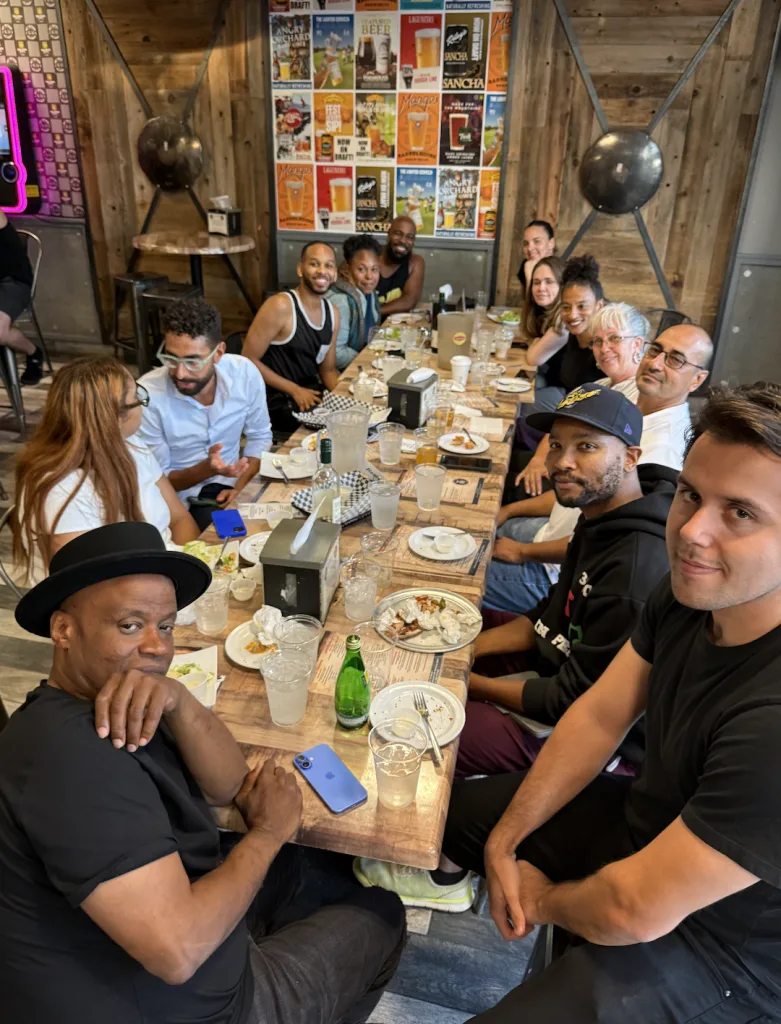
The feedback from our folks about the way André, Tarell, iLani, Munir, and Israel bonded with everyone, peeled back layers of our peers, revealing touching levels of empathy we’d not noticed before. The sharing we did on our side of the fence, was its own sort of catharsis that could not have been possible otherwise. To see and hear the givers thank us, affirms the feedback loop that is the sacred healing power of the arts. The praxis of craft heals the artist too.
Nothing will ever rob us of the experience, or the dynamic memory of what is now scaffolded in our frontal lobe’s private mental thumb drive. The magic of theater, of course, is how its consumption involves a lived four-dimensional experience; indeed, filming it necessarily flattens it, comparatively. For confined folks – the people in need of a play’s unique teaching devices – not filming this event amounts to a racialized suppression of the life-affirming take-aways that story and synthesis offer. It also disrespects the sacrifice of the actors, their producers (The Shed/Geffen Playhouse), and the institutional funders who made the event possible at all.
Johnny Cash filmed his Folsom concert; Metallica filmed their San Quentin video – both were retail media projects with profit incentives – while this was a nonprofit/non-public ask, intending to serve but one purpose: to make what was seen by twenty-seven of us, viewable by the more than 90,000 people sleeping in a California cage tonight, and the more than one million incarcerated souls with a DOC-issued tablet in their hands. VSP said “no.” Not a single still photo exists depicting the work done inside that gymnasium that day. Why?
The actors will never say it publicly, and most observers will champion the experience over the futurity of sharing the work with impacted audiences who will never venture to Broadway or playhouse. But we live here – we were there – and we know the impact this modality. We also glimpse the common denominator undergirding the things this prison celebrates, and those it stiff-arms. The VSP media center sat idling on October 8, 2025, while Tarell and André’s Oscar-winning film Moonlight streamed on our GTL tablets. Do the math. Where localism prevails, Black artistic expression – no matter the industry acclaim, performance acumen, reputational caliber, or academic pedigree of its composition – sadly, remains an endangered species in certain corners of the violence factory.
Dominick J. Porter & Ghostwrite Mike host the forthcoming Inside Knowledge audio podcast, produced by Kristine Guillaume, and executive produced by Elizabeth Hinton, featuring conversations with artists, scholars, and thought leaders, including Mumia Abu-Jamal, Heather Ann Thompson, André Holland, Erica Meiners, Angel Sanchez, and more. Follow their work at https://davisvanguard.org/witness, and support freedom at https://justiceforeverybody.org.

