
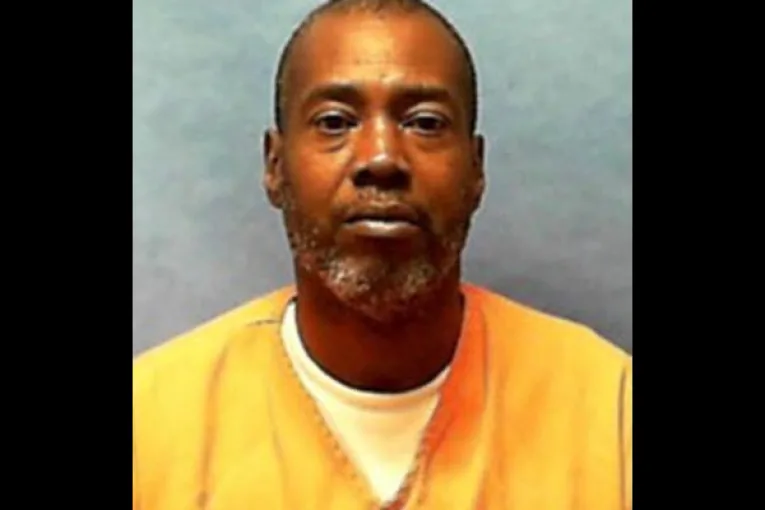
FLORIDA — With just 33 days between the signing of his death warrant and his scheduled execution, Billy Kearse faces a compressed legal timeline that has sparked renewed concerns over due process rights in Florida’s capital punishment system.
Billy Kearse is scheduled to be executed on March 3, 2026, more than three decades after he was charged in the killing of Fort Pierce police officer Danny Parrish. According to Tracking Florida’s Death Penalty (2026), Kearse was 18 years old at the time of the offense. Following the signing of his death warrant by Gov. Ron DeSantis, Kearse and his legal team were given 33 days to investigate and prepare any remaining legal claims before the execution date, a timeframe that reflects the limited deadlines in capital cases.
According to WPBF News, Kearse was sentenced to death after a jury’s unanimous recommendation for capital punishment. It was reported that a state attorney apologized to Officer Parrish’s wife for how long the case had taken. The state attorney also described Kearse as having received “due process on steroids” after DeSantis signed the death warrant during a press conference, as reported by WPBF News.
According to the Substack newsletter Tracking Florida’s Death Penalty, the Fourteenth Amendment to the U.S. Constitution states that no state shall “deprive any person of life, liberty, or property, without due process of law.” The newsletter also notes that the Florida Constitution similarly provides, “No person shall be deprived of life, liberty, or property without due process of law.”
The Substack newsletter additionally notes that Kearse’s federal habeas petition was resolved more than three years ago. After DeSantis signed the death warrant, Kearse’s team was required to fully litigate his final postconviction claims, appeal any denial to the Florida Supreme Court, and prepare and file a petition for writ of habeas corpus in that court. This involved the pursuit of any outstanding federal claims and the preparation and submission of a writ of certiorari petition to the United States Supreme Court.
The Substack newsletter draws a parallel to the 2018 case Jimenez v. State, in which Justice Barbara Pariente wrote that short warrant periods “create a fire drill” for courts reviewing execution-related documents. This creates significant time pressure for both legal teams.
When the death warrant was signed, Kearse’s attorney of more than two decades, Paul Kalil, was reported to be at a hospital meeting as his father was placed in hospice for end-of-life care. The Substack newsletter reports that Kearse’s team received no formal warning about the “unimaginable timeline.”
According to court filings cited in the Substack newsletter, Kalil worked “almost around the clock” on Kearse’s case to meet strict court deadlines despite his father’s hospitalization. On Feb. 6, 2026, Kearse’s defense team filed an “Emergency Motion to Modify Scheduling Order” requesting a 72-hour extension. The state denied the full extension but allowed a 46-hour extension.
The Florida Supreme Court extended the schedule by 72 hours. The circuit court initially denied Kearse’s motion, stating he could request again if the higher court modified its order or if both sides agreed to the state’s proposed schedule. After filing a renewed motion, the circuit court granted 48 additional hours to submit the postconviction motion.
Kearse’s team filed the postconviction motion on Feb. 9, 2026, with the “lead counsel absent” due to a family emergency following the death of Kalil’s father, according to the Substack newsletter.
On Feb. 10, Kearse’s team filed a second emergency motion asking for a 14-day extension or a stay of execution. They explained that although the Rule 3.851 motion had been filed, lead counsel was unavailable due to his father’s death and upcoming burial. The motion noted that the short schedule required immediate review of the state’s response and preparation for a case management hearing three hours after the filing, as well as a possible evidentiary hearing on Feb. 13, 2026.
The Substack newsletter reports that the state objected to the request. On Feb. 12, 2026, the Florida Supreme Court denied Kearse’s motion, requiring further proceedings to proceed.
Kearse’s execution remains scheduled for March 3, 2026. The limited timeline reveals the pressures of Florida’s execution process and raises concerns about Kearse’s team preparing a formal defense.
Follow the Vanguard on Social Media – X, Instagram and Facebook. Subscribe the Vanguard News letters. To make a tax-deductible donation, please visit davisvanguard.org/donate or give directly through ActBlue. Your support will ensure that the vital work of the Vanguard continues.
