
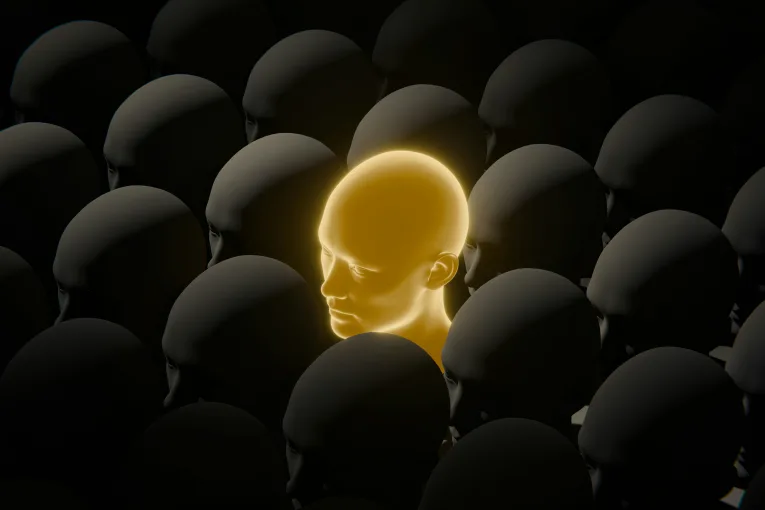
In a puff piece interview about “consciousness hygiene” with Michael Pollan in the Guardian, Shayla Love, the “lifestyle and wellness reporter,” begins by intoning: “The daily internal experience of waking up and thinking about your plans, worries and hopes for the day is miraculous and mysterious.”
Why do New Age aficionados and editors continue making the existential mistake of venerating thought and the separate self? Why does the program of the self continue to be venerated, when “AI agents” are replicating it to humanity’s peril?
Michael Pollan is best known for a study that attempted to scientifically answer the inane question: “Do psychedelics enhance mystical experiences in clergy?” He wrote an off the wall article in the New Yorker entitled, “This is your priest on drugs.”
In his externally focused critique of human consciousness, Pollen fosters the very thing that he rails against — “our ability to sit with our thoughts and perceive the world” — by conveniently leaving out inclusively watching our thoughts and emotions.
He mistakenly asserts: “Human consciousness is this private realm of interiority where we enjoy a very high degree of mental freedom.”
That’s not what human consciousness is. Consciousness as we know it is the totality of the content of human knowledge, experience and memory, both personal and collective. There’s nothing “miraculous” about human consciousness worthy of reverence, since it’s the source of the fragmentation of the earth, as well as division, war and suffering.
AI is vacuuming up human knowledge and experience, leaving a vacuum within the walls of the self. The first danger is not from AI however, but from continuing to believe in our own autonomous “agency,” which the vast majority of people refuse to question. Thus “sentience” is being projected onto the machine, which is then rendered into friends, lovers and therapists.
The “precious realm of our private space of interiority,” as Pollan puts it, is actually the prison of the personal. Yet he insists that it is the source of “a very high degree of mental freedom.”
Our private realms were never as private as we believed they were, especially in a culture of pathological individualism that has paradoxically produced tremendous homogeneity.
The notion of “my private consciousness” sounds crazy to indigenous peoples that haven’t succumbed to placing extreme emphasis on the individual self, but still prioritize shared systems of tradition and ritual.
Pollan is calling for personal “consciousness hygiene.” But that’s like closing the barn doors after the horses have fled, when what we need to do is open the doors and start shoveling the personal and collective shit out.
Unexamined, underlying premises in the interview are rife. Neither the interviewer nor the interviewee challenges the reader by asking the question: Is ‘my consciousness’ separate from human consciousness, or is it simply a social conditioning of separateness, which gives the illusory subjective feeling of a “private space of interiority?”
So what is actually happening in human consciousness?
To my mind, inward space (a very different thing than “my private realm”) has become saturated with the useless content and cumulative darkness from the past accelerated by the technologies of the present.
The “invasion by algorithms engineered to tickle our dopamine receptors and capture our attention” is secondary. It’s another layer of crap and chaos added to what was already occurring in the western mind before the net, which has gone global in recent decades.
The shrinkage of inner space hasn’t been generated by an ever shifting “them” monetizing our attention, but by an absence of human beings doing inner spadework. A lack of self-awareness is what has permitted manipulation by algorithms or propaganda (a distinction with little or no difference) by the tech oligarchs.
Giving primacy to “the space in which we daydream, mind wander, talk to ourselves,” and then calling it “this very precious thing” does not contribute to human freedom, but reinforces alienation.
The idea that we “need a ‘consciousness hygiene’ to defend our internal world against invaders that are trying to move in” is juvenile. Facilely, Pollan names the chief invader as Donald Trump, when Trump is just an egregious manifestation and symptom of the darkness that actually “dominates our headspace.”
Our minds have become overloaded with personal and collective junk. That’s what denies inward space, and smothers the space that truly matters — heart space.
Algorithms have certainly been “engineered to tickle our dopamine receptors and capture our attention,” but the invaders of our precious private consciousnesses were within us long before social media. Unexamined premises and unaddressed undergrowth have allowed the tech overlords to manipulate us, not the other way around.
The crisis of human consciousness is not external to our illusory personal consciousness, as Pollan insists, but the culmination of humankind’s ancient, separative consciousness.
After prefacing her question with the mind-boggling statement, “I like this ping-ponging of thoughts because it captures how busy our minds are,” Shayla asks Michael: “Is the goal totally quieting the noise?”
Having declared she likes inner noise, it’s a disingenuous question. But Pollan obliges with more inanity: “It’s not an emptying by any means. It’s about owning the noise. It’s about making it your noise.”
Pollan didn’t respond to the question because inner noise cannot end as long as we view it as “my noise.” The noise has become deafening, which means attending to the personal/collective noise and thereby quieting the mind is the most important thing one can do.
Pollan is correct in saying: “It’s essential to be “alone with your thoughts and getting in touch with how little control you have, how much is going on at any one time.” But he falls back into the unquestioned assumption of the separate self by adding, “it’s all yours.”
Our minds aren’t separate accretions of the content of consciousness, but microcosms of human consciousness. By observing the movement of thoughts and emotions as they arise within us without the infinite regress of the separate observer/self, we are observing the movement of human consciousness per se.
Then, as undirected attention gathers strength and intensity, the mind falls silent, and we spontaneously step out of the polluted stream of the old, increasingly destructive consciousness.
Pollan totally misses the mark in saying, “I see meditation is an important part of it. It’s a way to draw a fence around your consciousness.” That’s very unintelligent, both because it’s impossible, and because our inner fences are the walls of our prisons.
Plowing ahead, he adds, “Attention is consciousness. It’s a part of consciousness. It’s how we direct our consciousness where we want to.”
Attention that’s directed is not attention; it’s concentration. Attention is inclusive, non-directed awareness that gathers strength through choiceless observation.
Pollan also misleads when he says, “Psychedelic experiences and meditation have a lot in common.” Psychedelics may be useful therapeutically, but they are no substitute for meditation, and don’t provide a shortcut to transformation.
The final question is interesting: “Should we think about consciousness more sacredly?” Instead of exploring it, Pollan shows he’s out of his depth when he answers with definitive meaninglessness: “Souls are different from consciousness. Souls are indestructible.”
With the negation of the observer, non-directed attention quiets thought and empties the harmful and useless contents of consciousness. A completely different order of consciousness emerges, in which there is communion with immanent sacredness and non-personal love.
Follow the Vanguard on Social Media – X, Instagram and Facebook. Subscribe the Vanguard News letters. To make a tax-deductible donation, please visit davisvanguard.org/donate or give directly through ActBlue. Your support will ensure that the vital work of the Vanguard continues.
I consider myself a reasonably smart guy (when it comes to reading comprehension), but I’d say that I don’t follow about 50% of what this author is trying to say, over numerous articles.
In this article, it seems as though he’s primarily stating that we’re not separate from each other.
I’ve been watching Buddhist videos lately, and have found them somewhat helpful in regard to the “noise” within my own mind. They suggest to view that noise as “clouds, passing through” – separate from “yourself”. Doing so provides “space” between you and your own thoughts (some of which aren’t even rational). Worried about a future that may not materialize in the way that you’re worried about, and stealing your present moment in the process.
And that the present moment is all you have. (Pretty sure my cat already understands this, unlike me.)
Maybe you should read more books?
Maybe. Or maybe articles can be complete and coherent without having to refer to some other source.
I do a lot of reading on the Vanguard itself (and via news sources).
I don’t need to be reading romance novels to improve my comprehension skills.
But the argument here is not between “me” and the author. He has taken issue with another author.
There also appears to be a religious aspect to this author which also causes me to not entirely follow what he’s saying.
I’m not even sure we have a “soul” (though some white people do indeed have soul, despite the stereotype). If you doubt that, I’d refer you to The Righteous Brothers.
What I do know is that we become worm food. (This is about the only provable thing that I DO know.)
But this is a different type of reading. I read literally hundreds of books a year, but I remember when I had to read Kant in college, you read a little bit at a time, and often have to seek secondary materials and discuss with instructors in order to digest the material. It’s a higher level of reading and Martin is trained in that kind of writing which makes his writing more challenging
I guess I’d have to see the value in doing so, in order to be motivated. Of course, motivation can also arise AFTER you try something new/different. I’ll keep it in mind.
I am more interested than I used to be in Buddhist philosophy, at least. And it seems likely that some of that crosses over into what Martin is stating. (Or at least, that’s what I sometimes see.)
I’ve found Buddhism to be primarily a philosophy; not a religion. With a goal of not causing yourself to suffer (which actually is the source of most suffering).
I can also increasingly see “impermanence” – especially as more of my own life is in the rear-view mirror, and those around me have also started to die-off.
It’s true that my argument in this piece is with another author, and that a reader shouldn’t have to read another writer to understand what is being said. I feel it can still be helpful though.
I may read too much, though now it’s mostly current thinking on things, as reflected in this piece. Did my stint with what western philosophy calls “the canon,” and enjoyed it, but it left me unsatisfied. Feel that training has little to do with insight in the present, except perhaps on how to inquire and think together. Without going all epistemological, I’m sure knowledge is secondary.
You’ll find that insight doesn’t mainly come from reading, but from observing and questioning inwardly and outwardly. In keeping with the theme of this piece, you’ll also notice that whenever you have an “aha moment,” it’s simultaneously entirely yours, and there’s no feeling of “my insight.” It is just insight, which needs to be checked by further observation.
My intent generally is to encourage questioning, observation and self-awareness, irrespective of western or eastern philosophical systems.