
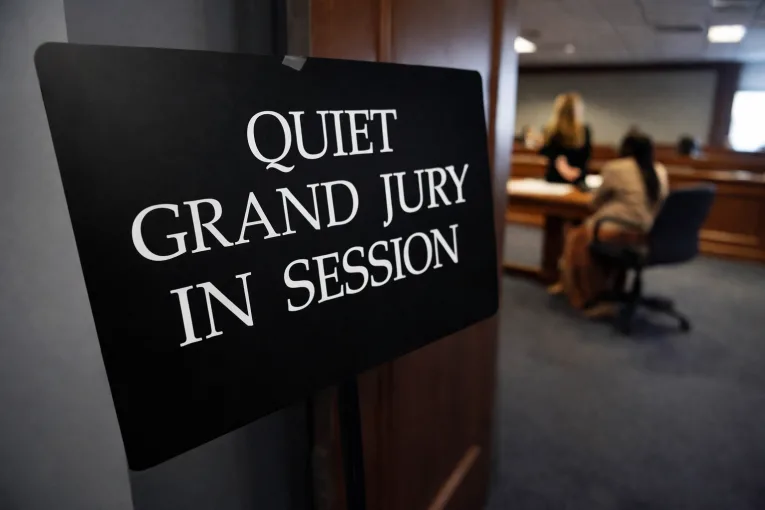
WASHINGTON — Federal grand juries, long criticized as little more than prosecutorial “rubber stamps,” are drawing renewed scrutiny in the first year of President Donald Trump’s second administration as they decline to indict in several high-profile cases.
In the United States, federal grand juries are routinely tasked with determining whether the government has probable cause to charge someone. Despite finding probable cause in tens of thousands of cases annually, Pew Research reports in a new analysis that grand juries have gained attention for using their power to reject charges during the first year of the second Trump administration.
The right to a grand jury is found in the Fifth Amendment. According to Pew Research, unlike petit juries, which determine whether an accused is guilty beyond a reasonable doubt, grand juries are responsible for deciding whether there is enough evidence to charge an accused in the first place. If there is, the accused receives an indictment.
According to Pew Research, the federal government no longer publishes data on how often grand juries refuse to indict someone. The last year this information was available was 2016, when grand juries indicted roughly 55,000 individuals and refused to indict six.
Unlike petit juries, Pew Research reports, grand juries do not need to make unanimous decisions. Grand juries are made up of 16 to 23 jurors, and only 12 are needed to return an indictment.
In the last year, however, grand juries have refused to return indictments in several high-profile cases involving the Trump administration, according to The New York Times. In August, no indictment was returned for a man who infamously threw a sandwich at a Customs and Border Protection officer in Washington. In several cases stemming from a crackdown ordered by President Trump in Chicago, grand jurors have similarly declined to indict.
The BBC reported on another high-profile grand jury case involving New York Attorney General Letitia James. James believes the Trump administration’s case against her, over alleged mortgage fraud, is politically motivated. Grand juries in Norfolk and Alexandria declined to indict her.
Despite their inability to determine guilt or innocence, grand juries are often celebrated for being both “the sword and the shield of justice,” according to Pew Research. They deliver justice by investigating alleged crimes, but they also restrain the government’s ability to prosecute without sufficient evidence.
According to The New York Times, “this is how grand juries were meant to work.” After grand juries were used in colonial times to refuse British revenue laws such as the Stamp Act, the framers of the Constitution included the procedure in the Fifth Amendment.
The New York Times argues that the procedures of federal grand juries account for why indictments are so common. Grand juries convene in secret and hear only from prosecutors and witnesses; no defense attorneys are present. Because of this, The New York Times reports that prosecutors can present hearsay testimony and illegally obtained evidence that ensures jurors will defer to them.
According to The New York Times, grand juries returning to their proper functioning in response to the Trump administration’s prosecutorial overreach is notable. However, this trend can also draw the nation’s attention to the need to reform the judicial process in favor of the accused and of public trust in institutions.
Whether federal grand juries will undergo reform remains to be seen, but the fact that the institution is able to respond and adapt to the needs of the time is inspiring.
Follow the Vanguard on Social Media – X, Instagram and Facebook. Subscribe the Vanguard News letters. To make a tax-deductible donation, please visit davisvanguard.org/donate or give directly through ActBlue. Your support will ensure that the vital work of the Vanguard continues.
