
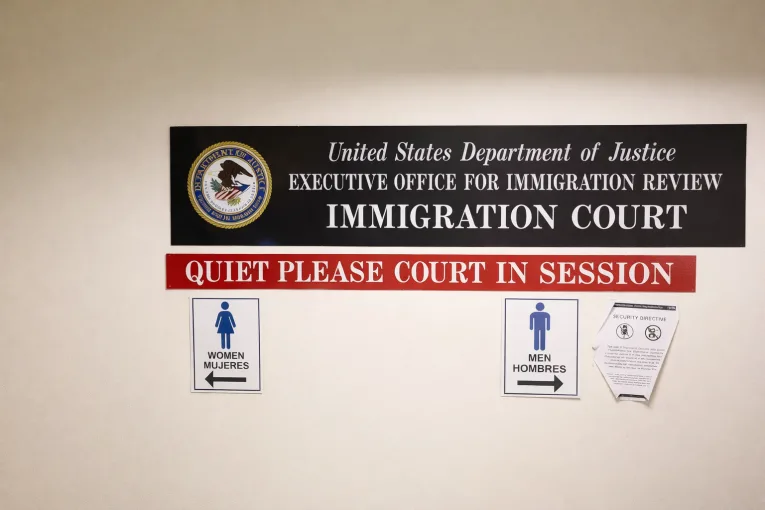
WASHINGTON, D.C. — As the Trump administration begins rolling back some of its hardline immigration enforcement policies, the number of habeas corpus petitions filed by ICE detainees nationwide is declining, though regional spikes underscore an ongoing legal battle, according to POLITICO.
A writ of habeas corpus is a judicial order requiring law enforcement authorities to justify the reason for detaining someone. These requests are generally filed by prisoners who believe law enforcement has infringed upon their federally protected rights, according to the U.S. Courts.
A report by POLITICO revealed that the number of petitions reached its highest point from Jan. 16 to Feb. 17 during Operation Metro Surge, with a peak of more than 400 petitions filed in a single day on Feb. 6.
This operation by ICE and Customs and Border Protection, beginning in December 2025 in Minnesota, resulted in the arrest of 3,000 people and the deaths of two civilian demonstrators, Renée Good and Alex Pretti.
However, as Operation Metro Surge has wound down and immigration agents have been gradually withdrawn from Minnesota, a reduction in habeas corpus petitions has become evident, POLITICO reports. By early March, the number of daily petitions filed had been cut in half.
Across the country, filings appear to be following a similar downward trend. That said, the trend is not uniform, reflecting shifting concentrations of immigration enforcement operations in key regions across the United States.
For instance, certain areas of the country — namely southern and western Texas, eastern California and South Florida — are experiencing a “sharp rise” in the number of petitions filed as the presence of federal agents increases, POLITICO reported.
Nirav Desai, a top attorney in the Justice Department’s Eastern District of California office, said, “The pace of filings accelerated in 2026, reaching approximately 100 to 200 new cases filed each week,” in a statement to the 9th Circuit Court of Appeals.
West Virginia is another state that has seen a surge in habeas filings after a major immigration enforcement operation in January led to approximately 600 arrests.
The major areas besides Minnesota that have seen a steady decline in the number of habeas corpus cases — Chicago, Los Angeles and Portland — were cities that also had the highest presence of ICE agents at the end of 2025 and beginning of 2026.
However, even as filings decline in some regions, the legal consequences of the earlier surge continue to have a substantial impact on the federal court system.
The volume of emergency cases has affected the work attorneys and federal judges are prioritizing and has resulted in a series of high-stakes rulings that both challenge and affirm the Trump administration’s deportation and detention policies, POLITICO reported.
Texas, Louisiana and Mississippi have ruled in support of the administration’s decision to detain thousands without bond, but many judges in these states maintain that the mass detention effort is in defiance of constitutional due process rights.
Meanwhile, the recent drop in petitions in other states has begun to ease pressure on the federal court system, providing some relief for attorneys and judges and allowing them to shift their attention back to other pending cases.
According to POLITICO, Justice Department attorneys in Minnesota faced significant strain after a number resigned or were fired during Operation Metro Surge over disagreements with how the immigration enforcement operation was handled. These attorneys described delaying important investigative work in order to keep up with the flood of immigration cases.
Attorneys in Texas, Louisiana and Mississippi, now experiencing similar surges in habeas filings, have voiced facing similar pressures.
While the decline in habeas corpus petitions overall indicates a temporary easing of pressure on the courts, the constantly shifting landscape of immigration enforcement suggests the legal battle over mass detention is far from over.
Follow the Vanguard on Social Media – X, Instagram and Facebook. Subscribe the Vanguard News letters. To make a tax-deductible donation, please visit davisvanguard.org/donate or give directly through ActBlue. Your support will ensure that the vital work of the Vanguard continues.
