
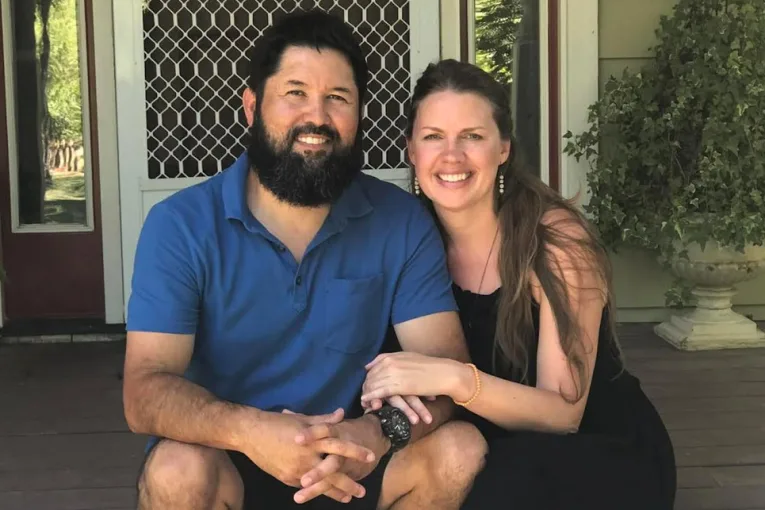
WOODLAND, Calif. — A close personal relationship between the lead investigator and a key witness emerged during testimony in the preliminary hearing of Yolo County farmer and Yuba Community College District Trustee Jose L. Garcia, raising questions about the conduct and impartiality of the investigation that forms the foundation of the prosecution’s case.
Garcia, a longtime farmer, business owner and elected trustee, has been under prosecution since his arrest in August 2025 alongside his wife, Alexis Garcia. Charges against Alexis Garcia were dismissed in October 2025 after the district attorney’s office acknowledged there was no probable cause.
The preliminary hearing so far has included extensive testimony from Brett Hancock, a former Woodland police officer who now serves as an investigator for the Yolo County District Attorney’s Office. Hancock conducted the investigation that underlies the criminal case against Garcia.
Deputy District Attorneys Madeline Warren and Rachel Moyo are prosecuting the case, while Garcia is represented by private defense attorney Tom Johnson.
The prosecution’s theory centers on the handling of funds belonging to Garcia’s mother, Gloria Garcia. According to testimony, Gloria Garcia signed a trust agreement in 2017 and owned Gloria’s Country Care along with the associated real property.
The business and property were sold in 2021 for approximately $5 million in two transactions. Hancock testified that although ownership of the property was split 50-50, the proceeds were not divided according to that ownership structure and instead went to the defendant.
A home was later purchased and sold in June 2022 for approximately $700,000. Hancock testified that the proceeds were evenly split, with Gloria Garcia’s portion — about $350,000 — deposited into a bank account before being removed by Jose Garcia and deposited in his own account.
Hancock testified that ultimately $1.1 million that was supposed to go to Gloria Garcia instead went entirely to Jose Garcia.
During testimony about the relationship between mother and son, Hancock stated, “She placed her trust in her son… he was going to take care of her.”
The defense argued that the case largely hinges on Hancock’s investigation and interpretation of financial transactions involving the trust and family finances.
During cross-examination on March 6, Johnson questioned Hancock extensively about his communications and relationship with two of Jose Garcia’s sisters, Mini Garcia and Lucy Garcia, both daughters of Gloria Garcia.
Johnson introduced subpoenaed text messages between Hancock and Mini Garcia, as well as messages involving Lucy Garcia. The messages were obtained through discovery and court filings connected to the case.
Hancock acknowledged that Mini Garcia had worked under his supervision for four or five years while both were employed at the Woodland Police Department. Johnson asked whether that prior relationship created a conflict that should have prevented him from investigating the case.
Hancock testified that he did not believe the relationship required him to recuse himself and said he did not consider conflicting out of the investigation.
Text messages presented in court showed ongoing communication between Hancock and Mini Garcia both before and during the investigation.
In one message, Hancock wrote, “Mini, you have a special place in my heart.” Additional messages show Hancock referring to her as “beautiful” and saying she had a “heart of gold.”
Other exchanges revealed a level of personal familiarity between the two. In one message, Mini Garcia wrote, “Hi stranger I was thinking about you yesterday and meant to message you to see how you are.” Hancock replied that he would “love to have lunch,” adding, “I always like where you choose to eat.”
Hancock also acknowledged sending Mini Garcia a message after he was assigned the investigation that read, “I picked up your mom’s case.” According to records introduced in court, she responded, “I am thrilled.”
Hancock said he did not consider recusing himself from the investigation despite those communications.
He also confirmed that he had multiple conversations with both Mini Garcia and Lucy Garcia during the course of the investigation. Johnson noted that the two sisters were involved in an ongoing civil lawsuit related to family finances.
Messages presented during the hearing showed Lucy Garcia regularly requesting updates about the investigation and expressing urgency about reaching a conclusion. In one exchange she wrote that “we need justice to occur” and “we are counting on you.”
Another message introduced by the defense showed Hancock telling Lucy Garcia, “I want to go over with you what I write up before going to the charging DA.”
During his testimony in court, Hancock testified that he had not shared the report with either Mini or Lucy Garcia before sending it to the charging DA.
Johnson also highlighted communications suggesting the sisters believed the criminal case could benefit their civil litigation.
In one text exchange between Lucy Garcia and Hancock, “We met with a lawyer regarding Jose’s stupid lawsuit against us three sisters. He said the DA case will help us tremendously. Hoping to hear back soon.”
Hancock acknowledged having a number of conversations with the civil attorney while the DA investigation was ongoing.
Defense questioning also raised issues about investigative procedures. Hancock testified that he was the only real estate fraud investigator in the district attorney’s office.
Johnson pointed to policies from the Yolo County District Attorney’s Investigations Division handbook governing investigator conduct.
One policy states that the office “will conduct fair and impartial criminal investigations and will provide the prosecution with both incriminating and exculpatory evidence, as well as information that may adversely affect the credibility of a witness.”
The same policy states that investigators must identify and disclose information favorable to the defense or that could undermine the credibility of witnesses.
Another section of the handbook addressing civil disputes states, “Members must not become personally involved in disputes and shall at all times remain impartial.”
Johnson also referenced a policy governing interview procedures, which states, “Absent extenuating circumstances or impracticality, investigators should audio record the preliminary interview with a suspected adult abuse victim.”
During testimony, Hancock acknowledged that he did not record an interview with Gloria Garcia. He also acknowledged destroying notes related to at least one interview with her.
Johnson further questioned whether Hancock had fully investigated financial transactions that might have supported the defense.
During cross-examination, Johnson asked whether Hancock had investigated how much money Jose Garcia had given to his mother between 2017 and 2023. Hancock testified that he did not know.
Johnson also asked whether Hancock had inquired about international trips that Jose Garcia allegedly paid for his mother or cash transfers that were wired to her. Hancock testified that he had not explored those issues.
Testimony during the hearing indicated that Jose Garcia held power of attorney over his mother’s finances and had authority to move funds.
Family communications introduced during the hearing suggested that relatives had concerns about Gloria Garcia’s access to money as she aged. At one point Mini Garcia wrote in a text message, “I agree she should not have her own spending money because she just gives it away.”
Defense questioning also indicated that Gloria Garcia had suffered a stroke and that family members had expressed concerns about her financial management.
Johnson argued during questioning that family members had previously agreed Jose Garcia would manage their mother’s finances and care for her.
Hancock testified that the trust agreement and power of attorney appeared valid but acknowledged that he did not conduct a deeper investigation into those documents.
During redirect examination, Hancock testified that he had been assigned the case by supervisor Melinda Aiello and reiterated that he was the only real estate fraud investigator in the office.
He testified that his communications with Mini Garcia were not unusual and did not influence his investigation. Hancock said that after 2020 Mini Garcia was no longer working under his supervision and stated that they had lunch once or twice but did not have dinner together.
Hancock told the court he did not believe he was biased.
During re-cross examination, Johnson challenged the scope of the investigation, noting that Hancock had attempted to interview Jose Garcia but that Garcia declined, which Johnson noted was within his legal rights.
Johnson also argued that investigators did not sufficiently explore evidence suggesting that Garcia was managing his mother’s finances with the knowledge or agreement of family members.
The preliminary hearing is expected to reconvene on March 17 as the court considers whether sufficient evidence exists to move the case forward to trial.
Follow the Vanguard on Social Media – X, Instagram and Facebook. Subscribe the Vanguard News letters. To make a tax-deductible donation, please visit davisvanguard.org/donate or give directly through ActBlue. Your support will ensure that the vital work of the Vanguard continues.
