
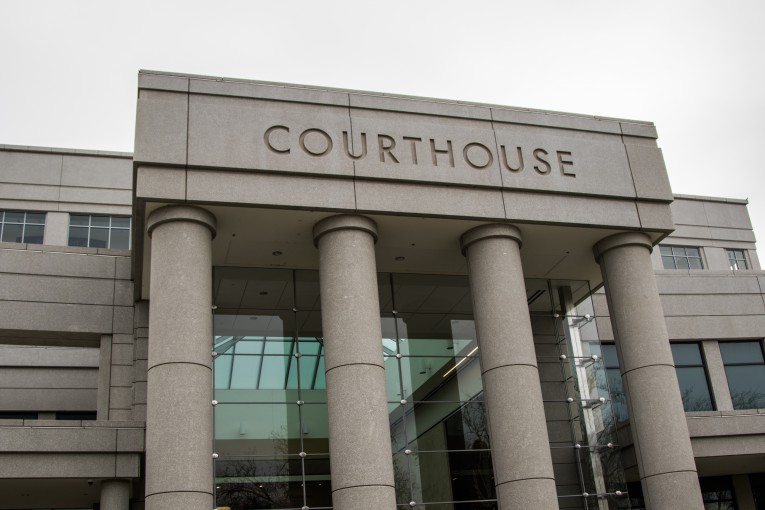
WOODLAND, Calif. — After hearing nearly 10 minutes of arguments Friday morning, a Yolo County Superior Court judge ruled it was not in the interest of justice to send Michael Angel Lopez back to a state hospital for another competency restoration attempt. Instead, Judge Clara Levers referred his case to CARE Court after reviewing his decades-long history of mental illness, cognitive disability and repeated unsuccessful treatment.
Lopez appeared remotely from Fourth and Hope for what was scheduled as a placement review. The hearing centered on whether the court should order him restored to competency through the Department of State Hospitals or pursue another option.
Deputy Public Defender Ron Johnson argued that another commitment to a state hospital would likely repeat a cycle that had already failed.
Johnson told the court Lopez had previously spent approximately three years at Napa State Hospital without being restored to competency. Afterward, Lopez remained under conservatorship for several years before eventually being released when evaluators determined he was no longer gravely disabled because he was living in a residential facility.
Johnson said Lopez’s condition involves significant cognitive impairment that affects his ability to understand legal proceedings.
“In speaking with Mr. Lopez myself, he has become very adept at answering affirmatively to get by when he doesn’t understand what’s actually being said,” Johnson said. “If you ask him what’s being said or what’s meant, he’s unable to respond.”
Johnson argued that Lopez’s lengthy period of homelessness and methamphetamine use only worsened those cognitive limitations. Although Lopez had struggled for years while homeless, Johnson said he had recently been receiving services through Fourth and Hope, where staff had been attempting to connect him with CARE Court resources.
Based on Lopez’s history, Johnson argued there was little reason to believe another restoration effort would succeed.
“It is highly likely that if he is sent to a state hospital setting again, he will simply return as not competent to stand trial and not restorable based on what we know from the history,” Johnson said.
Rather than another competency restoration attempt, Johnson argued the court should allow Lopez to pursue other treatment options available through community-based programs or conservatorship, if appropriate.
Deputy District Attorney Zach Gosda disagreed, arguing that Lopez continued to deteriorate because he refused treatment and lacked insight into his mental illness.
“I think every report indicates that he will not engage,” Gosda said. “He denies that he’s mentally ill. He will not engage in outpatient treatment, and he’s not suitable for outpatient based on CONREP’s report and the doctor’s report.”
According to Gosda, Lopez continued spending his money on methamphetamine while living on the streets and repeatedly decompensated without structured supervision.
“He needs a higher level of care,” Gosda argued. “I don’t think we’re going to accomplish anything while he’s out of custody.”
Gosda also maintained that restoration would improve public safety and pointed to the recommendation from CONREP (Conditional Release Program) that Lopez be committed to the Department of State Hospitals.
Before issuing her ruling, Judge Levers carefully reviewed the factors required under California law.
She noted Lopez’s extensive criminal history dating to 1984, including theft offenses, numerous drug-related convictions, a felony burglary conviction and a misdemeanor conviction for setting fire to a structure. She also reviewed the pending cases before the court, observing that nearly all involved controlled substance offenses, including a felony charge alleging Lopez possessed methamphetamine after entering the jail with a small bindle hidden in his sock.
The judge also reviewed the competing evaluations before the court.
While the CONREP report recommended another commitment to the Department of State Hospitals, Judge Levers gave significant weight to a March 24 report prepared by Dr. Sanchez Barker, which concluded that additional hospitalization was unlikely to provide meaningful clinical benefit.
The judge acknowledged that another restoration attempt could provide some public safety benefit but described that benefit as only “marginal,” given the nature of the pending charges and Lopez’s history.
“The court finds that it’s not in the interest of justice to restore him to competence,” Judge Levers said.
Instead of ordering Lopez back to a state hospital, Judge Levers announced she would initiate a referral to CARE Court on the court’s own motion. She directed that both Dr. Sanchez Barker’s March 24 evaluation and the June 4 CONREP report serve as the petition to begin CARE Court proceedings.
The court also modified Lopez’s release conditions.
At the request of probation, Lopez’s custody status was changed from supervised own-recognizance release to straight own-recognizance release. He was ordered to obey all laws and remain subject to searches for controlled substances and drug paraphernalia.
Judge Levers scheduled a status hearing for Sept. 4 at 9 a.m. in Department 9 to receive an update on Lopez’s CARE Court referral and determine what additional proceedings, if any, may be necessary.
Follow the Vanguard on Social Media – X, Instagram and Facebook. Subscribe the Vanguard News letters. To make a tax-deductible donation, please visit davisvanguard.org/donate or give directly through ActBlue. Your support will ensure that the vital work of the Vanguard continues.
