
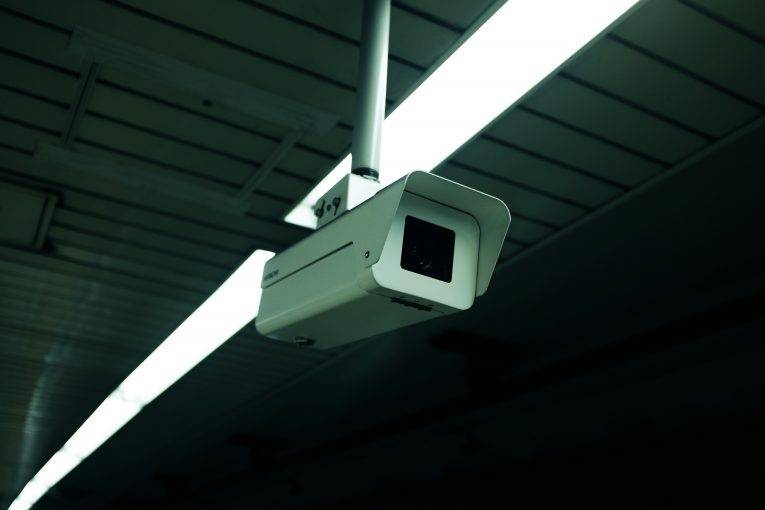
Surveillance Boosters Tout the Benefits of Deterrence, But There’s a Big Problem With That
Yesterday I wrote about how the Trump Administration is creating a “Model Cities Initiative” (MCI) grant initiative that would more accurately be called “Nightmare Cities.” It seeks to impose an authoritarian and ideological approach to policing that is heavily based on surveillance, boyish conceptions of dominance and toughness, and the use of force.
I didn’t mention this yesterday but in the program’s grant language I detected a note I often hear in discussions of surveillance programs: the goal of “deterrence.” “Funding awarded through MCI will emphasize common sense policing, including prioritizing deterrence,” Trump’s Justice Department declares in its call for cities to “supercharge” law enforcement and expand police surveillance. [emphasis added]
If you pay attention to surveillance technology, “deterrence” is a word you hear a lot. Over and over again, proponents of new surveillance technologies promise their products will “deter crime.” Viewed narrowly, of course, deterrence is a good thing — we all want to stop crime. But when you hear that word used in connection with surveillance, it should set off alarm bells in your head.
In 2019, the Baltimore police decided to start flying an aircraft over the city equipped with giga-pixel cameras that can videotape the movements of all cars and pedestrians in a 32-square-mile area. The head of the company that performed the flights for the police declared that their goal was “deterring crime in the community.” When it comes to people tempted to commit crimes, another supporter declared, “I want them to be worried that we’re watching. I want them to be worried that they never know when we’re overhead.” Another proponent of aerial surveillance proclaimed, “If drones watch potential criminals, they deter dishonest behavior.”
This might all sound like a good thing until you pause to reflect that drones and surveillance aircraft don’t just watch criminals — they watch everybody. They don’t just make people thinking about committing a crime feel anxious about being watched — to make criminals feel that way you have to make everybody feel that way because you don’t know in advance who might commit a crime.
It’s a simple point, but the way boosters of surveillance talk, it seems as if this hasn’t occurred to them — and it should be pointed out every time they say it.
The same argument about deterrence is un-self-consciously made by peddlers of other technologies. Flock, the license plate surveillance company, argues against that its system helps “to deter and solve crime,” while a seller of patrol robots touts “mobile physical deterrence.”
Sometimes law enforcement wants people to feel not just watched, but actively intimidated. Some police departments have used militarized equipment to frighten and intimidate people exercising their rights, a tactic the profession calls a “show of force.” And the same logic applies. Whether or not such untargeted tactics deter wrongdoing by a few people, they chill dissent and darken and degrade people’s experience of exercising their rights — or, when used routinely, their quality of life overall. The Los Angeles Police Department, for example, constantly flies loud, militaristic police helicopters over the city — especially lower-income, less white parts of the city — on “the theory that would-be criminals tend to rethink their nefarious plans when there’s an airship hovering overhead,” as the Los Angeles Times put it. Intimidation has certainly been a hallmark of the Trump invasions of federal agents into local communities.
In some specific contexts, of course, targeted deterrence can be a good thing. A security guard in a bank, for example, may help deter robbers without impinging on everybody else’s freedom in any important ways. People expect a certain amount of watchfulness in a bank. The same holds true in many other narrow circumstances.
But it’s not the same when the context is entire neighborhoods or other large swaths of public space — places where people live their lives. So when you hear someone say “our surveillance technology will deter crime by making criminals feel like they’re being watched,” just remember what that means: everyone will feel like they’re being watched. In some limited contexts that might make sense but at a minimum a recognition of this simple fact needs to be part of every conversation and debate in which “deterrence” is used as an argument.
Jay Stanley, Senior Policy Analyst, ACLU Speech, Privacy, and Technology Project
Follow the Vanguard on Social Media – X, Instagram and Facebook. Subscribe the Vanguard News letters. To make a tax-deductible donation, please visit davisvanguard.org/donate or give directly through ActBlue. Your support will ensure that the vital work of the Vanguard continues.
