
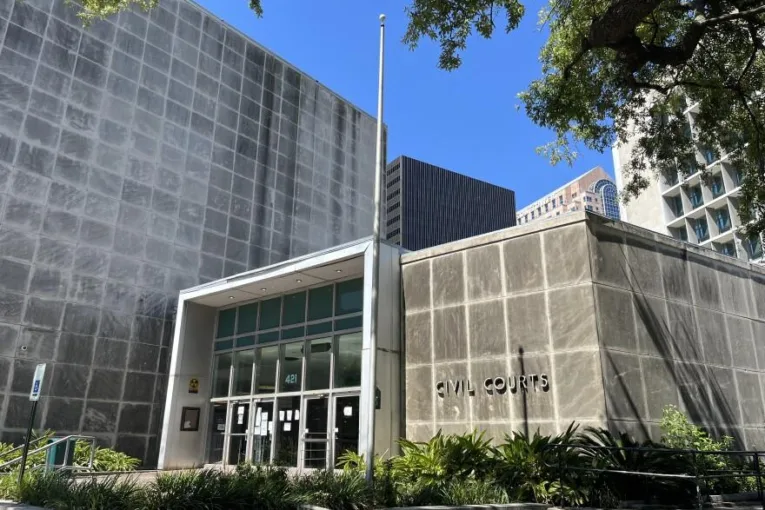
LOUISIANA — Louisiana’s justice of the peace courts have generated millions of dollars in eviction fees over the past decade, with some judges earning hundreds of thousands of dollars annually from a system that compensates them directly through court fees, according to a nine-month investigation published by The Guardian on Oct. 20.
The investigation raises questions about whether a judicial compensation system tied to court filings creates financial incentives that undermine impartiality in eviction proceedings, an issue now at the center of a federal class-action lawsuit.
Louisiana has approximately 390 elected justices of the peace who handle evictions, small claims and other matters. They are not required to be attorneys when initially elected, and the minimum educational requirement is a high school diploma.
The Guardian reviewed more than 11,000 pages of eviction records and 3,400 financial disclosure forms covering 2016 through 2025. Its analysis found that the 10 highest-revenue justice of the peace courts collected nearly $31 million in fees over the decade, with their judges retaining nearly $12 million as personal compensation.
The judges also received approximately $1.2 million in salaries paid by their parishes, while the remaining fee revenue covered constables, court personnel and operating expenses.
Under Louisiana law, including provisions amended through House Bill 150, sponsored by state Rep. Marcus Bryant, justices of the peace can collect fees for eviction proceedings and writs authorizing the physical removal of tenants.
One justice, Chuck Cusimano II, who presides over a court in Jefferson Parish outside New Orleans, earned more than $400,000 in 2025, including his parish salary.
That compensation exceeded the annual salary of U.S. Supreme Court Chief Justice John Roberts.
Between June 2025 and May 2026, Cusimano’s court ruled on nearly 3,300 eviction cases, according to The Guardian’s examination of court records.
The investigation found that eviction fees accounted for the majority of Cusimano’s compensation and that 98% of eviction filings involved nonpayment of rent.
One landlord, 1st Lake Properties, accounted for more than 60% of the court’s eviction docket during the period examined, winning 1,974 eviction judgments.
Cusimano denied that the compensation arrangement created a conflict of interest.
“I don’t see a conflict at all,” he told The Guardian. “It’s fee based, and they pay upfront to us, irrespective of the outcome.”
However, compensation varies substantially among justices. The nonprofit news outlet Bolts reported that one justice in Caddo Parish collected more than $108,000 in fees in 2023, while another in the same region collected approximately $900.
The funding structure is now the subject of a federal class-action lawsuit challenging whether judges whose compensation depends on court fees can provide constitutionally impartial hearings.
The lawsuit, George v. Sanders, was originally filed in February 2025 by the Southern Poverty Law Center, the National Housing Law Project and attorney William Quigley on behalf of tenant Latoria George.
George’s individual claims were subsequently dismissed without prejudice after she failed to comply with court orders, but the litigation continued with Johnnie Rushing as the remaining named plaintiff.
The case challenges the compensation practices of East Baton Rouge Parish Justice of the Peace Steven Sanders, whose court reportedly handles between 300 and 400 eviction cases monthly.
According to the original complaint, the system creates an “incentive for him to maximize the number of eviction cases filed in his court by ruling in favor of landlords, who select where to file a petition for eviction.”
The plaintiffs argue that the financial arrangement creates both personal and institutional conflicts of interest because judges depend on fees to supplement their salaries and finance court operations.
Sanders’ court collected approximately $629,000 in fees in 2023, according to financial records cited by Bolts.
The Guardian reported that Sanders’ court generated more than $753,000 in fees in 2024, approximately 90% of which came from eviction proceedings. Combined with his parish salary, Sanders earned more than $299,000 that year.
The lawsuit also challenges restrictions on appellate review for tenants whose eviction cases are heard in justice of the peace courts.
Unlike tenants whose cases originate in district or city courts, tenants challenging a justice of the peace ruling must seek a new trial in district court rather than pursue a conventional appeal.
The plaintiffs argue that the difference in appellate rights violates the Equal Protection Clause of the 14th Amendment, while the financial conflict allegations arise under the amendment’s Due Process Clause.
In a significant development on Sept. 25, U.S. District Judge John W. deGravelles denied Sanders’ motion to dismiss the lawsuit and granted class certification.
The ruling certified a class covering tenants who currently face or will face eviction proceedings before Sanders’ court in East Baton Rouge Parish.
The decision allowed the constitutional challenges to proceed but did not determine whether the fee system itself violates the Constitution.
The financial burden of eviction proceedings can extend beyond the initial court costs. The Guardian reported that many residential leases require tenants to reimburse landlords for legal expenses, leaving tenants responsible for costs associated with their own evictions.
Those expenses can accumulate alongside unpaid rent, late fees and moving costs, increasing the financial pressure on households already struggling to remain housed.
The Guardian found that the annual eviction filing rate in Cusimano’s district approached one in five renter households, nearly three times the national average used in its comparison.
Chris Kerrigan, an attorney with Southeast Louisiana Legal Services, described difficulties obtaining fee waivers for low-income tenants.
According to Bolts, Kerrigan was told that court personnel did not provide fee waiver applications because the court operated as a for-profit institution.
The constitutional questions surrounding Louisiana’s eviction courts resemble issues previously raised about financial incentives in the state’s criminal justice system.
In 2019, the U.S. Court of Appeals for the Fifth Circuit ruled in Cain v. White that Orleans Parish Criminal District Court judges had a conflict of interest because they controlled a Judicial Expense Fund supported partly by fines and fees imposed on defendants.
The appellate court concluded that the arrangement failed “to provide a neutral forum for determination of such persons’ ability to pay.”
Unlike the arrangement challenged in Cain, where the funds supported court operations rather than judges’ personal compensation, Louisiana’s justice of the peace system permits judges to retain portions of the fees collected in their courts.
The plaintiffs in the current lawsuit argue that the arrangement creates a direct financial incentive to attract eviction filings and issue eviction judgments.
Lisa Foster, a retired California Superior Court judge and former U.S. Department of Justice official, told The Guardian that the compensation system was “blatantly unconstitutional.”
“Without question, the Louisiana justice of the peace system has failed its citizens, yet no one seems to be taking action,” Foster said.
The federal litigation will determine whether the challenged compensation structure and limitations on appellate review violate constitutional protections, with the September ruling allowing the certified class to pursue its claims.
To comment please go to one of these social media platforms:
Facebook: https://www.facebook.com/DavisVanguard
LinkedIn: https://www.linkedin.com/company/peoples-vanguard-of-davis-inc/
Instagram: https://www.instagram.com/davisvanguard/
X: https://x.com/davisvanguard
Bluesky: https://bsky.app/profile/vanguardnewsgroup.bsky.social
Subscribe to the Vanguard News letters. To make a tax-deductible donation, please visit davisvanguard.org/donate or give directly through ActBlue. Your support will ensure that the vital work of the Vanguard continues.
