
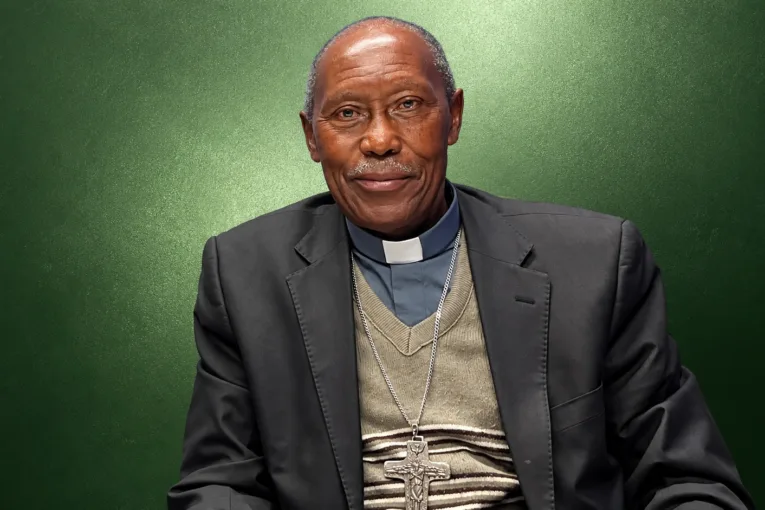
AURORA, Colo. — A federal judge ordered the release of 78-year-old Ugandan pastor Edward Nalwamba after determining that the federal government had failed to demonstrate his deportation was reasonably foreseeable, ending approximately 13 months in U.S. Immigration and Customs Enforcement detention.
Nalwamba, who is approaching his 79th birthday, was released Oct. 20 following an Oct. 19 ruling by U.S. Magistrate Judge Cyrus Y. Chung, according to Colorado Newsline and court records from the U.S. District Court for the District of Colorado.
Nalwamba has lived in the United States since 2002, when he arrived for a religious conference. He remained in the country after his visa authorization expired and subsequently worked in religious ministry and as a caregiver for people with developmental disabilities.
Immigration authorities detained Nalwamba in September 2025, despite his having previously lived under federal supervision for years following an earlier period of immigration detention that ended in 2011.
In his Oct. 19 order, Chung determined that federal officials had failed to establish that Nalwamba’s removal was likely in the reasonably foreseeable future. The court concluded that his continued detention exceeded the limits established by federal law and Supreme Court precedent.
The ruling relied on the Supreme Court’s 2001 decision in Zadvydas v. Davis, which established limits on the federal government’s authority to detain noncitizens after a final removal order has been issued.
Under that decision, detention beyond six months may become legally unjustified when a person provides good reason to believe removal is not reasonably foreseeable and the government cannot rebut that showing.
Government attorneys argued that Nalwamba contributed to delays in the removal process by allegedly failing to cooperate with efforts to obtain travel documents and facilitate his deportation. The court found the evidence insufficient to justify his continued confinement.
The decision did not overturn Nalwamba’s underlying removal order or grant him immigration status. He remains subject to a final order of removal while pursuing efforts to reopen his asylum proceedings.
According to Colorado Newsline and The Washington Post, Nalwamba has expressed fears of persecution in Uganda because of his criticism of government abuses. He previously sought asylum in the United States but encountered legal obstacles because his application was not filed within the statutory deadline.
Nalwamba’s detention also raised concerns about his deteriorating health at the ICE detention facility in Aurora.
Supporters and legal advocates reported that he lost approximately 35 pounds during his detention, experienced respiratory difficulties and eventually became unable to walk without assistance.
Following his release Oct. 20, fellow detainees reportedly helped carry Nalwamba to a waiting vehicle because he had not been provided a wheelchair when leaving the facility.
Nalwamba expressed gratitude for their assistance.
“That showed me they are good people by the way they went (out of their) way. They just did a good thing and they went away,” he said, according to Colorado Newsline.
One of his immigration attorneys, Joy Athanasiou, described the circumstances surrounding his release as “heartbreaking, and it was infuriating.”
Nalwamba also described his treatment during detention.
“It is like you are an animal, like people are taking care of goats or cows. I have never imagined human beings treated like I saw in this place,” he said.
The Department of Homeland Security disputed allegations that Nalwamba had been denied appropriate medical care while detained.
Unlike criminal incarceration, immigration detention is classified as civil confinement, intended in part to facilitate immigration proceedings and removal rather than impose criminal punishment.
The Supreme Court’s decision in Zadvydas limits the government’s ability to continue detention after a final removal order when there is no significant likelihood that removal can be accomplished in the reasonably foreseeable future.
Nalwamba’s release ends more than a year of immigration detention, although his legal efforts to remain in the United States are unresolved.
Federal authorities retain the ability to pursue his removal, but the court’s ruling prevents his continued detention under the circumstances presented in the case.
To comment please go to one of these social media platforms:
Facebook: https://www.facebook.com/DavisVanguard
LinkedIn: https://www.linkedin.com/company/peoples-vanguard-of-davis-inc/
Instagram: https://www.instagram.com/davisvanguard/
X: https://x.com/davisvanguard
Bluesky: https://bsky.app/profile/vanguardnewsgroup.bsky.social
Subscribe to the Vanguard News letters. To make a tax-deductible donation, please visit davisvanguard.org/donate or give directly through ActBlue. Your support will ensure that the vital work of the Vanguard continues.
