
OAKLAND, Calif. — California Attorney General Rob Bonta filed a lawsuit Friday alongside a coalition of 21 attorneys general and two governors challenging the Trump administration’s attempt to divert federal funding from housing projects, arguing the move could put thousands at risk of homelessness.
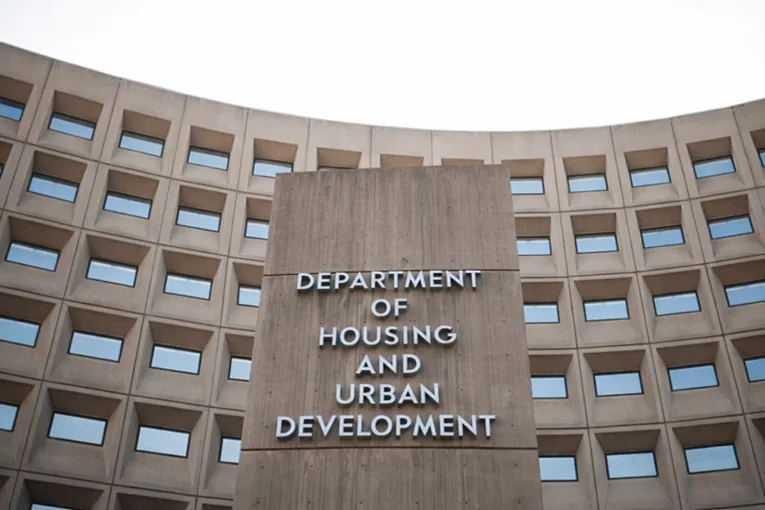
The U.S. Department of Housing and Urban Development’s Fiscal Year 2026 Notice of Funding Opportunity for the Continuum of Care Program indicates the agency seeks to “steer funding away from permanent supportive housing projects.”
The Continuum of Care Program is “the federal government’s flagship program for funding housing and other services for individuals at risk of and experiencing homelessness,” which the U.S. Department of Housing and Urban Development uses to distribute “billions of dollars each year to state, local and nonprofit entities to provide housing and services to families and individuals facing homelessness.”
The complaint states that HUD has implemented the Continuum of Care Program to further its stated policy of “implement[ing] a Housing First approach to reducing homelessness, and driv[ing] equitable community development.”
However, last week’s press release from Attorney General Bonta noted that the U.S. District Court for the District of Rhode Island “granted critical parts of the coalition’s motion for summary judgment, ruling that HUD’s conditions restricting CoC funding are unlawful and cannot be implemented.”
The successful federal ruling blocked “HUD’s 2025 CoC NOFO” from diverting “more than $3 billion in federal funding from those [housing] projects.”
Attorney General Bonta said, “The Trump Administration is once again trying to undermine HUD’s longstanding Housing First approach that has kept and continues to keep our most vulnerable residents housed.”
The lawsuit states that “the Trump Administration has embraced policies that risk trapping people in poverty and punishing them for being poor.” The scoring criteria in “HUD’s 2026 CoC NOFO” were found to “unlawfully [penalize] applicants for continuing to follow HUD’s longstanding Housing First approach.”
This penalization comes in the form of “steering funding away from proven low-barrier housing that helps people exit homelessness and toward programs that impose conditions before individuals can access housing.”
The FY 2026 NOFO seeks to “re-implement a cap on permanent housing,” which would make $1.3 billion unavailable for CoC-funded permanent housing projects and result in “tens of thousands of formerly homeless individuals and families being evicted back to the streets, with states and local governments left to pick up the pieces.”
Additionally, “Defendants have failed to adequately explain their abandonment of Congressionally approved Housing First policies by setting a cap on permanent housing,” leading the coalition to argue that “the De Facto Cap and 2026 Service Requirement Conditions are blatantly arbitrary and capricious.”
The press release noted that the “set-aside would effectively cap permanent housing funding below levels necessary to maintain existing projects,” and estimates by the National Alliance to End Homelessness show the decision “could put at least 97,000 residents of CoC-funded permanent housing at risk of losing their housing.”
Today’s press release stressed that “[p]ermanent supportive housing provides long-term housing stability, transitional housing provides temporary shelter intended as a bridge to permanent housing, and supportive service-only projects provide services without housing assistance.” The De Facto Cap would prevent individuals from obtaining these opportunities and increase their likelihood of housing instability.
The policies “undermine CoC’s goal of ensuring that individuals and families who have exited homelessness are not forced back onto the streets, as well as Congress’s directive that HUD prioritize renewal funding to support that same objective.”
Attorney General Bonta’s press release states that “Congress has also acted to protect renewal funding for those projects,” making it clear that permanent supportive housing must be protected, and that the state “will continue fighting to ensure that those who have secured housing stability do not lose it.”
Follow the Vanguard on Social Media – X, Instagram and Facebook. Subscribe the Vanguard News letters. To make a tax-deductible donation, please visit davisvanguard.org/donate or give directly through ActBlue. Your support will ensure that the vital work of the Vanguard continues.
