
Key points:
- Davis sees unusual sight of apartment signs advertising availability.
- Davis had under 1% vacancy rates for decades, now 7-10% rentals are vacant.
- UC Davis plans to house nearly half of Davis-based students in future.
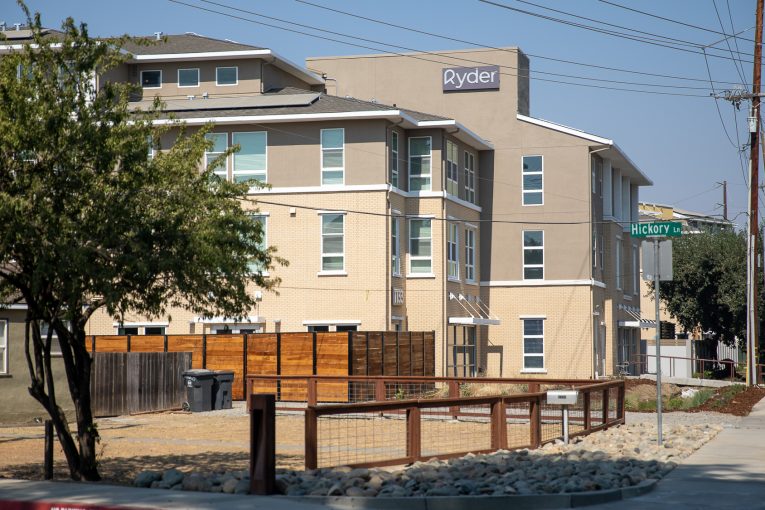
This summer, if you drive through Davis, you see an unusual sight: signs on apartment buildings advertising the availability of units.
It wasn’t long ago that such signs were rare, if not non-existent. For decades, Davis routinely had vacancy rates of under 1 percent. Students would line up in January and February, some even sleeping overnight to get their names on a list.
I am not ready to say that the housing crisis in Davis is over. But data is beginning to show that these anecdotal observations are not wrong.
On Bill Buchanan’s Davisville show this week, Davis real estate broker and manager Kit Boschken said that between 7 and 10 percent of rentals in Davis are currently vacant, an unusually high number, especially in August. A few years ago, that number was under 1 percent.
Why is the rate this high now? Boschken pointed to several factors: the increase in student housing in recent years, changes in enrollment demand, rising inventory in the for-sale market, the Trump administration’s cuts in research funding that reduced local demand for rentals and commercial space, and even the draw of Midtown Sacramento for upper-division UC Davis students who only need to be on campus a couple of days per week.
Boschken predicted that rents will come down next year, though not drastically. “I think it’ll be a slow progression downward to a point,” she said. “I don’t think we’re going to go from $1,000 a bedroom to $700 a bedroom. It’s not going to be that big of a drop. But owners are going to have to be more realistic on what they want for rent, and are going to have to put some money into the properties.”
The Davisville discussion aligns with a recent UC Davis survey. About 4 percent of market-rate apartments in Davis were vacant in fall 2024, the highest since the university began publishing a blended vacancy rate in 2017. Rents increased only slightly, by a combined average of 1.6 percent.
The UC Davis Office of Student Housing and Dining Services noted that the increase follows a seven-year period in which the university added more than 6,260 new apartment and residence hall beds. The city of Davis also approved numerous student housing projects during that period.
Michael Sheehan, associate vice chancellor for housing, dining and divisional operations in Student Affairs, said the improvement “is a direct result of the planning, hard work and partnership with the city.”
The campus has met its 2023 target of 15,000 student beds under a 2018 memorandum of understanding with the city and county. This fall, UC Davis housed more than 15,000 students and their family members on campus, representing about 41 percent of Davis-based students. That’s up from 29 percent in 2016-17.
The university is not stopping there. UC Davis will break ground on the Segundo Infill Project this spring, adding 500 more beds by 2027, and it has begun planning for a new West Village apartment complex. The campus’ long-range development plan anticipates housing nearly half of Davis-based students in the coming years.
The turnaround is striking. Just two years ago, students were still forced to camp overnight in front of apartments in the cold, hoping to secure a lease for the following academic year. Lines stretched for hours, and many left empty-handed. Students testified before the city council in early 2023 about the stress and inequity of a market that required them to sign contracts nine months before moving in.
Now, property managers are offering incentives and move-in specials to fill units. Nearly 30 percent of survey respondents reported decreasing rents in 2024, compared with just 10 percent the year before. Forty-three complexes offered incentives — more than double the year prior.
How did Davis accomplish this? The answer is simple: UC Davis added thousands of student housing beds, and the city approved multiple large apartment projects.
That doesn’t mean the overall housing crisis is solved. Davis has barely touched the issue of family and workforce housing. The overall market remains tight, and the city is still obligated to meet its housing requirements under state law.
But for now, at least, the student housing crisis in Davis — long a defining feature of the community — has been substantially alleviated. And that is a milestone worth recognizing.
Follow the Vanguard on Social Media – X, Instagram and Facebook. Subscribe the Vanguard News letters. To make a tax-deductible donation, please visit davisvanguard.org/donate or give directly through ActBlue. Your support will ensure that the vital work of the Vanguard continues.

Don’t know how accurate any of this actually is, but the student housing market is different than the “family/worker” market.
The reason being that students only need space for themselves, and have to travel frequently between campus and home. Workers/families do not have this same criteria – which is why, for example, they seek housing farther away where they get more for their money (such as Spring lake). And for the most part, such households have more than one worker, working at different locations.
Workers/families seek “permanent” housing – not just housing for a couple of years.
I don’t know anyone in the “slow growth community” who argued against UCD providing more housing for its students. (In fact, I’d say that some in that community were the primary catalyst for UCD to do so.)
I keep asking this question (without response), but is UCD still planning to house more of its own workers, as well? (As they do regarding the housing in back of Davis Commons shopping mall?)
And is UCD actually hiring anyone these days?
Also, perhaps one of the growth activists on here can explain why they advocate for more jobs in the city (or more accurately – just outside of the city on farmland), while simultaneously shouting “housing shortage”. And the reason that they believe that Davis residents who work at a state job in Sacramento, for example, will suddenly abandon their own careers, retirement, etc. (And the reason that they think they’d be hired at some new company in Davis in the first place.)
Ron: the student population is a de facto permanent presence in the community even if the individual students rotate through.
I think you missed my point: Students (on an individual level) have different priorities than families/workers.
As such, proximity to campus (or actually being housed on campus) is likely one of their highest priorities, and they’re more-willing to overlook other downsides regarding particular locations (since they know it’s only “temporary” for them on an individual basis).
As I recall, this was also one of the arguments in favor of Nishi (and the air quality concerns). That is, students will only be there for a short time on an individual basis (and perhaps that they’re young enough to “take it” without adverse effects).
I think you missed the point – you’re assuming that matters without showing it matters with research/ evidence.
One only needs to look at “who” lives “where” to see the evidence.
Do you think there’s a lot of families/non-students living in the new student-oriented apartments in Davis? (I already know that the student housing on campus REQUIRES occupants to be students.)
And what type of demographic do you suppose lives in Spring Lake?
In any case, it will be interesting to see what happens if Nishi is ever built, considering that you’re claiming that the need for student housing has already been met.
(By the way, the Vanguard’s website seems rather unresponsive/slow, this morning.)
Argument is not evidence
Again, the evidence is there. Are you actually suggesting some kind of study needs to be done, to figure out who lives in student housing?
And who lives in places like Spring Lake?
And speaking of evidence, I find it in short supply in regard to this (and most of your) articles, as well.
The really unfortunate part (for Davis) is that the megadorms don’t count toward RHNA targets in the same manner as any other type of housing. And city officials knew that ahead of time, since it was specifically pointed out prior to approvals.
But yeah – have it your way in the absence of a research study: You believe that Spring Lake is full of UCD students, and that student housing in Davis is occupied by families and non-students.
Makes “sense” to me (in some kind of alternate universe).
Why should UCD house workers? No other employer in the region is required or even asked to provide company housing. In fact, company housing has a rather bad reputation.
Beyond that, are you just interested in disenfranchising UCD employees? UCD acts as a municipality but does not have any type of democratic representation for residents. This isn’t as important for students because they often register in their home town. Putting in UCD employees on campus disenfranchises them from local decision making. There’s no reason to have UCD provide housing.
Further, putting more housing on UCD for employees eats up the most precious ag land in the world due to UCD’s role in ag research.
I’m not seeing what your point is in this comment. So student housing demand is different (to some degree) from family housing demand. And??? Students may be moving out of the neighborhood duplexes which does increase missing middle market supply.
We could annex the campus and both faculty and students could participate locally. I don’t know why you are more comfortable with faculty being enfranchised to vote in Davis municipal elections than students. To me your argument is just another shameful rationalization of the dilution of student political power in Davis.
BTW, It’s likely that UCD is going to start building faculty housing on campus now that prevailing wage laws have been reformed.
Well, UCD must be thrilled that the City of Davis prioritized UCD’s housing needs over the needs of the Davis community. The approval of so many mega-dorms with exclusionary design for students only, adding literally, thousands of student beds, rather than building traditional apartments that would have been inclusive housing, and allow workers and families to live in, was a bad decision.
“Well, UCD must be thrilled that the City of Davis prioritized UCD’s housing needs over the needs of the Davis community. ”
Aren’t the needs of students who live in our community part of the city’s needs?
That seems like a question that should be asked of HCD, in regard to megadorms and RHNA targets. (And possibly – what responsibility that UCD itself should have.)
David,
The needs of the Davis community needs to be prioritized rather than UCD’s needs. Particularly when UCD keeps increasing its housing needs for its own students while not providing enough on-campus housing as the other UCs are. UCD can, and needs to take responsibility for the housing needs of its students, and it never has because the City keeps enabling UCD’s opportunistic behavior.
How do you separate the two when they are so intertwined?
Eileen
Again, UCD has a higher % of on campus housing than any other UC campus including UCB and UCLA. I already pointed you to the sources of that data when you were in error before. Please stop repeating information that you know is wrong.
And now you’re complaining because we now have sufficient student housing? Building those apartments gets students out of the duplexes and older single family homes in town. The market is fungible.
And what would UCD do to “prioritize Davis” in building more housing? Are you saying that UCD should be building other types of housing in Davis? I don’t see the logic in your statement. It seems that now that we’ve met the student housing demand for the moment, you need something else to target.
“The needs of the Davis community needs to be prioritized rather than UCD’s needs.”
Isn’t that what Village Farms is trying to do?
“That doesn’t mean the overall housing crisis is solved.”
Yes it does.
“Davis has barely touched the issue of family and workforce housing.”
It’s expensive-er than to live elsewhere. Otherwise, someone has to subsidize it. There, I touched it.
“The overall market remains tight,”
No it doesn’t. There is significant crossover between student housing and housing overall, despite RO’s claim to the contrary. Some housing is as-good-as student-only. But much housing that students live in could be used by students or non-students.
“and the city is still obligated to meet its housing requirements under state law.”
We fight national immigration laws. Surely we can fight state housing requirements — if the Council wanted to.
Join “Our Neighborhood Voices” and fight the power!
Alan M. says: “Some housing is as-good-as student-only. But much housing that students live in could be used by students or non-students.”
True.
My main point (in regard to non-student housing) is the same one you made:
Alan M. says: “It’s expensive-er than to live elsewhere.”
(And this is why the push toward density won’t achieve the claimed/desired result. Unless nearby, continuing sprawl is purposefully curtailed.)
Of course, the actual goal of the activists is to keep growing – otherwise there’d be no need for additional housing at all (infill, or sprawl). (But if they admitted that, they’d be saying the “quiet part out loud”.)
Alan M
We don’t need to subsidize family and workforce housing. We just need to specify to developers that they build that type of housing. We’ve run the numbers and the developers can actually make MORE money by building this type of housing on less land. It’s just that developers are caught up in their old ways of thinking, which is too often the case. Electricity rates are too high for the same reason (which I’ve been closely engaged in). Don’t simply assume that the private sector somehow knows how to do something the right way because in my professional experience they generally just continue to do it the same way without thinking.
It is likely that the biggest factor is the decline in enrollment of international students, which would affect UC Davis disproportionately.
https://www.visaverge.com/f1visa/2025-sees-significant-drop-in-international-student-enrollment-to-usa/
Since this has occurred rather abruptly, it is likely tied to immigration policies of the current administration, just as tourism to the US is dropping sharply.
https://www.visaverge.com/news/major-us-cities-face-sharp-tourism-declines-in-2025-linked-to-trump-policies/
These changes will have significant adverse economic impacts on many communities, including places like Davis where students are important drivers of the local economy.
Good catch, Don – and a factor that wasn’t mentioned in the article itself.
So what you’re saying is that the president whom you share a first name with has helped solve the local student housing crisis. :-)
And with the other budget cuts to UCD, has helped solve the entire UCD-generated “housing crisis”.
And is doing the same thing nationally, in regard to deportations.
Exactly Ron. Trump has solved the Davis housing crisis.
It’s going to be hard for Davis progressives to admit that.
Mission accomplished! (LOL)
Sorry guys those Chinese students subsidize American students. Trump is allowing 600,000 in.
From AP, President Trump said “President Xi would like me to come to China. It’s a very important relationship. As you know, we are taking a lot of money in from China because of the tariffs and different things,” he said. “I hear so many stories about ‘We are not going to allow their students,’ but we are going to allow their students to come in. We are going to allow it. It’s very important — 600,000 students.”
I guess you missed this paragraph from the link that Don Shor supplied:
“US international student enrollment dropped 11% from March 2024 to March 2025, losing 130,000 students.”
Don’s link tells us nothing about UCD enrollment of foreign students. It’s a national figure.
It also doesn’t tell us about the fall or whether the administration is shifting their policy.
https://www.ucdavis.edu/news/uc-davis-admits-record-high-number-first-year-studies
What we don’t know is how many who were accepted have decided to enroll, and how many are changing their plans due to federal immigration policies. DHS is about to promulgate a rule mandating that foreign graduate students finish within four years. That would be very consequential.
https://www.federalregister.gov/documents/2025/08/28/2025-16554/establishing-a-fixed-time-period-of-admission-and-an-extension-of-stay-procedure-for-nonimmigrant
Overall these immigration impacts could cost California as much as $1 billion and have significant impacts on local economies in cities like Davis.
“What the decline could cost
According to the NAFSA analysis, a potential 30-40% decline in new foreign students would yield a 15% drop in overall international enrollment in the U.S. That decrease would equate to nearly $7 billion in lost revenue and more than 60,000 fewer jobs.
The new estimate includes a breakdown on the possible impact the enrollment losses would have on each state. California would stand to lose more than $1 billion from the anticipated drop, and New York’s total cost would approach that total. Several other states — including Illinois, Massachusetts, Ohio, Texas, Michigan, Pennsylvania and Florida— would face financial losses exceeding $200 million each, according to the report.”
https://www.forbes.com/sites/michaeltnietzel/2025/08/03/international-college-students-could-drop-by-150000-this-fall-report-warns/
I suppose inducing a recession via random and irrational immigration restrictions is one way to deal with a housing shortage, eh?
“Trump is allowing 600,000 in.”
You believe this?
I’m old enough to be a watch what they do not what they say kind of guy but I do find it amusing when these sycophants are completely undermined by the fearless leader AKA Who’s your daddy.
Biden had his sycophants too even though he hadn’t a clue what was going on for at least the last two years.
As Gomer would say “Surprise, surprise, surprise.” Adding supply causes rents to go down. Who would have ever guessed? Oh that would be me because I learned about supply and demand in Econ 1 in college 50 years ago. After making that claim for 20 years on here and repeatedly being told I was wrong I have been vindicated by the empirical evidence. Now we need to do the same with housing for families. All we need to do is get rid of Measure J and I will be proven correct again.
Did you not notice that Don (and to some degree, the article itself) addressed declining DEMAND?
And where is it documented that rents have actually gone down (as a result of reduced demand or increased supply?) The article itself notes that rents have increased.
Though it is true that housing prices have been declining throughout the region and elsewhere.
In any case, why is it that the growth activists insist upon looking at only one side of the equation (and disregard changes in demand)?
And why is it that they don’t recognize that rising prices, for example, reduce demand (and vice-versa)?
Just in case anyone other than Ron G needs “help” with this (summarized by AI):
“The law of demand is an economic principle stating that, all else being equal, as the price of a good or service increases, the quantity demanded by consumers will decrease, and conversely, as the price decreases, the quantity demanded will increase. This inverse relationship is fundamental to understanding market behavior, as it explains why demand curves slope downward and how price influences consumer purchasing decisions.”
(Seems like some of the housing activists never took an Economics 101 course.)
The reason that demand is flexible is largely due to “alternatives”. And “alternatives” is a very broad category.
Also, it is notable that UCD’s annual vacancy rate analysis has claim it was only 4% which is less than half of what the local real estate experts say it is (i.e. 7%-10%). So on top of everything else, UCD’s vacancy rate low- balls the vacancy rate in Davis as well, so they can try to complain about the need for the City to provide housing for UCD’s needs.
So don’t count on UCD housing data at all, including how many students they claim they are housing on campus. So, looks like UCD is into “cooking the books” to manipulate the City into building more housing for them. So this is what we now know we can expect from UCD, and likely what they have been doing for a long time.
The 4 percent represented last fall whereas the 7 to 10 percent is an estimate for August 2025.
David,
UCD reported that 4% vacancy rate in in just this past February. So do you think the vacancy rate skyrocketed to 7%-10% in only six months? Give me a break. UCD is cooking the books and you can’t trust their housing “data” to try to manipulate the City into building the student housing that UCD can, and needs to be building far more on-campus housing for their own needs for their students.
There have been occasional spikes in the apartment vacancy rates in Davis over the decades that I’ve been following this topic. There were big increases in vacancy in 1991 and, of course, in 2020. The survey has been done since 2013 by BAE Urban Economics and their methodology is explained in the reports.
https://housing.ucdavis.edu/_pdf/vacancy-survey/2024-vacancy-survey.pdf
There is no evidence for your assertion that they are “cooking the books” or that you cannot trust their data.
Realtors use different metrics and I don’t know the source of Kit Boschken’s number cited on Bill Buchanan’s show. But the most important difference from one to the other is likely the time of year. Any dramatic change in the apartment vacancy rate this year will be reflected in BAE’s report for 2025 which will likely be released in February 2026 based on apartment surveys completed this fall.
But the study was based on last fall not February. And as others have noted a few things happened this year that might account for it, including the things mentioned by Don and other commenters.
“Davis had under 1% vacancy rates for decades, now 7-10% rentals are vacant.”
Bottom line is NO MORE HOUSING CRISIS in Davis.
Right David?
What will you write about now?
Read the title of this article – that’s what I’m saying
As I recall, some on here were using the vacancy rate as a justification to build more housing (until the vacancy rate reached 5%).
So using that logic, it sounds like some housing now needs to be torn down to reduce the vacancy rate (down to 5%).
We’ll get it right, though it might require some repetitive construction and tear downs over time.
I’ve largely come to the conclusion it’s impossible to have a conversation with you and just ends up frustrating people because your brain doesn’t work the way most other peoples brains work
As I noted in my comment, I’m just repeating the argument put forth by others on here – and adapting it to address the current situation. I’m sorry if you find that frustrating, but maybe it’s your brain that doesn’t work the way most others work.
But I’ll admit that I haven’t actually done the math to determine how many housing units will now need to be torn down, to lower the vacancy rate to 5%.
And if they ever build Nishi, I guess they’ll have to tear down even more somewhere else in town.
You got the argument wrong and the idea of tearing down housing is lunacy
I’m literally repeating the argument put forth by others on here, in regard to building (up to) a 5% vacancy rate (which has now been surpassed).
So maybe the lunacy starts with that.
But if not, then why is pursing a 5% vacancy rate in one direction “not lunacy”, but is in the other direction?
The argument put forth by others is about adjusting “supply” to reach 5%.
Again, just trying to figure out the logic put forth by others on here.
You’re not. The first problem is you’re conflating the rental housing market with the overall market. The second is the five percent figure is not a cap, it’s an indicator of a more healthy market. That doesn’t mean that you can’t surpass that vacancy and it certainly doesn’t mean that you should tear down housing if you surpass the vacancy rate. So as I told Keith, the article’s title is accurate – the student housing crisis IN DAVIS is alleviated – for now. That doesn’t mean that the overall housing crisis has been solved – it hasn’t.
I’m not conflating anything – I’m literally putting forth the same arguments that others have put forth on here, regarding adjusting supply to reach 5% vacancy rate (in regard to the local rental market).
I’m pretty sure that both you and Don have literally made that argument – many, many times.
And you still haven’t responded to my question, regarding the reason that it’s “not lunacy” to adjust supply in one direction, but “is” lunacy in the other direction.
Obviously, I’m not advocating anything here – just trying to figure out your logic.
I reiterate my point from earlier today – it’s impossible to have a conservation with you…
For fall 2025, UC Davis accepted 13,225 international student applicants, which is 24% of the total # of students admitted to UCD. That is the highest percentage of international students in the UC system.
Systemwide: “With 25,019 accepted international students in 2025, the UC admitted more students from abroad than in the past. In a press release, the university noted that the increased international offers were due to “rising uncertainty of their likelihood of enrolling.” That uncertainty comes from the changing immigration landscape. Recent policy shifts created confusion for both universities and international students.
As we reported previously, U.S. visa appointments were temporarily paused, creating further enrollment uncertainty. Although consular processing has resumed, it is proceeding with tighter scrutiny and more aggressive vetting, complicating many international students’ timelines and decisions.
In response to the current climate, the UC campuses extended more international offers than usual, anticipating that many students may not be able to follow through due to these external obstacles.”
https://www.universityofcalifornia.edu/about-us/information-center/freshman-admissions-summary
So they did plan somewhat for a drop-off in international students. Question is whether they anticipated the magnitude of these impacts.
The “yield rate” (accepted applicants who choose to attend) for international students systemwide in recent years is about 25%. If that prevailed for fall 2025, about 3300 new international students would choose to enter UCD this fall. They would typically be housed on campus, but their predecessors from previous years would be moving out into the community. Some move away. The continuing students may be choosing not to return in higher numbers than usual.
Given the visa uncertainties, and the harsh treatment of travelers that is getting considerable attention in international media, it is likely that the yield rate is dropping. Perhaps it is dropping significantly. While we won’t know until later in the season, and hard numbers can be difficult to find, a very high rental vacancy rate would be a leading indicator of this trend, especially if it also prevails for campus housing.
And that’s just for entering students. Graduate students may well have left due to funding curtailments for ongoing research, and uncertainty about future funding. Their departures would likely have more direct impact on the local housing market.
Short-term disruptions to the housing market such as occurred in the great recession or the pandemic do not affect long-term planning for the housing market.
The question is how long this ongoing chaos will continue, how much harm it will do to higher education and research, and what the ripple effect will be on businesses and local governments in communities where the university is a dominant employer and landlord. Ultimately this could be quite harmful to the local economies in UC-adjacent cities.
Let’s agree, for the purpose of argument, that UCD is understating the vacancy rate and therefore we are getting info that tells us we need more supply. If we continue building into a supply glut prices will go down and that is a good thing for people who are paying too much of their income for shelter.
AP: Colleges face financial struggles as Trump policies send international enrollment plummeting
https://apnews.com/article/international-f1-student-visa-trump-college-3f10a430b4ee48342ecb62d47c53cfbc