
Key points:
- “Most Californians — especially young Californians — can’t currently afford to buy a home in our state.” – Tom Steyer
- Tom Steyer urges California lawmakers to back Senate Bill 79.
- California faces an existential housing crisis, Steyer warns.
Tom Steyer is making an urgent appeal for California lawmakers and residents to back Senate Bill 79, calling the legislation a necessary step to confront what he describes as an existential housing crisis threatening the state’s future.
“Most Californians — especially young Californians — can’t currently afford to buy a home in our state,” Steyer wrote in his Substack post. “And if people can’t afford to live and build a life here, then nothing else we do to build a thriving economy will matter. We can’t let perfect get in the way of the good when it comes to addressing our housing crisis.”
In a San Francisco Chronicle op-ed, Steyer argued that outdated zoning codes have become a chokehold, restricting the supply of new housing and driving costs to historic highs.
“If we want to revitalize our cities, we need to change how we build,” he wrote. “That’s exactly what California Senate Bill 79 sets out to do.”
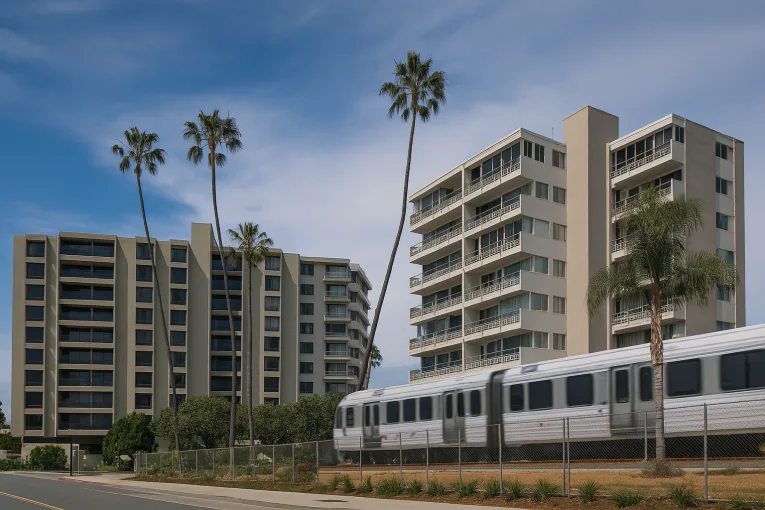
SB 79, authored by state Sen. Scott Wiener, D-San Francisco, would allow more mid-rise apartments near public transportation, cut through red tape for projects built on transit land, and require accountability measures to ensure housing targets are met. Steyer called the bill “smart, targeted and, frankly, long overdue.”
He warned that piecemeal solutions such as converting empty office towers into housing, though valuable, cannot come close to solving a shortage measured in the millions of units.
“Office conversions are complicated and costly,” he wrote. “In some cases, they’ll pencil out, and we should absolutely encourage them where they do. But let’s not kid ourselves. The scale of California’s housing crisis is measured in the millions of units. No amount of tinkering with empty offices will come close to providing enough housing.”
Steyer framed SB 79 as a lever to help cities build where it matters most, opening up underused land and allowing urban areas to grow again. He emphasized that the crisis is not merely about housing availability but about the broader health of California’s economy, environment and social fabric.
“The housing shortage drags down our economy by more than $100 billion every year, according to a McKinsey & Co. report, and it drives up poverty costs and fuels some of the highest per-capita homelessness rates in the country,” he wrote.
Steyer noted that the state’s struggles have become a national symbol of dysfunction.
“And the whole country is watching,” he wrote. “If the fourth-largest economy in the world — home to world-class universities and the tech industry — can’t figure out housing, then who can? Meanwhile, states like Texas are winning the narrative war by pitching themselves as affordable and ‘open for business.’ How California handles this moment will shape the national conversation and, in no small way, the future of American democracy.”
Still, SB 79 faces opposition.
Los Angeles Mayor Karen Bass and the Los Angeles City Council have voiced concerns about local control over housing and infrastructure. Some housing advocates argue the bill does not go far enough, while others say it gives too much deference to local governments.
Steyer acknowledged those criticisms but argued that inaction is the greater threat.
“Is S.B. 79 a perfect bill? No. (And very few are.),” he wrote on Substack. “I know Los Angeles Mayor Karen Bass and the L.A. City Council have come out against it, citing the need for local control over decisions on housing and infrastructure. Meanwhile, some housing advocates say S.B. 79 doesn’t go far enough, and other critics say it defers too much to local governments. But the fact remains: We have a housing crisis. We can’t let the perfect get in the way of the good — not when the stakes are this high.”
He also stressed the relationship between housing and California’s massive investment in public transit.
“Our public transit systems — BART, Muni and other agencies — are struggling. We’ve invested billions in them, but ridership lags, in part because too few people live close enough to use them. More housing near transit means more riders, more revenue and fewer car trips. Read: lower emissions and stronger communities,” Steyer wrote in the Chronicle.
SB 79, he argued, strikes a “careful balance” between state-level mandates and local flexibility. “It sets minimum standards so the housing crisis can’t be endlessly delayed, but it leaves room for cities to shape their own plans. That’s exactly the kind of balance we need: firm enough to matter, flexible enough to work.”
For Steyer, the bill’s urgency comes down to the lives of millions of Californians priced out of the housing market.
“This bill will make a real and meaningful difference in the lives of millions of working Californians right now,” he wrote. “And when we’re facing a need this pressing, our answer simply cannot be to do nothing.”
He placed the issue in urgent terms: “As of 2021, California had just 24 affordable homes for every 100 of the lowest-income renters, a gap of nearly one million units. By 2017, the median home price in California was more than 120% of the national average. Fewer than 1 in 3 Californians could afford a median-priced home.”
That shortage, he added, is already pushing families out of the state.
“We’re in the middle of a housing crisis, and the fact of the matter is that if people can’t afford to own a home in this state, they’ll leave. It’s that simple. If there are actions we can take to stop that from happening — and there are — then we should take them. And passing S.B. 79 is one of those actions,” Steyer wrote.
For Steyer, the urgency is not only about affordability but about ensuring California’s cities remain vibrant and inclusive. “Our cities should be engines of inclusion and innovation — not museums of what used to be. We don’t need more empty offices downtown. We need homes. We don’t need underused transit systems. We need ridership, density and equity,” he wrote in the Chronicle.
He closed his appeal with a call for political action.
“If that’s what you think too (and you live in California), then give your assembly member a call and let them know you need them to support S.B. 79,” he wrote. “That’s the only way this works. You can look them up right here.”
For Steyer, the choice is either to keep quibbling over imperfections while the housing crisis worsens, or act now with the tools at hand.
“When I hear leaders I respect hesitating, quibbling over whether SB79 is 100% perfect, I have to ask: What world are you living in?” he wrote.
Follow the Vanguard on Social Media – X, Instagram and Facebook. Subscribe the Vanguard News letters. To make a tax-deductible donation, please visit davisvanguard.org/donate or give directly through ActBlue. Your support will ensure that the vital work of the Vanguard continues

Why should anyone care what Tom Steyer thinks? Because he’s a rich hedge fund manager?
Triggered much?
I wondered because that’s your second Tom Steyer article this week.
I’m just curious on why you think it’s so important to write two articles on what Tom Steyer thinks about SB79?
That might have been a better way to frame your question, and I could have answered you.
Several points.
First – this point he made on Substack – “Most Californians — especially young Californians — can’t currently afford to buy a home in our state,” Steyer wrote in his Substack post. “And if people can’t afford to live and build a life here, then nothing else we do to build a thriving economy will matter. We can’t let perfect get in the way of the good when it comes to addressing our housing crisis.”
Second – I try to bring in a variety of different viewpoints on housing – even those I don’t agree with and especially those from people I don’t normally agree with.
For example, last year, I did a bunch on Steve Hilton, the right wing Fox Commentator who is running for Governor as a Republican this cycle.
https://davisvanguard.org/2024/03/hilton-unveils-policy-paper-on-housing-affordability/
“Why should anyone care what Steyer thinks?”
You don’t seem to care what anyone thinks except for things that agree with your already held beliefs.
David says: “And if people can’t afford to live and build a life here, then nothing else we do to build a thriving economy will matter.”
So apparently, thousands of houses are sitting empty because “no one can afford to live” here? That claim doesn’t make much sense. Maybe try knocking on a few doors, to see if anyone answers. Of course, they do sometimes consist of second or third homes (depending upon the location) – in which case that might not be the best method to see if someone is “home”.
Actually, the places where houses are dirt-cheap are often the ones sitting empty and dilapidated.
That was a quote from Steyer
Ah, yes – the same guy who claims that BART, for example, wasn’t designed to serve the current population (and is dependent upon more density some 55 years or so after it was built. Not to mention all of the growth that has occurred since that time.)
The same guy who suddenly/probably thinks San Francisco isn’t dense enough to ensure the viability of their transit system (MUNI), more than 100 years after it started service.
Trump may soon declare a national housing emergency, are you progressive everything is a housing crisis going to jump on board the Trump train?
“We’re trying to figure out what we can do, and we don’t want to step into the business of states, counties, and municipal governments,” Bessent told the Washington Examiner. “We may declare a national housing emergency in the fall.”
Bessent said housing affordability would be a critical leg of Republicans’ 2026 midterm election platform. Bessent declined to list any specific actions the president may take, but he suggested that administration officials are directly studying ways to standardize local building and zoning codes and decrease closing costs.”
https://finance.yahoo.com/news/trump-weighs-declaring-national-housing-193254754.html
The more interesting question is how people like you will react – will it compel you to acknowledge a problem? So far, Trump has made the problem worse.
“We’re trying to figure out what we can do, and we don’t want to step into the business of states, counties, and municipal governments,” Bessent told the Washington Examiner.
This was amusing.
I think the more compelling question is how people like you will react if Trump helps alleviate the housing problem.
Will people on your side be able to give Trump credit? Or will it still be TDS as usual.
So you’re admitting now that there’s a problem?
I give him credit for signing the first step act, but he didn’t solve mass incarceration. It’s going to be hard to solve the housing crisis, when he’s made it harder to build housing and he’s cutting HUD and housing for low income folks.