
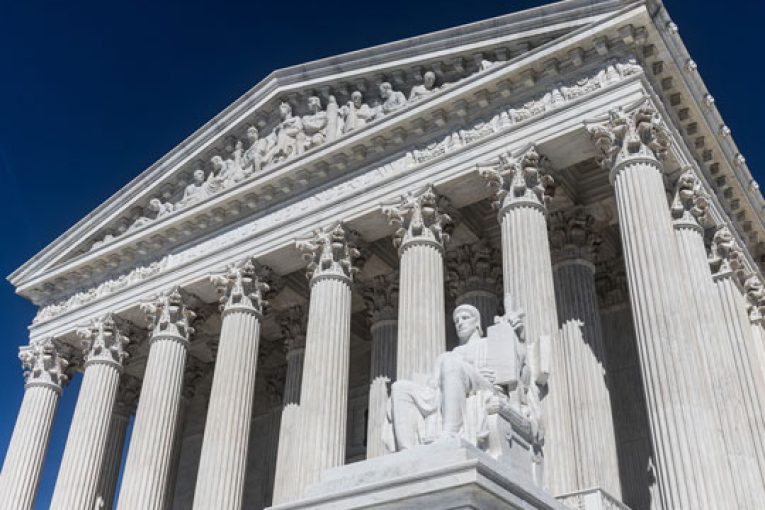
DAVIS, Calif. — UC Davis law professors Vikram David Amar and Alan E. Brownstein published an analysis Tuesday titled “The Good, the Bad and the Ugly in Last Week’s Los Angeles ICE Detention Case by the Supreme Court”, examining the merits and consequences of the Court’s decision in Noem v. Vasquez Perdomo and addressing Justice Brett Kavanaugh’s written opinion.
As Amar and Brownstein summarized, the Supreme Court lifted a preliminary injunction issued by a federal judge in Los Angeles, who ruled that Immigration and Customs Enforcement (ICE) had overly relied on “skin color, Spanish language use, occupation, and physical location” in selecting individuals for immigration investigation.
Amar and Brownstein noted that, among the plaintiffs, some were detained by ICE despite being U.S. citizens. The plaintiffs argued that the Fourth Amendment requires the government to have “individualized reasonable suspicion or probable cause of a person’s wrongdoing.” However, in a 6-3 decision, the Supreme Court ruled without a formal written opinion that it is within ICE’s authority to use the factors above, including race or ethnicity.
Amar and Brownstein acknowledged Kavanaugh’s effort to “explain” his decision, while the other five justices ruling in favor of ICE did not offer any reasons. Justice Sonia Sotomayor, one of the three liberal members of the Court, highlighted what she saw as a troubling pattern of increasing rulings without official reasoning. Amar and Brownstein also noted Kavanaugh’s recognition of restraints on the use of race, characterizing it as only a “relevant factor.”
However, Amar and Brownstein criticized Kavanaugh for relying on the controversial Los Angeles v. Lyons decision, in which the Court upheld the Los Angeles Police Department’s use of a chokehold that caused 16 deaths between 1975 and 1982. As they noted, the Court denied Adolph Lyons’ request for an injunction because he was unlikely to be subjected to another police chokehold.
Amar and Brownstein argued that Lyons was “bad law on its own facts,” making Kavanaugh’s reasoning doubtful. They asserted that Kavanaugh erred in comparing Vasquez Perdomo with Lyons, since Los Angeles residents, especially those of Hispanic descent, can encounter ICE agents repeatedly under the disputed policy.
Given Kavanaugh’s argument, Amar and Brownstein stated that future plaintiffs may not be able to sue even if ICE exclusively uses race when investigating potential undocumented migrants, although Kavanaugh disapproves of the exclusive use of race.
Amar and Brownstein also questioned Kavanaugh’s framing of “reasonable suspicion.” They pointed out that Court precedent requires more than “statistical correlations” to justify targeting individuals of a particular background, unless an explicit exception applies. They noted that an emergency docket is insufficient to create an exception for immigration enforcement.
Moreover, Amar and Brownstein found that Kavanaugh did not evaluate the percentage of undocumented migrants of Hispanic descent. Instead, he cited a statistic that the Los Angeles region contains 10 percent, or 2 million, alleged undocumented migrants. Justice Sotomayor promptly dissented against Kavanaugh’s reasoning, according to the professors.
Amar and Brownstein expressed concern over inconsistencies in the Court’s rulings. They noted that, while the Court ruled colleges cannot use race as a factor in admissions, it permitted ICE to use race as a factor in immigration investigations. The Court has historically treated race as a higher standard than other demographic factors, such as location, because of the country’s long history of race-based injustices. Yet Kavanaugh’s argument appeared to equate race with other demographic factors.
Finally, Amar and Brownstein criticized the district court for banning “any combination” of the four factors — skin color, Spanish language use, occupation, and physical location — without allowing for weighing among them. They argued that Kavanaugh could have vacated the lower court on that ground.
Follow the Vanguard on Social Media – X, Instagram and Facebook. Subscribe the Vanguard News letters. To make a tax-deductible donation, please visit davisvanguard.org/donate or give directly through ActBlue. Your support will ensure that the vital work of the Vanguard continues.
