
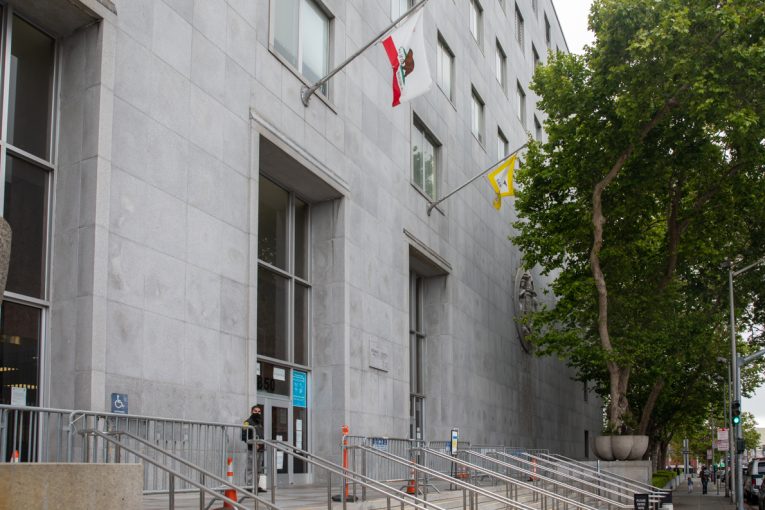
SAN FRANCISCO — A pretrial hearing this week in an eight-year-old DUI case highlighted serious questions about late discovery, evidence handling, and the ability of people accused of crimes to receive a fair and timely trial in San Francisco courts.
In a hearing Tuesday, Dec. 2, Deputy Public Defender Liliana Garcia litigated a motion to dismiss the case, arguing that her client’s right to a speedy trial had been violated. The hearing was held before Judge Maria Evangelista, who heard arguments from Garcia and Assistant District Attorney Sarah Quinones.
The accused in the case had blood samples taken eight years ago that were sent to a laboratory to determine whether substances were present at the time of driving. The lab, located in Pennsylvania, tested the sample, but it — along with approximately 102 other cases’ samples — was misplaced for more than six months, during which the evidence was stored under unknown conditions and temperatures.
This information was not disclosed to the defense until a late discovery in November 2025, eight years after the case was first brought to court.
Garcia argued that the sudden and late disclosure violated her client’s right to both a speedy and fair trial and prevented her from providing effective assistance of counsel. She said the mishandling of the evidence deprived the defense of the opportunity to have its own experts independently test the blood samples or meaningfully challenge the prosecution’s evidence.
Judge Evangelista acknowledged that the accused had suffered prejudice but denied the motion to dismiss. The judge cited the accused’s multiple bench warrants and participation in a primary caregiver diversion program, which she said contributed to the delay.
She transferred the case to Department 606 before Judge Stephen Murphy for trial and consolidation of all remaining pretrial motions. If those motions failed, the case was set for a jury trial to begin the following day.
Before Judge Murphy, the remaining pretrial motions included a motion to compel outstanding late discovery, a Brady motion seeking disclosure of exculpatory evidence related to the mishandled blood samples, a Trombetta motion arguing that favorable evidence had been lost or destroyed, a motion to suppress the blood test results and a Penal Code section 1385 motion to dismiss the case in the interest of justice.
Garcia told the court this was “a case that should be dismissed” because the defense was only learning critical facts at the eleventh hour after eight years of litigation. She argued that discovery produced so late forces the defense to operate in crisis mode rather than develop a coherent, well-investigated case over time.
Judge Murphy took the motions under submission over the lunch break and returned in the afternoon to question both sides further.
When the hearing resumed, Murphy told Garcia he observed that the motions shared an “overarching theme,” centered on the blood samples. He asked Quinones to explain how the samples were mishandled before ruling on the Trombetta motion.
Quinones said there were three blood specimen vials in the case and that only one had been sent to the Pennsylvania lab. The other two, she said, were stored in San Francisco and remained suitable for testing. She also stated that the mishandling occurred after testing and affected only one vial.
Garcia countered that focusing on a single vial ignored the broader due process problem — the extreme delay and the late disclosure of critical information. She told the court that some information was received “as late as just this morning, and in emails after 7 p.m. last night,” and required expert analysis to interpret.
Garcia argued that there was still insufficient information regarding the multi-year storage of the specimens and the chain of custody. Citing her expert, she said there was no guarantee the evidence had not degraded due to the age of the case and no comparable evidence available for the defense to independently analyze. She also argued that little weight could be placed on any testing performed at that point.
After hearing the arguments, Judge Murphy denied the motion, stating it “would have more merit if it was all three” samples that had been mishandled rather than a single vial.
Garcia continued to argue her remaining motions, emphasizing that the case was eight years old and yet critical evidence was not disclosed until November. The delay, she said, deprived the defense for years of the ability to meaningfully retest or challenge the prosecution’s evidence.
Continuing the prosecution, Garcia argued, “would compile prejudice,” and “dismissal is the only remedy toward justice.”
She cited Kyles v. Whitley, a U.S. Supreme Court decision holding that the defense is entitled not only to clearly exculpatory evidence but also to information that undermines the reliability of prosecution witnesses or the integrity of the police investigation. That includes evidence suggesting investigative work was “slovenly, shoddy, negligent, inadequate, less than thorough, or biased.”
Quinones said her office did not receive the blood evidence litigation packet from the lab until November. When questioned by Murphy about why the case had continued for eight years, Quinones cited multiple bench warrants and the accused’s participation in primary caregiver diversion, which pauses criminal proceedings.
She said dismissal would effectively reward the accused for bench warranting and that diversion had provided an opportunity to have the case dismissed. She argued that the age of the case was the result of the accused’s conduct.
Garcia responded that the state’s handling of the case and its late disclosure “fundamentally changed the case” and deprived the accused of due process. She described late discovery as “not just an oversight, but a systemic issue in this county,” adding that similar problems recur and continue to violate the rights of people facing trial.
Supervising Misdemeanor Attorney Jacque Wilson of the Public Defender’s Office also addressed the court, arguing that the District Attorney’s Office failed to provide timely discovery as required by law. He said the defense had “wholly been deprived of any opportunity to make informed decisions” and that late discovery prevented a complete defense.
Wilson told the court that discovery must be disclosed at a time when it is useful to the defense and said the case was a clear violation of that principle. He added that “the offending party should not benefit,” arguing that late disclosures unfairly advantage the prosecution while leaving the defense without adequate time to respond.
“We are aggrieved because we are just learning details as we go,” Wilson said, arguing the appropriate remedy was dismissal of the case or suppression of the blood evidence.
After taking the motions under submission overnight, Judge Murphy denied all defense motions, including the motions to dismiss and suppress the blood test results. The case was ordered to proceed immediately to jury trial.
The matter ultimately did not result in a verdict and was resolved through a plea to a lesser offense.
For Garcia, however, the resolution did not address the broader concern — that an eight-year delay, compounded by late and incomplete discovery, had already deprived her client of what the Constitution guarantees every person accused of a crime: a timely, fair trial and a meaningful opportunity to present a complete defense.
Follow the Vanguard on Social Media – X, Instagram and Facebook. Subscribe the Vanguard News letters. To make a tax-deductible donation, please visit davisvanguard.org/donate or give directly through ActBlue. Your support will ensure that the vital work of the Vanguard continues.
