
by Vanguard Staff
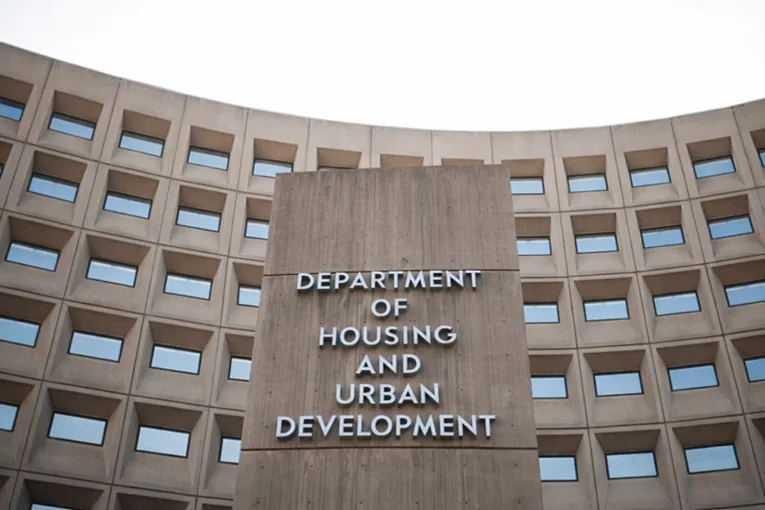
WASHINGTON, D.C. — A coalition of 174 national, state and local civil rights and housing organizations, joined by the California Civil Rights Department, is calling on the U.S. Department of Housing and Urban Development to abandon a proposed rule that would eliminate a key enforcement tool used to combat housing and lending discrimination.
The National Fair Housing Alliance, joined by 173 civil rights, fair housing, fair lending and social justice groups, filed formal comments Feb. 13 urging HUD not to finalize its proposal to repeal the agency’s disparate-impact regulations under the Fair Housing Act.
In their letter to HUD Secretary Scott Turner, the organizations wrote that they “urge you not to finalize the Department of Housing and Urban Development’s (HUD) proposed rule (Proposed Rule) eliminating HUD’s regulations regarding disparate impact under the Fair Housing Act (FHA), to leave in place the current disparate-impact rules, and to stop unlawfully refusing to comply with the Supreme Court’s recognition that disparate impact is part of the Fair Housing Act.”
HUD’s proposed rule would eliminate its Discriminatory Effects regulation, a framework that allows enforcement of the Fair Housing Act when a policy has a discriminatory effect even if there is no evidence of explicit discriminatory intent. The coalition argues that such claims have long been recognized by the courts, including the U.S. Supreme Court.
“The Supreme Court has already made it clear that disparate impact is cognizable under the Fair Housing Act,” Nikitra Bailey, executive vice president of the National Fair Housing Alliance, said in a statement. “HUD’s Discriminatory Effects Rule was implemented to provide much-needed clarity on how to apply this important standard. Unfortunately, HUD’s new proposal is just the latest attempt by the Administration to muddy the waters and is a dereliction of its responsibilities to fully enforce the Fair Housing Act of 1968.”
In the letter, the coalition insisted that HUD not finalize the proposed repeal, maintain the current disparate-impact rule and comply with “50-years of legal precedent, including the Supreme Court’s decision in Texas Dep’t of Hous. & Cmty. Affairs v. Inclusive Communities Project, Inc., recognizing disparate-impact liability under the Fair Housing Act.”
The groups further argued that HUD must continue enforcing the statute as interpreted by the courts. “As the Proposed Rule acknowledges, ‘the Supreme Court [has] held that disparate-impact claims are cognizable under the Fair Housing Act.’”
The letter states that disparate impact “is a critical aspect of the framework Congress created to eliminate all policies that unnecessarily preclude people from obtaining safe, affordable, and accessible housing of their choice.”
The coalition contends that HUD lacks authority to eliminate disparate-impact liability through rulemaking. “The President cannot, however, ‘eliminate the use of disparate-impact liability’ under the Fair Housing Act simply by means of an Executive Order, nor can HUD do so simply because an Executive Order instructed it to do so,” the letter states.
Separately, the California Civil Rights Department submitted its own formal comment opposing the repeal. In its filing, CRD wrote that it “opposes the Department of Housing and Urban Development’s (HUD) above referenced proposal (Proposed Rule) to remove the regulations setting out its disparate-impact liability standard.”
CRD warned that “The Proposed Rule undermines the purpose of the Fair Housing Act and may have serious negative implications for fair housing enforcement, across the Nation and in California.”
In its letter, CRD emphasized the longstanding legal foundation of disparate-impact enforcement, stating, “Disparate impact liability has been recognized as intrinsic to the Fair Housing Act for more than a half-century.”
The department further cautioned that eliminating the regulation would strain state enforcement efforts. “The loss of federal regulation and enforcement will seriously undermine California’s efforts,” CRD wrote, adding that repeal “will increase the burden on CRD to investigate and pursue disparate-impact claims with its limited resources, and potentially lead to discrimination going unaddressed.”
CRD also stated that the proposal “would provide an opening for litigants to question and undermine settled disparate impact caselaw, and reduce momentum for the lines of cases which have recognized and addressed certain discriminatory practices, setting the Nation back in its fight for fair and equal housing.”
In a public statement, CRD Director Kevin Kish underscored the stakes. “Civil rights can be violated even when no one openly reveals a bias based on race, gender, religion, disability, or another protected category,” Kish said. “Literacy tests, poll taxes, and blanket rejections of renters using Section 8 are all examples. The federal government’s proposed repeal removes a critical, longstanding tool to fight these kinds of discriminatory policies. Americans deserve better.”
According to the National Fair Housing Alliance’s 2025 Fair Housing Trends Report, referenced in the coalition filing, HUD received 1,710 complaints in 2024, while thousands more were processed by state and local agencies under HUD’s Fair Housing Assistance Program.
Beyond filing comments, NFHA launched a public education campaign highlighting the potential effects of repealing disparate-impact protections on immigrant households, housing choice voucher holders, people with disabilities, survivors of abuse, veterans and rural residents. According to NFHA, 1,426 public comments were submitted to HUD in connection with the proposed rule.
The coalition concluded its filing by urging HUD to withdraw the proposal and maintain existing regulations that codify disparate-impact liability, which they argue is consistent with the statutory text, decades of case law and the Supreme Court’s interpretation of the Fair Housing Act.
Tags:

So does this mean that there will now be more (or fewer?) white, Asian, and possibly Latino people in public housing? Pretty sure that they’re under-represented right now.
But that there is one other group that is vastly over-represented.