
By Vanguard Staff
WASHINGTON, D.C. — Salvadoran nationals deported from the United States are being forcibly disappeared and arbitrarily detained in El Salvador’s prison system without access to lawyers, family members or judicial review, according to a new report released by Human Rights Watch.
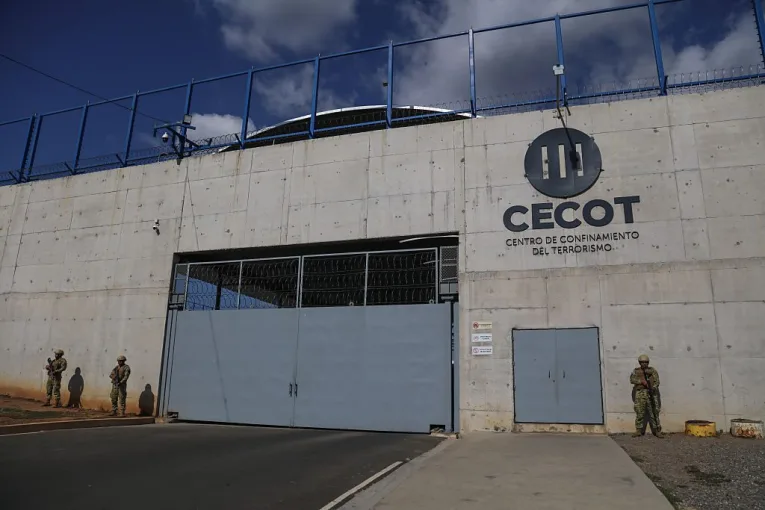
The report states that more than 9,000 Salvadorans have been deported from the United States to El Salvador since the start of 2025, and some have been immediately detained upon arrival, including several who were transferred alongside Venezuelan nationals to El Salvador’s massive Center for Terrorism Confinement prison complex.
Human Rights Watch interviewed relatives and lawyers connected to 11 deported Salvadorans and found that most have been held incommunicado, with authorities refusing to disclose their whereabouts or legal status. Family members said they have received no indication that their relatives have been brought before a judge since arriving in El Salvador.
“Whatever the criminal history of these Salvadoran men, they have a right to due process, to be taken before a judge, and their relatives are entitled to know where they are being held and why,” said Juanita Goebertus, the organization’s Americas director. “Deportation cannot mean enforced disappearance.”
Human Rights Watch said the detentions appear to violate international law, which defines enforced disappearance as a situation in which authorities deprive a person of liberty and then refuse to disclose their fate or whereabouts, effectively placing them outside the protection of the law.
The deportations occurred as part of the Trump administration’s immigration enforcement policies. U.S. officials have alleged that several of the deported Salvadorans were members of the gang MS-13, but Human Rights Watch reported that neither U.S. nor Salvadoran authorities have provided evidence to substantiate most of those claims.
According to Human Rights Watch analysis of data from U.S. Immigration and Customs Enforcement, only about 10.5 percent of the more than 9,000 Salvadorans deported since January 2025 had convictions in the United States for violent or potentially violent crimes.
Relatives of ten deported individuals told Human Rights Watch their family members had already served sentences in the United States, including cases involving drug possession and two cases involving violent offenses.
Some of those deported had fled violence in El Salvador before migrating to the United States, including threats and extortion linked to gangs.
One of the deportees, Kilmar Ábrego García, was deported on March 15, 2025, but the Trump administration later acknowledged the removal occurred due to what it described as an “administrative error.” Following an order from a federal judge, Ábrego was returned to the United States on June 6.
Ábrego’s lawyers later told U.S. courts that he had been physically abused while detained in Salvadoran prisons. On Dec. 11, a U.S. District Court in Maryland ordered his release from ICE custody.
Human Rights Watch reported that relatives often learned their family members had been deported only after searching the ICE Online Detainee Locator System and finding no results. U.S. officials then informed them that their relatives had already been sent to El Salvador.
Family members said they repeatedly contacted Salvadoran authorities seeking information but were told officials either lacked the legal authority to provide details or had no record of the deportees.
In several cases, relatives ultimately discovered their loved ones’ possible locations only through legal proceedings before the Inter-American Commission on Human Rights.
In responses to the commission in late 2025, El Salvador acknowledged that four deportees were being held at Santa Ana prison and another at CECOT. The commission urged the Salvadoran government to disclose the detainees’ legal status, end their incommunicado detention and ensure their safety.
Other families believe their relatives are also being held at CECOT after identifying them in photographs and videos posted by Nayib Bukele.
In three of the cases documented by Human Rights Watch, relatives said they still have no information about where their loved ones are being held.
Relatives and lawyers have attempted to challenge the detentions through the Salvadoran court system, filing habeas corpus petitions before the country’s Constitutional Chamber of the Supreme Court. According to Human Rights Watch, one petition was rejected on the grounds that the information presented was not sufficiently precise, while several others remain unanswered.
The detentions are occurring amid El Salvador’s nationwide state of emergency, which has been in effect since March 2022. The emergency powers suspended several procedural protections, including the right to be informed promptly of the reason for arrest, the right to remain silent, access to legal counsel and the requirement that detainees be brought before a judge within 72 hours.
Human Rights Watch said the policy environment has enabled widespread human rights violations across El Salvador’s prison system.
Families searching for deported relatives described months of uncertainty and fear as they attempted to locate loved ones across multiple government agencies and legal institutions.
“I kept calling the migrant shelter in El Salvador, but they never gave me any information, so I filed a complaint with the Human Rights Ombudsperson’s Office,” the sister of one deported Salvadoran told Human Rights Watch. “An official told me that my brother was deported on March 15 [but] because of the state of emergency they would not provide any information.”
Another family member described a similar experience while searching for her son, who had lived in the United States for more than a decade.
“That same day I started looking for lawyers in El Salvador, but several told me they could not take those cases because they feared government reprisals,” the woman said. “I called several institutions, the Attorney General’s Office, the Ombudsperson’s Office, a migrant shelter, and government ministries in El Salvador, but they gave me no information. At the Ombudsperson’s Office, they told me that due to the state of emergency, they were not obligated to provide me with information. I feel abandoned.”
Human Rights Watch said the pattern of secrecy surrounding the deportees’ detention echoes historic human rights abuses in the region.
“The desperation of families to find disappeared loved ones evokes the darkest days of dictatorships in Latin America,” Goebertus said. “The United States should stop casting people into the black hole of El Salvador’s prison system.”
Follow the Vanguard on Social Media – X, Instagram and Facebook. Subscribe the Vanguard News letters. To make a tax-deductible donation, please visit davisvanguard.org/donate or give directly through ActBlue. Your support will ensure that the vital work of the Vanguard continues.
