
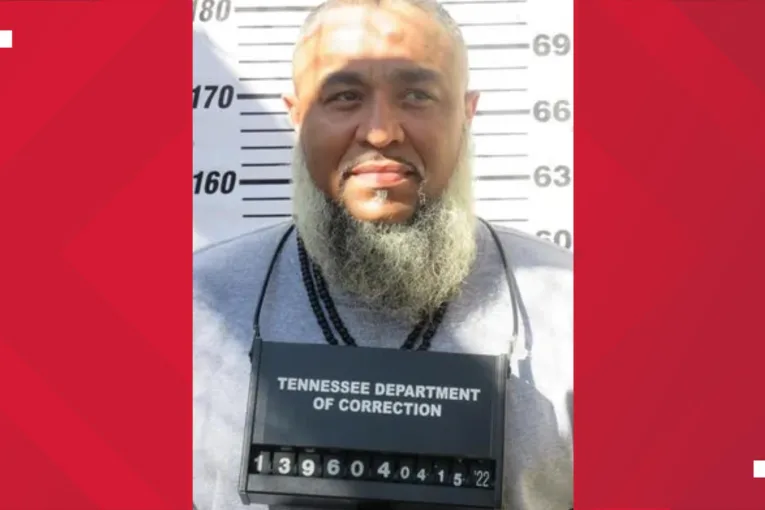
NASHVILLE, Tenn. — Tennessee’s failed attempt to execute death row prisoner Tony Carruthers on Thursday renewed national criticism of the death penalty and intensified concerns about wrongful convictions, after prison officials were unable to establish the intravenous lines required for lethal injection.
The Tennessee Department of Correction halted the execution after repeated attempts to insert IV lines failed, leading Gov. Bill Lee to grant Carruthers a one-year reprieve from execution. According to reporting by The Commercial Appeal, execution personnel spent roughly an hour and 20 minutes attempting to establish access points for lethal injection before abandoning the procedure.
Laura Porter, executive director of the U.S. Campaign to End the Death Penalty, said the failed execution underscored broader systemic problems with capital punishment.
“Tennessee has effectively made the case against the death penalty. They forced Tony Carruthers to represent himself at his own capital trial, failed to test DNA and fingerprint evidence and now they have failed to execute him. It is time to end the death penalty.”
Stacy Rector, executive director of Tennesseans for Alternatives to the Death Penalty, described the execution attempt as another example of longstanding concerns surrounding lethal injection protocols.
“Today’s botched execution attempt of Tony Carruthers is horrifying but not surprising. TADP has sounded the alarm for years about the serious problems with lethal injection and urged our state toward greater transparency so these problems can be addressed.”
Carruthers had been scheduled to die Thursday (May 21) at Riverbend Maximum Security Institution in Nashville for a 1994 triple murder case in Memphis.
According to The Commercial Appeal, prison officials were able to establish a primary IV line but failed to insert a secondary line as required under Tennessee execution protocols. Medical personnel also unsuccessfully attempted to insert a central line before the execution was called off.
Maria DeLiberato, senior counsel for the American Civil Liberties Union’s Capital Punishment Project, said Carruthers endured painful attempts to establish the lines, including efforts involving his arms, shoulders, foot, jugular and chest.
DeLiberato described the procedure as “torture.”
According to witness accounts cited by The Commercial Appeal, individuals in the witness room heard a man ask Carruthers about his pain level during the attempts to establish IV access. Pained groans were later heard during the attempted central line procedure.
DeLiberato also questioned whether one of the physicians involved was qualified to perform the central line procedure.
“So I went back in and I objected to him doing a central line,” DeLiberato said. “The doctor, himself, kind of snapped back at me and said, ‘Yes, I am qualified.’ The warden told him to just do his job.”
After Lee granted the reprieve, DeLiberato said the delay would allow Carruthers another opportunity to pursue forensic testing.
“I am so grateful that we are going to have a chance to prove what we’ve been saying and what Tony has been saying for 30 years, that he didn’t commit this crime,” she said. “I cannot wait to tell his family.”
The failed execution attempt comes after months of litigation by the ACLU and ACLU of Tennessee seeking DNA and fingerprint testing that attorneys say could point to an alternative suspect.
Earlier reporting by the Davis Vanguard detailed claims that multiple fingerprints and DNA samples recovered from the crime scene did not match Carruthers.
In an April lawsuit challenging Tennessee’s refusal to conduct forensic testing, attorneys argued the state possessed evidence that could potentially exonerate Carruthers. The lawsuit also alleged prosecutors failed to disclose that a key witness was a paid confidential informant.
“Tony’s execution would be a gross miscarriage of justice that is entirely avoidable with basic forensic testing,” DeLiberato previously stated in the ACLU lawsuit.
“The state holds DNA and fingerprint evidence that could help determine who committed this crime, but instead of testing it, it is prioritizing finality over the truth,” she added.
The case against Carruthers relied heavily on testimony from informants and cooperating witnesses rather than physical evidence, according to court filings and prior reporting. One co-defendant allegedly later identified another individual as the true perpetrator, while forensic evidence recovered from the scene reportedly has never been fully compared against that alternative suspect.
The case has also raised concerns about due process because Carruthers represented himself during portions of the capital trial after conflicts with multiple appointed attorneys.
According to prior Vanguard reporting, Carruthers repeatedly sought legal representation but was ultimately allowed to proceed without counsel despite allegations of severe mental illness.
Casey Stubbs, director of the ACLU’s Capital Punishment Project, condemned the state’s actions following the failed execution attempt.
“Permitting Tony Carruthers’ execution without ordering DNA testing was a grave injustice,” Stubbs said. “This injustice turned barbaric when Tennessee’s efforts to set an IV line for the lethal drugs failed and the executioners continued to press forward anyway with the botched execution.”
Melanie Verdecia, pro bono counsel for Carruthers, also criticized the state.
“This is not how our system is supposed to work,” Verdecia said.
Legal observers told The Commercial Appeal they expect additional litigation challenging Tennessee’s execution procedures following Thursday’s failed attempt.
David Raybin, a Tennessee criminal defense attorney, said the incident was avoidable.
“And it was preventable,” Raybin said. “The government could have foreseen this and had taken precautions.”
Outside the prison, anti-death penalty advocates reacted with relief after learning the execution had been halted.
“We said God is good,” said Michael Sample, a former death row prisoner who attended a vigil outside the prison. “It had to be a higher power or something.”
Follow the Vanguard on Social Media – X, Instagram and Facebook. Subscribe the Vanguard News letters. To make a tax-deductible donation, please visit davisvanguard.org/donate or give directly through ActBlue. Your support will ensure that the vital work of the Vanguard continues.
