
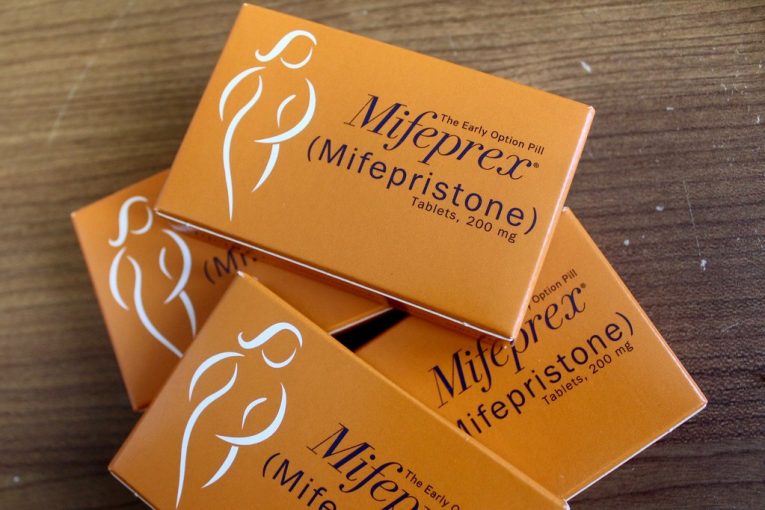
WASHINGTON — The U.S. Supreme Court recently issued a decision temporarily preserving access to the abortion pill mifepristone through telemedicine and mail distribution, prompting reproductive rights advocates to describe the ruling as a short-term victory amid an ongoing legal battle over abortion access.
The Center for Reproductive Rights highlights that “most commonly a two-drug regimen of mifepristone and misoprostol accounts for more than 60% of abortions in the U.S. each year.”
The organization states that “7.5 million Americans have used the drug since it was approved by the FDA in 2000.”
Telehealth has expanded abortion access and has been especially essential for patients who live far from clinics and providers.
Additionally, studies and research have confirmed that mifepristone is safe, including when dispensed through the mail.
In response to the decision, SisterSong Executive Director Monica Simpson released a statement describing the ruling as a temporary win for abortion access.
According to an article published by The Guardian, the case stems from an October 2025 lawsuit filed against the U.S. Food and Drug Administration by Alliance Defending Freedom on behalf of Louisiana.
In the lawsuit, the plaintiffs argued that the FDA’s rules allowing remote prescriptions of mifepristone “interfered with the state’s ban on abortion.”
Further, on May 1, the 5th U.S. Circuit Court of Appeals ruled in favor of Louisiana, effectively banning mail-order mifepristone nationwide.
In response, two mifepristone manufacturers, Danco Laboratories and GenBioPro, filed an emergency request that kept the matter on hold through May 14 and temporarily preserved access to the pill by mail.
The Supreme Court’s decision was issued in a 7-2 ruling, with Justices Clarence Thomas and Samuel Alito dissenting.
Justice Thomas stated that the mailing of mifepristone constitutes a “criminal enterprise” and pointed to the 1873 Comstock Act. Specifically, the Comstock Act broadly banned people from sending “obscene, lewd or lascivious” materials through the mail.
Justice Thomas further noted that the Comstock Act references “any article or thing designed or intended for the prevention of conception or procuring an abortion.”
He argued that the 1873 law applies to remotely prescribed mifepristone distributed through the mail.
In her statement, Simpson said SisterSong was “relieved” by the Supreme Court’s decision because it “ensures that people, especially Black, brown, queer, trans, immigrant, poor, and people living in rural communities who already face barriers to healthcare, can continue accessing essential reproductive care.”
According to the Center for Reproductive Rights, limiting access to mailed mifepristone and requiring in-person dispensing “would force patients across the country to travel to a health center to be handed the medication.”
The organization also stated that such restrictions would block pharmacies from providing mifepristone “for all patients, including those who need it for miscarriage management.”
Simpson continued by emphasizing that although the ruling represents a victory for abortion access in many communities, “people’s lives shouldn’t hang in the balance between back-and-forth litigation.”
She further argued that attacks on mifepristone have never been about “safety or medicine,” but rather “power and control” over decisions regarding people’s bodies, families and futures.
Simpson added that the same systems limiting abortion access are also targeting other marginalized communities, including immigrants and LGBTQ+ communities.
Moreover, she stated that these policies are “rooted in white supremacy and the belief that some communities deserve autonomy and dignity while others do not.”
Toward the end of the statement, Simpson emphasized that these communities “deserve more than temporary protections and legal uncertainty around our healthcare and bodily autonomy.”
Follow the Vanguard on Social Media – X, Instagram and Facebook. Subscribe the Vanguard News letters. To make a tax-deductible donation, please visit davisvanguard.org/donate or give directly through ActBlue. Your support will ensure that the vital work of the Vanguard continues.
