
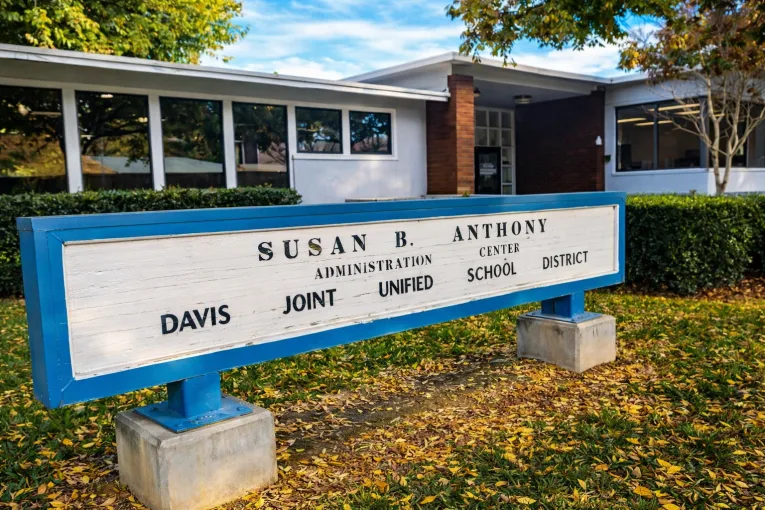
As a reading intervention paraeducator, I often serve upwards of 60 students per day, sometimes teaching in groups that exceed 20 students. In every paraeducator job description, regardless of classification, the language states that we are to serve students “individually and/or in small groups.” This language is not unique to DJUSD, but is standard throughout California and commonly used across the country.
Over the last couple of years, multiple reading paras, including myself, have petitioned for a reclassification, arguing that working with such large groups does not align with the language of our current job description. Both years, our petitions were rejected, with the district citing that “small groups” is not quantifiable under California Education Code. However, California Education Code does expect districts to contextualize the language used within job descriptions. Given that, it is reasonable to assume the language used for paraeducators across the state was created with a common foundation, and that the inclusion of the phrase “small groups” was intentional — meant to provide a clearer understanding of the workload and work environment intended for paraeducators.
Last school year, I became involved with the union representing classified staff in Davis Joint Unified, California School Employees Association Chapter 572. I believed the concerns surrounding reading paras were valid and would receive support from union leadership. However, as I continued providing documentation, evidence, and rebuttals to the district’s denial of reclassification, I began receiving pushback from the union as well. Our labor representative echoed the district’s position and made little apparent effort to investigate or negotiate on our behalf. The only action the district ultimately took was a job description revision added to the back end of last year’s tentative agreement. In the revised description for reading paras, the word “small” was removed, leaving the language to state that we serve students “individually and/or in groups.” I immediately questioned the intent behind that change.
Interestingly, the district overlooked the fact that the group-size language appeared in two separate places within the job description: once in the summary section and once in the essential duties section. While one reference to “small groups” was removed, the other remained. It is important to note that while “small groups” continues to appear in every other paraeducator classification, the district only attempted to remove it from the reading para classification — the very group of employees raising concerns and pointing out inconsistencies. In ongoing communication with the district, I asked officials to contextualize the phrase “small groups” and provide a clear definition of what “small” means to them.
Their response was that the district had “no interest” in contextualizing the term. That raises an important question. If the district truly believes reading paraeducators were never working outside the scope of their job description while serving groups of more than 20 students, and still has no desire to define “small,” then why attempt to remove the word in the first place? What I find even more concerning is that the district extensively contextualizes classroom sizes for teachers, as documented in certificated staff collective bargaining agreements. Those agreements not only define classroom limits, but also provide additional compensation when those limits are exceeded.
Article 11.3.2.2 states: “When class sizes exceed the ideal maximums, the teachers will be compensated $2 per student per day that the overage occurs.”
Why would the district have no interest in contextualizing language for paraeducators when it has already done so for certificated staff? The public can draw its own conclusions. Could it be that the district does not want to acknowledge that paraeducators have gradually taken on duties beyond what their job descriptions originally intended? Possibly because recognizing those discrepancies could require additional compensation? And perhaps the larger question is this: how has our union allowed this issue to continue unchallenged? Where was union leadership during negotiations last year when an attempt was made to remove a key term that appeared to validate the very concerns paras across the district had been raising? I was supposed to serve on that negotiations team. I earned my seat through a democratic vote of the membership. Why I was never allowed to fill that seat is a discussion for another day. Paraeducators are just as essential as every educator who shows up for our children each day. This issue highlights not only unequal treatment toward paras, but also troubling questions surrounding transparency and accountability from both the district and union leadership.
Paraeducators often earn less than many fast-food workers, and I find that reality deeply troubling. At a time when working people are taking on multiple jobs and longer hours simply to keep up with the cost of living, paraeducators deserve a livable wage. More importantly, they deserve leadership that does not dismiss concerns when assigned duties exceed what is defined in their job descriptions. As always, if you are a classified employee, attend union meetings. If you are a parent or community member, attend school board meetings. And to the teachers: we need your support as well. Stand in solidarity with the many paraeducators who work tirelessly alongside you every day. Ask questions. Speak out. Our students depend on all of us.
Follow the Vanguard on Social Media – X, Instagram and Facebook. Subscribe the Vanguard News letters. To make a tax-deductible donation, please visit davisvanguard.org/donate or give directly through ActBlue. Your support will ensure that the vital work of the Vanguard continues.
