
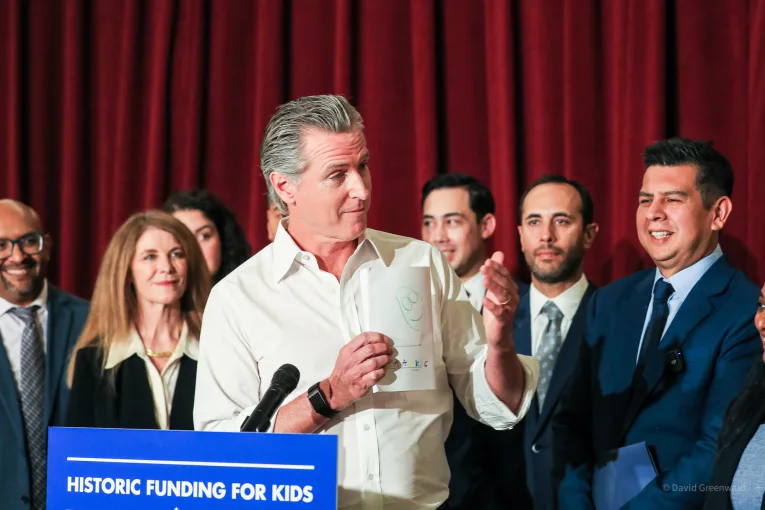
DAVIS, Calif. — Gov. Gavin Newsom traveled to Willett Elementary School in Davis on Wednesday to sign California’s 2026 education budget, describing it as a landmark investment in public education that places unprecedented emphasis on students with disabilities, community schools, educator recruitment and retention, and long-term structural reforms designed to strengthen California’s education system.
The signing ceremony brought together education leaders, legislators and local officials, with speakers repeatedly emphasizing that the budget represents years of policy development rather than a single legislative accomplishment. Throughout the event, speakers framed the measure as both a continuation and expansion of California’s recent education reforms, while highlighting what they described as historic funding levels for special education.
Davis Joint Unified School District Superintendent Matt Best opened the ceremony by connecting the legislation to the work taking place inside classrooms across California.
“Everyone here in this room knows that public education transforms lives. It cultivates the potential of each and every student throughout our state,” Best said.
He said schools continue to face significant challenges despite their successes.
“It’s true that it’s a challenging time to be an educator. We all know that students have higher needs than at any time in my professional career. In addition, we have staffing shortages made difficult by the gap between wages and costs of living and housing and higher education,” Best said.
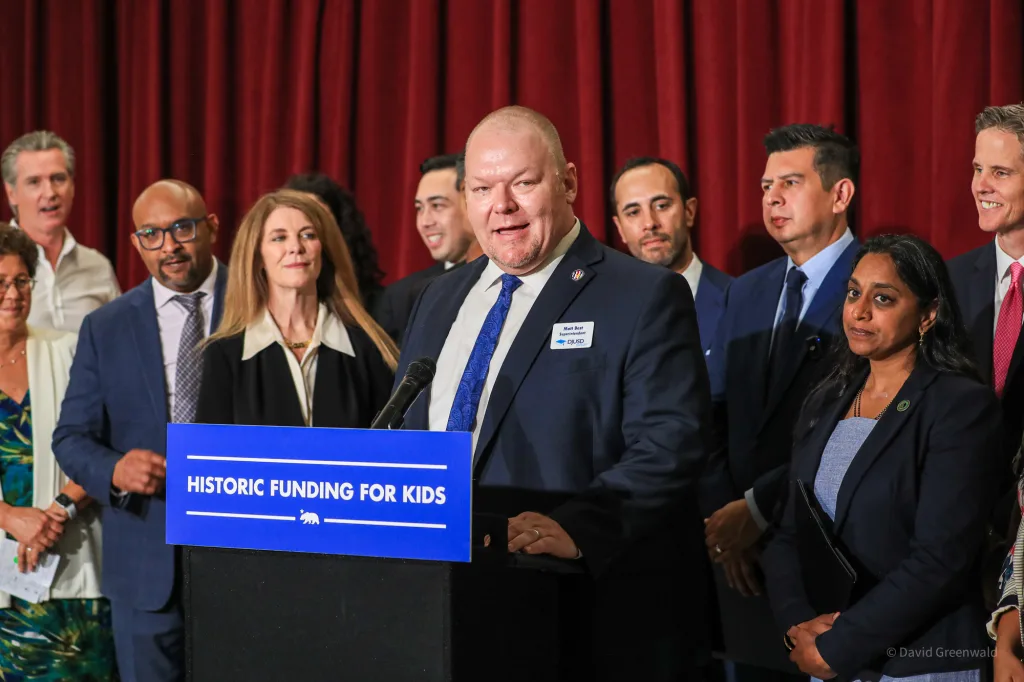
Best argued that the state’s increased investment arrives at a critical moment for districts attempting to meet growing student needs while confronting financial pressures.
“In order to do the important work of addressing literacy, serving students with disabilities and advancing our graduate profile every dollar counts,” he said.
He concluded by thanking the governor and Legislature for what he called “their oversight and perseverance in these challenging times,” adding that “these historic investments in education will help us to support students in reaching their true potential.”
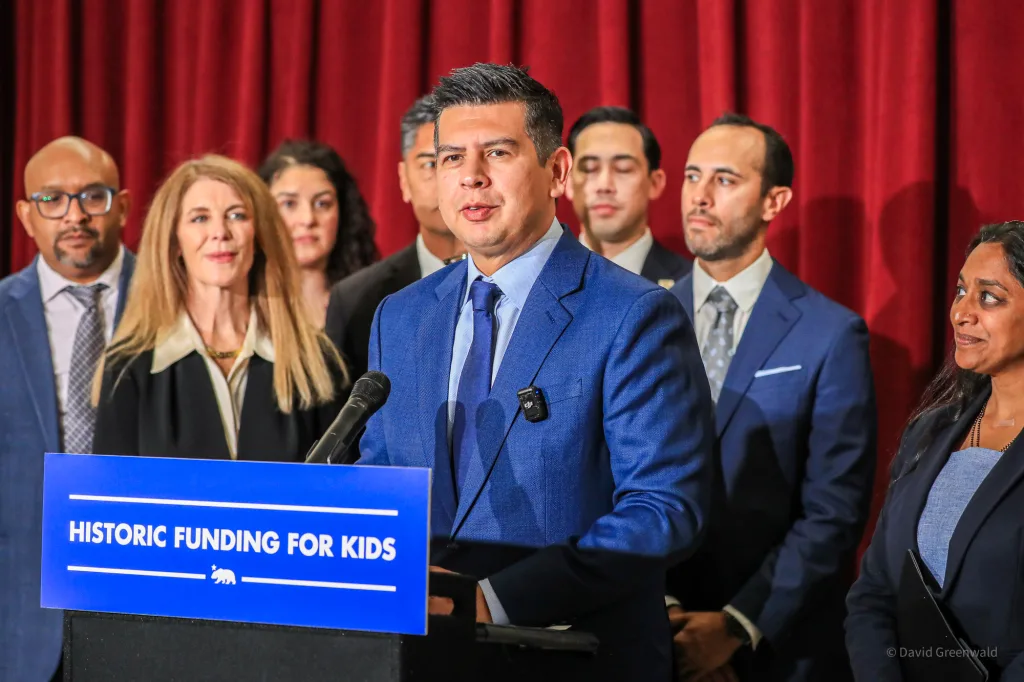
Assemblymember David Alvarez, chair of the Assembly Budget Subcommittee on Education Finance, characterized the budget as a historic commitment to California schools, while tying the legislation to his own family’s experience with public education.
“My parents never even had a first grade education and yet because of what California promised to generations in the past and with this bill, we continue to promise into the future,” Alvarez said.
He described the legislation as containing “historic investments like never before,” pointing specifically to paid family leave for teachers, expanded special education funding, investments in community schools and expanded dual enrollment opportunities.
“We are now going to be offering teachers paid family leave with pregnancy leave that was not available before — 14 weeks — so that teachers can actually enter the profession and know that they can actually start a family. That’s important and significant,” Alvarez said.
He also emphasized investments intended to modernize secondary education.
“The re-imagining of middle schools and high schools … we must do in order to stay on top of the ever changing landscape of the workforce and the industries that exist in California,” he said.
Alvarez called expanded dual enrollment another major achievement.
“As many students as possible can have college credits as high school students so they can enter college or university a little bit ahead and perhaps get into a little less debt,” he said.
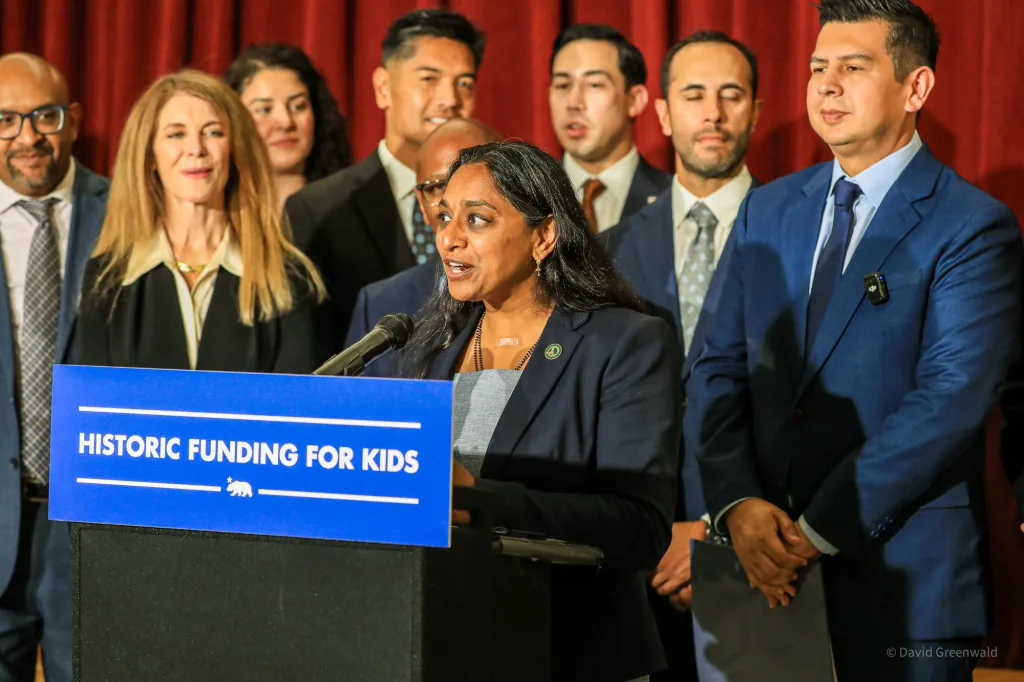
Assemblymember Darshana Patel focused much of her remarks on what she described as unprecedented investments in special education.
“There is so much more to deliver for California public education,” Patel said. “Our community members are ever holding us accountable for delivering on the outcomes that they’re expecting.”
She highlighted what she called one of the budget’s defining accomplishments.
“There’s a $2.4 billion increase to the special education base rate, which means that’s an increase of 43%. Nothing like that has ever happened before,” Patel said.
Patel outlined additional appropriations, including funding for inclusive instructional practices, diploma pathways for students with significant disabilities and increased support for districts facing extraordinary special education costs.
“These are remarkable historic investments to support our students with disabilities,” she said.
Patel credited legislative leaders and Gov. Newsom for making the investments possible.
“My most deepest sincere gratitude to our governor for really taking on public education during his two terms in office and making sure that we could continue to deliver for California students,” Patel said.
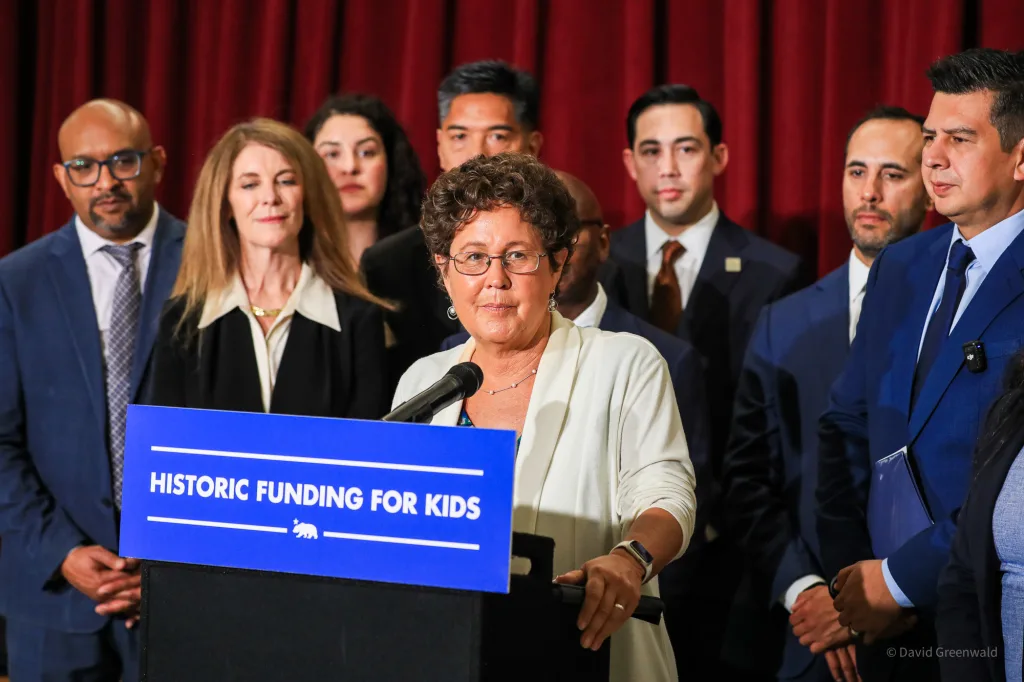
State Board of Education President Linda Darling-Hammond placed the legislation within the broader context of California’s education reforms over the past decade.
She noted that when the Local Control Funding Formula was first implemented, California ranked among the nation’s lowest-funded education systems.
“This budget is the largest ever for education,” Darling-Hammond said.
She said Proposition 98 funding has increased dramatically during the past seven years.
“Our investment in Proposition 98… went up by about 70%… a 66% increase in per pupil spending.”
Darling-Hammond argued that recent improvements in student achievement reflect those investments and singled out special education funding as especially significant.
“The federal government promised to do, years ago, to fully fund special education… and has never done. And now California’s stepping up to make good on a promise that has not been really met almost anywhere in the country,” she said.
She also warned that California’s investments come at a time when federal support faces uncertainty.
“In a moment when special education is under attack by the Trump administration, this is going to be even more important for us here in California,” Darling-Hammond said.
She highlighted transitional kindergarten, community schools, educator development and secondary school redesign as examples of reforms now becoming permanent features of California’s education system.
“So taken together, this budget really represents planting deeply the innovations that have been launched by the Legislature and governor over the last seven years and enabling them to go on into the future,” she said.
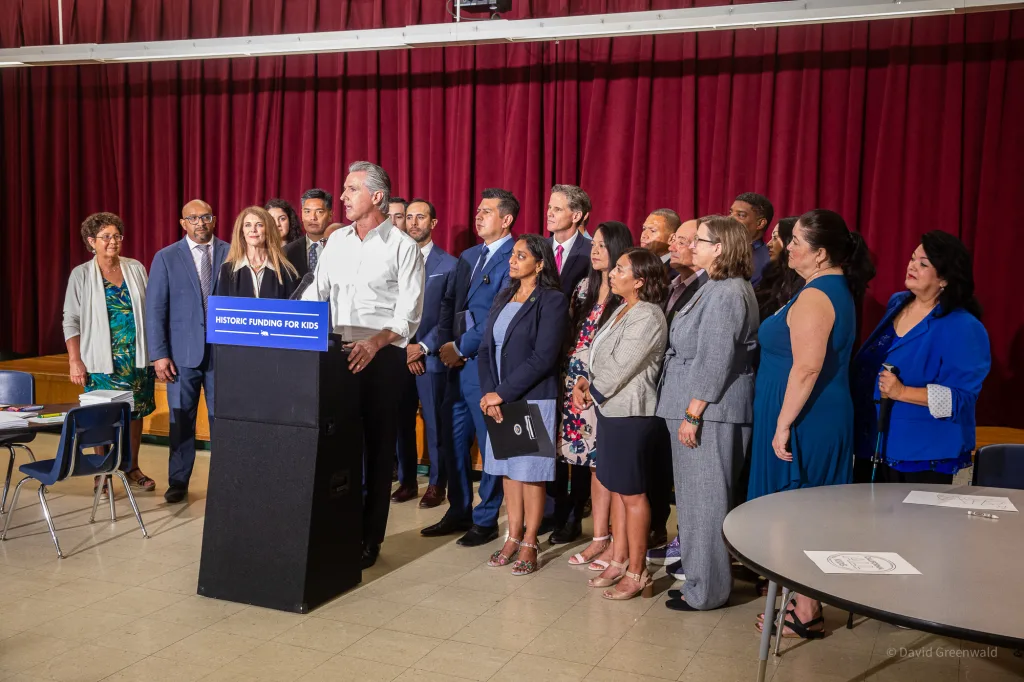
Newsom devoted much of his remarks to explaining why the administration prioritized special education funding.
“The spirit that brings us here… is about the investments for these young children,” Newsom said.
He described the issue as deeply personal, recounting his mother’s work supporting adoptions involving children with disabilities and his own volunteer work with Special Olympics.
“This issue is personal in so many ways,” he said.
Newsom also reflected on his own experiences with learning disabilities.
“When you grow up as well with some reading and learning disabilities, you also are adjacent to this population in terms of your own experience and your own understanding and appreciation.”
He repeatedly emphasized the size of the investment.
“$2.4 billion… 43% increase year over year. We don’t hear numbers like that. You’ve never heard a number like that in California.”
According to Newsom, the administration deliberately expanded its original proposal after determining that incremental funding would not adequately address long-standing deficiencies.
“We were failing more efficiently, that we needed to do something bold,” Newsom said.
He explained that the January proposal included approximately $509 million before the May revision added another $1.8 billion.
“We asked them, what do we need to do to do something meaningful here?” Newsom said.
Beyond special education, Newsom pointed to permanent funding for community schools as another signature accomplishment.
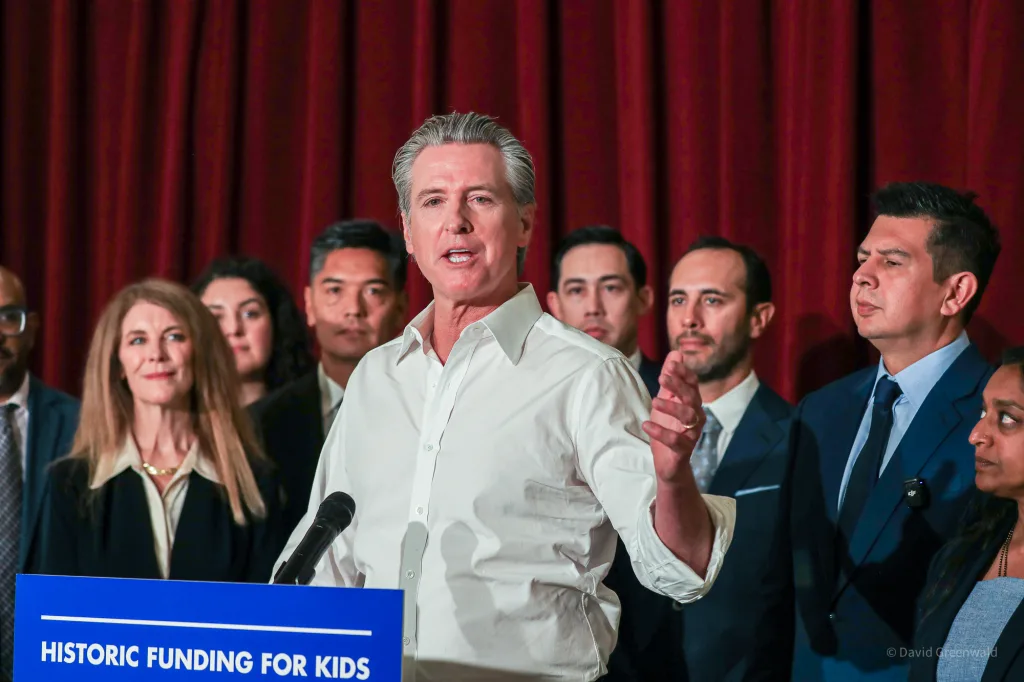
“I made some commitments on the campaign trail that we’d run some pilots. Never in my wildest imagination… that we could get to a $4.1 billion multi-year commitment on community schools,” he said.
He argued that independent evaluations have demonstrated the model’s effectiveness and said integrating community schools into the Proposition 98 funding formula would ensure their long-term stability.
Newsom also highlighted the expansion of transitional kindergarten, universal school meals, summer school opportunities, literacy initiatives and free community college as examples of reforms built over multiple years.
“Education reform is not some one big idea and you walk away. It’s not a single act. It’s about a habit,” Newsom said.
“Process unfolds over the course of years and years and years. It’s multiple strategies all stacking together.”
He argued that governance reforms accompanying the budget are equally important because implementation ultimately determines whether legislation succeeds.
“Program passing is not problem solving. It’s the hard work after a bill is signed. That’s when the job starts,” Newsom said.
Although reporters questioned the governor on a range of unrelated political issues following the bill signing, including federal investigations, campaign politics and statewide appointments, the central focus of the event remained California’s record investment in public education.
The legislation represents one of the largest education spending packages approved during Newsom’s administration, with special education emerging as its centerpiece. Speakers repeatedly emphasized that the funding is intended not only to increase district resources but also to improve teacher recruitment, strengthen inclusive instruction, expand services for students with disabilities and permanently embed successful education reforms into California’s funding structure.
Follow the Vanguard on Social Media – X, Instagram and Facebook. Subscribe the Vanguard News letters. To make a tax-deductible donation, please visit davisvanguard.org/donate or give directly through ActBlue. Your support will ensure that the vital work of the Vanguard continues.

Will any of this budget money make its way to Newsom’s wife’s businesses or non profits?
You’re worried about Seibel’s supposed corruption? Her father is a billionaire. Her husband is the Governor. You’ve been watching too much right wing media.
“California First Partner Jennifer Siebel Newsom has drawn significant scrutiny and an active FBI/DOJ tax probe regarding the financial ties between her nonprofit, The Representation Project, and her for-profit film company, Girls Club Entertainment. Over the past decade, these connected entities have funneled approximately $3.7 to $4.1 million to her personally or to her LLC.”
https://calcoastnews.com/2026/03/gov-newsoms-wife-collected-3-7-million-from-gender-nonprofit/
That is all you got? With all the corruption in America this is what you choose to be outraged about? She overpaid herself 150k a year from her non-profit. LOL Dude.
I’ll make you a bet. You pick the end date and I’ll bet you she doesn’t spend a single night behind bars because of her corruption at her non-profit between now and that end date.
David, were you present at this event?
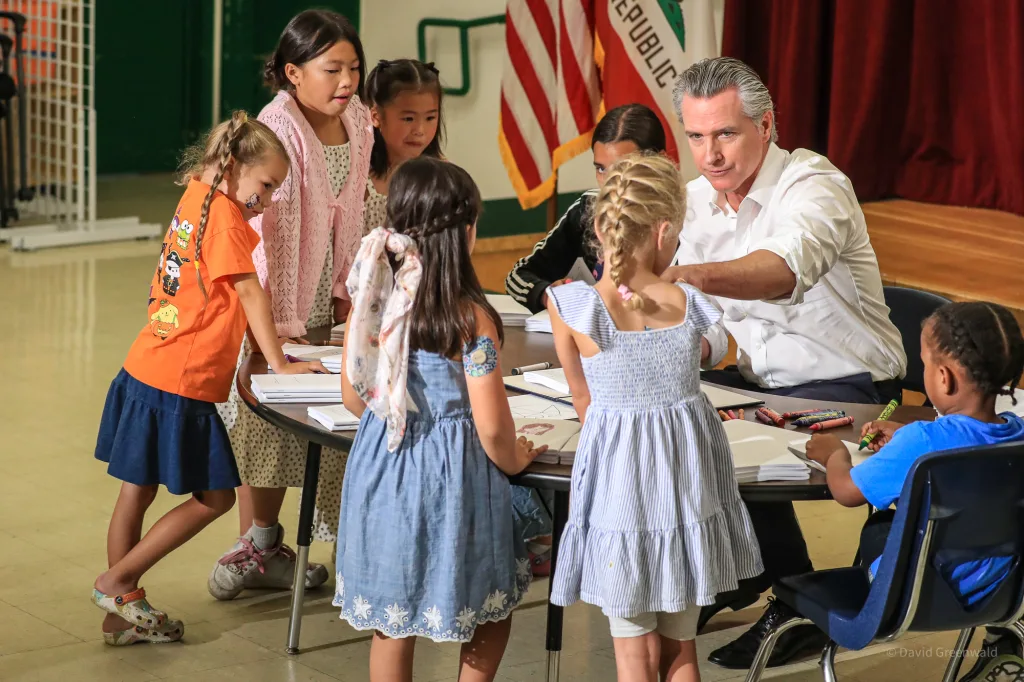
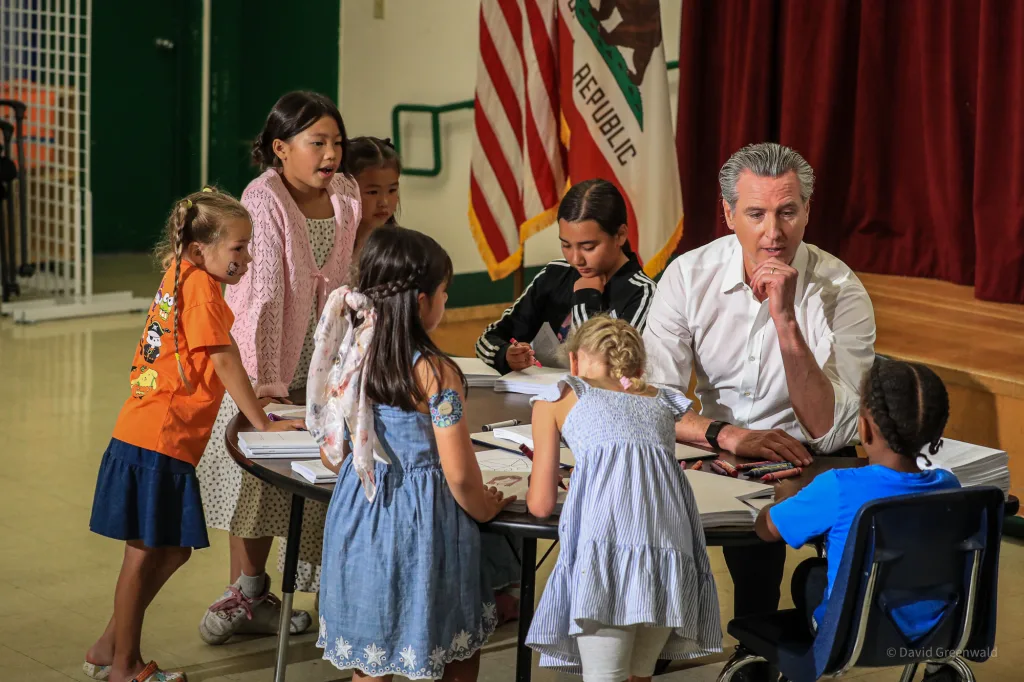
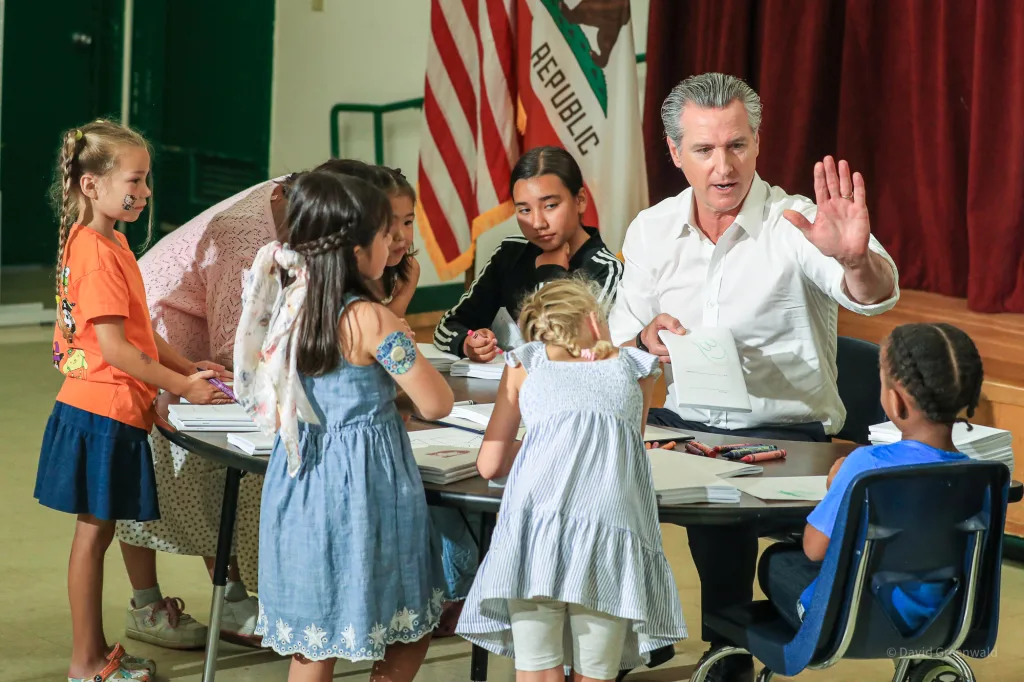
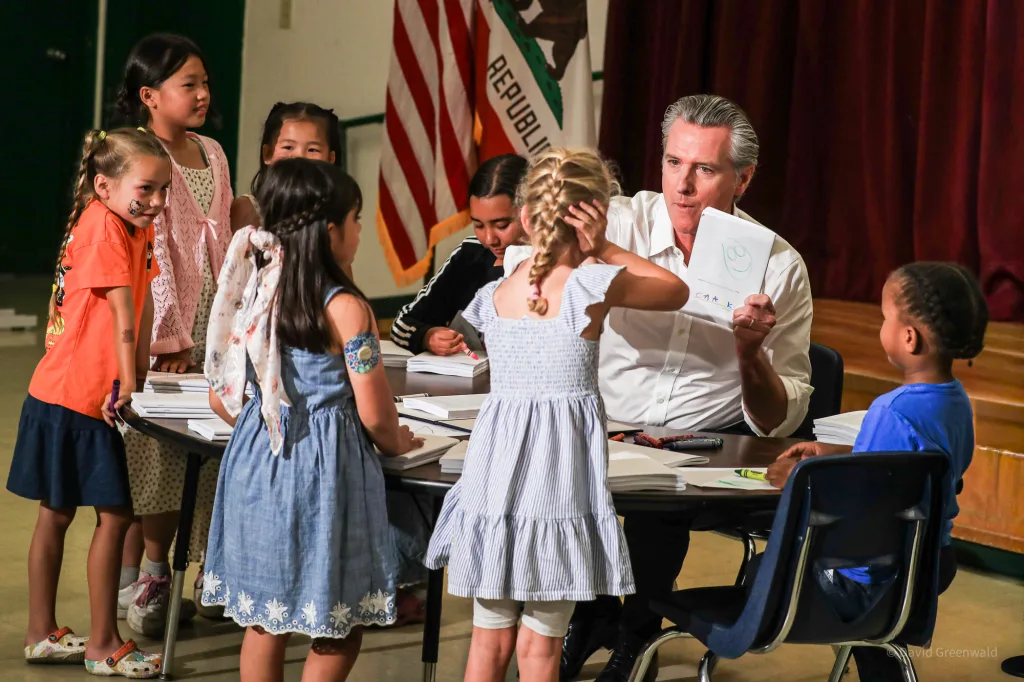
“all photos by David Greenwald “
How did you know about it?
Press advisory from the Governor’s office
Do all bloggers get those?
Why are you being obnoxious, I thought you had an actual point
I’m just trying to ascertain how the people that were there knew about it because I know of other people who would’ve wanted the same access to the governor.
You could have asked that question directly instead of the flippant question.
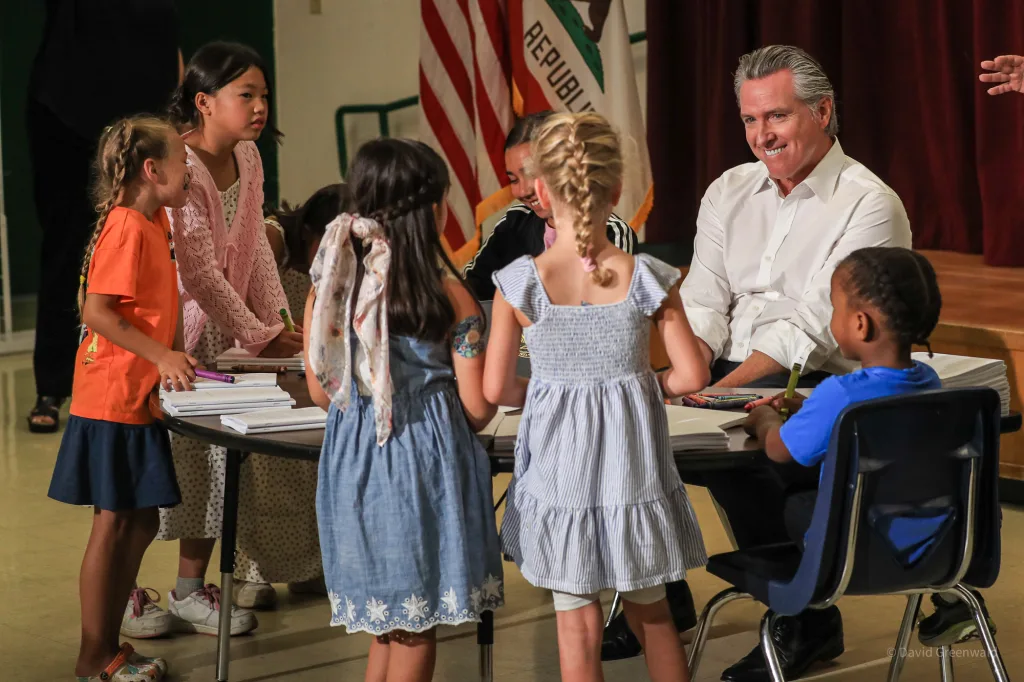
It was not a public event. The Governor’s office allowed credentialed media in to cover the event. I got an email late on Wednesday, signed up to cover it and went and covered it. (I get those all the time, usually it’s not of interest. I can’t remember a time in 20 years of doing this that the Governor came to Davis). The school district only found out on Wednesday afternoon. Apparently there is some sort of summer school at Willett. I have no idea how they selected the kids who attended from the school, but assume there must have been permission from parents to do so.
In 2021 Newsom went to Mishkas.
Thanks – guess I missed that one
“I’m just trying to ascertain how the people that were there knew about it because I know of other people who would’ve wanted the same access to the governor.”
I can think of at least one person who’d almost certainly be interested (Beth). They could probably sell tickets to that type of event (and even I might pay to see it).
David is a good photographer, but the subject matter would be a lot more interesting in that case.
Actually, I’d be interested in meeting with him as well – but for a different reason. Actually, more than one reason. (At this point, the land giveaway to tribes is even more concerning than his push for housing. Not that it would do any good, however.
Also, I’m wondering when the legislature and governor are going to start collecting LESS money for schools from non-parents in particular, especially since enrollment is declining statewide.