
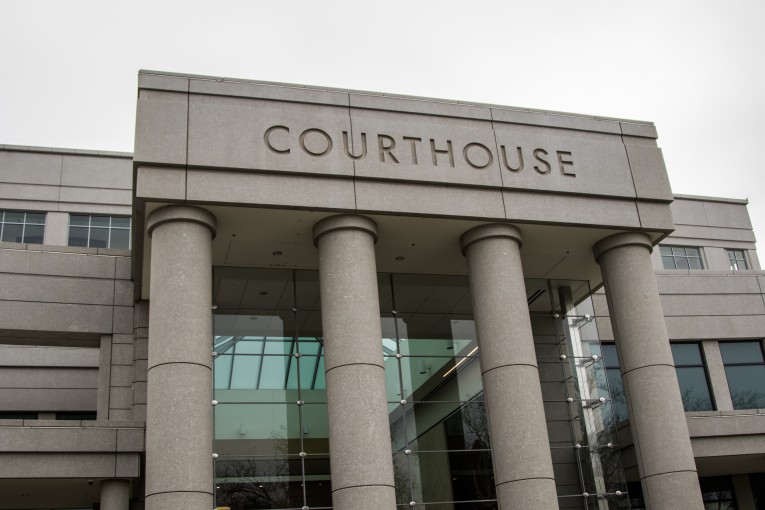
WOODLAND, Calif. — A Yolo County Superior Court judge has ruled that prosecutors violated California’s Racial Justice Act during Maurice Cook Jr.’s 2003 murder trial, concluding that the prosecution’s comparison of Cook and his co-defendants to “a pack of wolves” constituted racially discriminatory language.
The ruling rejects the District Attorney’s Office’s defense of the original prosecution and sets the case for a remedies hearing that could determine whether the violation affected Cook’s judgment.
Judge Daniel P. Maguire concluded that the prosecution crossed the line drawn by Penal Code section 745, finding that the “pack of wolves” analogy, viewed in the context of the entire trial, violated the Racial Justice Act because repeated use of a racial slur throughout the proceedings amplified its discriminatory impact.
Although the judge rejected Cook’s remaining allegations of racial bias, he found the prosecutor’s closing argument constituted racially discriminatory language under California law.
The challenged conduct arose during Cook’s original 2003 murder trial, prosecuted by then-Deputy District Attorney Jeff Reisig.
More than two decades later, Yolo County District Attorney Melinda Aiello defended the original prosecution against Cook’s Racial Justice Act petition, arguing that the challenged language complied with California law. Judge Maguire ultimately disagreed in part, concluding that the prosecutor’s “pack of wolves” analogy violated the statute.
“I do find that Section 745(a)(2) was violated by the use of animal imagery; namely, the comparison of defendants to a pack of wolves during closing argument,” Maguire said from the bench. “I do not find any other violations of the RJA.”
The judge added, “However, the frequent use of a quoted racial slur did likely have a priming effect, as Professor Bowman testified, which made it more likely that the pack of wolves reference would implicitly appeal to racial bias, thus constituting racially discriminatory language within the meaning of the RJA.”
The ruling followed months of litigation over Cook’s petition under the Racial Justice Act. Aiello argued that the challenged language did not violate the statute and urged the court to conclude that the prosecutor’s closing argument reflected permissible commentary on the evidence rather than an appeal to racial bias.
Cook’s attorneys argued the prosecution’s rhetoric dehumanized Cook and relied on coded racial appeals prohibited by the Racial Justice Act.
Cook’s trial took place in 2003, nearly two decades before California enacted the Racial Justice Act. Maguire noted that the statute applies retroactively but said a future remedies hearing would determine whether the harmless-error provision governing pre-2021 judgments applies.
“The RJA does apply retroactively; although Subdivision (k) of the Act allows for a harmless error analysis for cases in which judgment was entered before 2021,” Maguire said. “That provision may be considered at the remedy hearing that the Court will be setting.”
The court’s ruling came after the California Supreme Court issued new guidance on evaluating claims of implicit racial bias under the Racial Justice Act. Both sides submitted supplemental briefing addressing those decisions before Maguire issued his ruling.
At the heart of the dispute was whether the prosecutor’s language, considered in the context of the entire trial, would objectively appeal to racial bias.
Quoting from the Supreme Court’s guidance, Maguire noted that courts must evaluate context rather than isolated words.
“So the focus is on the entire context, not just the words in isolation,” Maguire said. “These cases illustrate the importance of context in assessing RJA language claims.”
The People’s briefing argued that the prosecutor’s “pack of wolves” remark described coordinated conduct relevant to accomplice liability rather than race. Prosecutors also argued that repeated references to racial slurs during trial fell within the statute’s safe harbor because attorneys were quoting evidence directly relevant to Cook’s intent.
Cook’s attorneys countered that the prosecution’s closing argument dehumanized Cook and reinforced longstanding racial stereotypes about Black men, gangs and violence.
Their briefing relied heavily on testimony from Professor Mary Bowman, who testified that the prosecution’s repeated references to gang members as unlike “normal people,” combined with comparisons to predatory animals and repeated use of racial slurs, would objectively appeal to implicit racial bias.
The defense also cited the California Supreme Court’s recent guidance noting the Legislature’s intent to eliminate racial bias from the criminal justice system.
Maguire rejected most of Cook’s claims.
Addressing the repeated use of racial slurs during the trial, the judge concluded the statements largely fell within the statutory exception allowing attorneys to quote relevant evidence.
“The RJA does not require the sanitation for editing of quotations if they otherwise follow within the safe harbor of Section 745(a)(2),” he said.
The judge likewise rejected claims arising from questioning by defense attorneys, concluding the context demonstrated they were attempting to explain or mitigate statements attributed to their clients rather than appeal to racial bias.
“The context suggests that Mr. Beede, who represented Mr. Smith, was trying to explain or mitigate his own client’s statements,” Maguire said. “He was not appealing to racial bias either implicitly or explicitly.”
Similarly, Maguire found no violation arising from defense counsel’s closing argument discussing rap lyrics.
“The context here shows that Mr. Reed, like Mr. Beede before him, was trying to mitigate the effects of his client’s own statement,” the judge said. “He was — in the Court’s view, he was not appealing to racial bias either implicitly or explicitly.”
Although the judge concluded the quoted slurs themselves did not violate the Racial Justice Act, he acknowledged the effect they had on the trial.
Throughout the proceedings, attorneys repeatedly used what Maguire described as “perhaps the most odious slur in the English language.”
“In my view, the quotation was clearly relevant to the case as it related to a central issue; namely, Mr. Cook’s intent,” he said.
“Was the quotation used excessively or gratuitously? It was used frequently, and the Court finds that the frequent use had a priming effect as Professor Bowman testified … but having examined the record, the Court does not find gratuitous or excessive use.”
The court reached a different conclusion regarding the prosecutor’s closing argument comparing Cook and his co-defendants to wolves.
“The prosecution’s comparison of Mr. Cook and the codefendants to a pack of wolves did violate the RJA,” Maguire ruled.
“The Court finds that this case is more similar to Bankston than Demolle. As in Bankston, the defendant was compared to a vicious animal engaged in animalistic behavior.”
The judge quoted the challenged argument: “Like a pack of wolves, they surrounded James Giles. They kept him distracted. They kept him engaged … They worked together. They killed him. And they left together and they celebrated together and they are Crip Killers. They are proud of it.”
Although Maguire observed that the “wolf pack” analogy occupied only “a brief portion of an extended closing argument,” he concluded that it became legally significant because of the broader context.
“The effect of the wolf pack reference was amplified and exacerbated by the priming effect resulting from the frequent use of the slur throughout the trial,” he said.
The court rejected Cook’s remaining claims, concluding that references to Oak Park, the prosecutor’s use of the word “migrate,” and repeated distinctions between gang members and “normal people” did not violate the statute.
“The Court does not find that the word ‘migrate’ has a racially discriminatory connotation, nor does it find that there was excessive or gratuitous references to Oak Park,” Maguire said.
While acknowledging that the prosecutor “did strongly draw a distinction between gang members and ‘normal people,'” Maguire concluded those comments “appear to the Court to be fair commentary seeking to explain the otherwise inexplicable crime.”
“In other words,” he said, “the Court finds that the othering was directed to gang activity, not race.”
Having found an Racial Justice Act violation, Maguire ordered additional briefing and scheduled a remedies hearing to determine whether the state can prove beyond a reasonable doubt that the violation did not contribute to the judgment and what relief, if any, should be granted. The hearing will also address Cook’s pending resentencing under Penal Code section 1172.1.
Follow the Vanguard on Social Media – X, Instagram and Facebook. Subscribe the Vanguard News letters. To make a tax-deductible donation, please visit davisvanguard.org/donate or give directly through ActBlue. Your support will ensure that the vital work of the Vanguard continues.
