
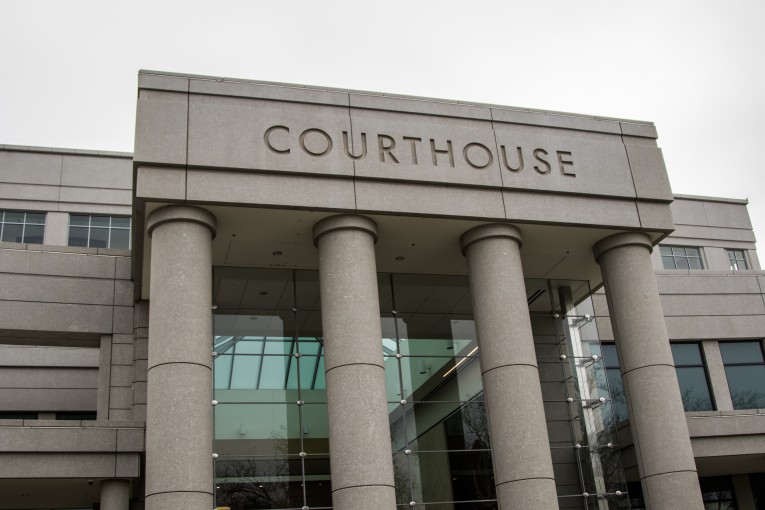
WOODLAND, Calif. — A Yolo County Superior Court judge struck special circumstance allegations against two Black defendants charged with murder after finding they had established a violation of California’s Racial Justice Act, concluding the Yolo County District Attorney’s Office failed to provide race-neutral reasons for disparities in how special circumstance allegations have been charged.
In a lengthy ruling delivered July 1, Judge Catherine Rayhill found that lawyers for the two defendants proved by a preponderance of the evidence that Black defendants in Yolo County were more frequently charged with murder special circumstances than similarly situated defendants of other races.
The ruling removes the special circumstance allegations, eliminating the possibility of life without parole or the death penalty based on those allegations, while leaving the underlying murder charges intact. Jury selection was scheduled to begin the following day.
The defense had argued that the Yolo County District Attorney selectively sought felony-murder special circumstance allegations against Black defendants despite evidence showing the office did not pursue such allegations in every legally eligible case.
According to the defense motion, the district attorney alleged special circumstances “in less than half of eligible cases in the thirteen years from 2012 through 2024” and had failed to provide a race-neutral explanation for the disparities.
Reading from the bench, Judge Rayhill summarized both sides’ arguments before analyzing the statutory requirements of Penal Code Section 745, California’s Racial Justice Act.
The judge explained that the defense argued “the evidence clearly shows that the DA does not file special circumstances in every case where it is legally available,” and that statistical evidence demonstrated significant racial disparities in charging Black defendants. She also summarized the prosecution’s position that defendants had failed to compare themselves to similarly situated defendants and that race-neutral reasons explained any differences.
Rayhill reviewed the Racial Justice Act’s requirement that defendants prove, by a preponderance of the evidence, they were charged with a more serious offense than similarly situated defendants of other races and that prosecutors more frequently sought those charges against people sharing the defendants’ race.
The judge emphasized that the statute does not require proof of intentional discrimination and specifically allows courts to consider statistical evidence, aggregate data and nonstatistical evidence while also considering systemic and institutional racial bias.
The court examined charging data from 57 murder defendants prosecuted in Yolo County between 2012 and 2024.
According to Rayhill, the evidence showed 19 white defendants, 30 Hispanic defendants and 13 Black defendants during that period. Of those groups, five white defendants, 14 Hispanic defendants and six Black defendants were charged with special circumstances.
“The raw numbers indicate a disparity in the charging based upon race,” Rayhill said. “However, the analysis does not end there as there may be legal or race neutral reasons why the cases were charged as they were.”
Rayhill also discussed testimony from competing expert witnesses.
She said defense expert Dr. Nick Petersen “found that there was absolutely a disparity in the racial charging in Yolo County,” while prosecution expert Dr. Alexander Aue disagreed that there was a statistically strong showing but “could not say that there was not a racial disparity in charging the cases.”
The judge further noted testimony from former Yolo County prosecutor Steve Mount, who reviewed many of the comparator cases but testified that he lacked sufficient information to determine whether special circumstances could have been charged in many of them.
Rayhill observed that the elected district attorney, who ultimately makes charging decisions regarding special circumstances, did not testify.
“The DA in this case was not presented as a witness so there is no input from him as to racial neutral reasons concerning the cases in which he decided special circumstances could or should have been filed,” Rayhill said.
After reviewing the statistical evidence and testimony, Rayhill concluded the prosecution failed to justify the disparities.
“The People have not shown racial neutral reasons for the disparity in the data,” she ruled.
“Based upon the totality of the evidence under the standard of preponderance of the evidence, the Court finds a racial justice violation in this case.”
Deputy District Attorney Jesse Richardson objected to the ruling before the court determined the appropriate remedy.
Richardson argued “it’s the People’s position that the defense hasn’t met their burden of proof and that the defense never even made a prima facie showing in the first place.”
He also contended the prosecution’s position “was further compounded by the Court curtailing cross-examination of witnesses in this case and also in denying the discovery request and admitting inappropriate or otherwise inadmissible evidence.”
Defense attorneys urged the court to immediately strike the special circumstance allegations.
Deputy Public Defender Sara Johnson told the court, “My only comment would be that the statute does ask for a remedy that’s specific to the violations and striking the special circumstances is specific to this violation. And I would ask the Court to strike the special circumstances today.”
Attorney James Granucci added, “That’s what we’ve been asking for all along.”
Rayhill agreed, citing the Racial Justice Act’s remedy provision.
“The statute does say that the Court shall impose a remedy specific to the violation,” she said before ruling, “The Court will strike the special circumstance enhancements in the Complaint against (the accused).”
The case will proceed to trial on the remaining charges after the court’s order removing the special circumstance allegations.
Follow the Vanguard on Social Media – X, Instagram and Facebook. Subscribe the Vanguard News letters. To make a tax-deductible donation, please visit davisvanguard.org/donate or give directly through ActBlue. Your support will ensure that the vital work of the Vanguard continues.

Not a surprise. Hispanics and Blacks twice as likely to be charged with special circumstances. Will the new DA act to correct the legacy issues from the retired DA of overcharging, going to trial too often for no gain in crime rates and now demonstrated racial bias?