
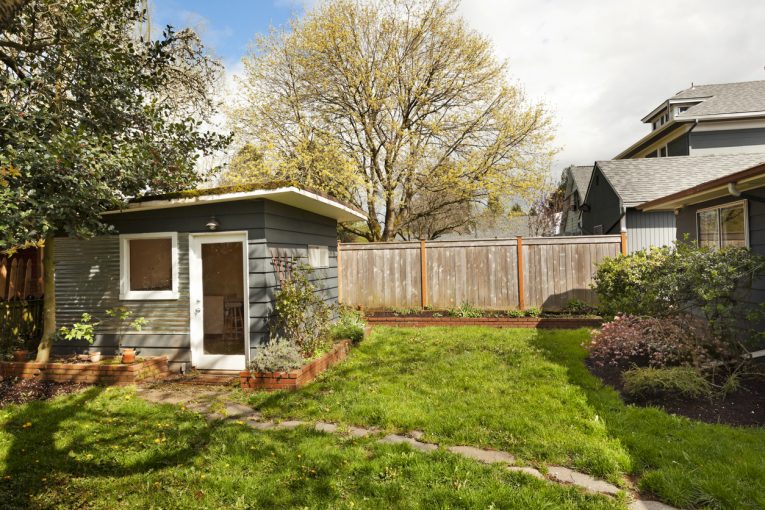
DAVIS, Calif. — The Davis City Council will consider an overhaul of the city’s accessory dwelling unit regulations Tuesday, bringing local rules into compliance with a series of changes to California housing law while seeking to reduce barriers to construction of smaller infill housing units.
City staff is recommending the council hold a public hearing and introduce an ordinance amending Article 40 of the Davis Municipal Code to clarify regulations governing accessory dwelling units, or ADUs, and junior accessory dwelling units, known as JADUs.
The proposed changes come as California has repeatedly revised state law to make ADUs easier to approve and construct, limiting some forms of local discretion and establishing standards governing permitting, setbacks, height, parking, fees and other requirements.
Davis last comprehensively updated its ADU ordinance in 2021. Since then, according to the staff report, “the State has adopted numerous changes and clarifications related to ADU standards and requirements as part of efforts to encourage the production of ADUs statewide.”
The amendment also implements Program 1.16 of the city’s Housing Element, which directs Davis to facilitate ADU production by updating its ordinance when necessary. Staff said the proposal advances the City Council’s 2026-27 housing goal of promoting housing availability through infill, densification, expanded affordable housing options and fewer barriers to production.
According to the report, the ordinance changes are “expected to clarify City processes and facilitate the construction of ADUs within the City.”
The Planning Commission reviewed the proposal July 22 and voted 4-0 to recommend City Council approval. Commissioners expressed support for updating the ordinance as part of the city’s efforts to advance its housing goals and increase housing affordability.
During the commission’s deliberations, Commissioner Valencia proposed a friendly amendment that would have provided city incentives for property owners who placed deed restrictions on ADUs for low-income households.
The amendment failed and was not incorporated into the Planning Commission recommendation, but commissioners asked that the proposal be forwarded to the City Council and specifically identified in the staff report.
Under the city’s framework, ADUs fall into three categories depending on their characteristics and the review required: state-exempt, or building-permit-only, ADUs; ministerial ADUs; and non-ministerial ADUs.
State-exempt ADUs meeting applicable requirements do not require a Planning Division permit, and local zoning standards such as lot coverage, open-space requirements and floor-area ratios are not applied to them. JADUs are a type of state-exempt ADU created from space within an existing single-family residence or attached garage.
Ministerial ADUs are those that do not qualify for the building-permit-only category but meet the city’s requirements for ministerial approval. Unlike state-exempt units, lot coverage, floor-area ratio and open-space requirements apply.
Non-ministerial ADUs do not satisfy the requirements for either of the other categories and require an administrative use permit administered by the Planning Department. The city is not proposing changes to its existing non-ministerial ADU section as part of the current amendment.
City staff said it has already been implementing updated state requirements and revised its ADU informational materials in late 2025 to account for legislation that took effect Jan. 1.
“The current proposed ADU ordinance amendment would codify the updates and align the City’s municipal code with State requirements,” the staff report states.
Among the new state laws is Assembly Bill 1154, which made several changes involving JADUs, including eliminating an owner-occupancy requirement for JADUs with their own sanitation facilities and requiring JADUs to be rented for at least 30 days.
Senate Bill 543 made changes involving application procedures and timelines, impact fees, allowable unit sizes and numbers, and fire sprinklers, while changes to Senate Bill 9 modified requirements governing the submission and state review of local ADU ordinances.
Other recent state legislation has addressed unpermitted ADUs, replacement parking, occupancy and separate sale of units and local programs for preapproved ADU plans.
Senate Bill 1211, effective in 2025, prohibited requiring replacement off-street parking for ADUs and JADUs and changed rules governing units on lots with multifamily housing. Assembly Bill 1332, effective in 2024, required local agencies to develop programs for preapproved ADU plans to expedite approvals.
The Davis ordinance would update or clarify definitions and code references, permitting processes, height and setback standards, design requirements, and provisions governing the sale and conveyance of ADUs.
“The proposed amendments clarify the ADU requirements and the review process,” staff wrote. “It also reorganizes provisions in the ordinance to consolidate and simplify where possible.”
Because of the extent of the reorganization, staff presented the ordinance as a replacement rather than a redlined version of the existing code. Staff said significant changes to the requirements or process were necessary to align the municipal code with state law.
The ordinance would require the city to review qualifying ADU applications ministerially, without a public hearing, when an application is complete and demonstrates compliance with applicable requirements. Applications subject to ministerial approval would have to be processed within timelines established by state law.
The proposed ordinance states that the purpose of the updated regulations is to allow ministerial ADUs and JADUs “in a manner that encourages their development but simultaneously minimizes impacts on traffic, parking, density, and other areas where the city is still permitted to exercise local control.”
For building-permit-only ADUs, the ordinance states that qualifying units would not be subject to locally adopted development standards that apply to other ADUs.
Such ADUs could generally reach 18 feet in height, with an additional two feet permitted to accommodate roof pitch. They could not be rented for terms of 30 days or less.
For a JADU that shares sanitation facilities with the primary single-family dwelling, either the JADU or the remainder of the home would generally have to be occupied by the property owner. The ordinance would also require a recorded declaration restricting separate sale of a JADU and prohibiting its use for short-term rentals.
The city also could not deny an ADU or JADU application solely because of a nonconforming zoning condition, building-code violation or unpermitted structure elsewhere on the property when that condition does not pose a public health or safety threat and is unaffected by construction of the ADU or JADU.
For ADUs subject to local development standards, the ordinance would allow one ADU on a property with an existing or proposed primary dwelling in an area zoned for single-family or multifamily residential use.
Local regulations could not be applied in a way that physically prevents construction of an ADU containing at least 800 square feet of interior living space with four-foot side and rear setbacks, provided the unit complies with other applicable standards.
A detached ADU with zero or one bedroom could be up to 850 square feet, while a detached ADU with two or more bedrooms could reach 1,000 square feet. An attached ADU generally could not exceed 50% of the gross floor area of an existing primary dwelling.
Detached ADUs could generally reach 18 feet, while attached ADUs could reach 25 feet or the height limit applicable to the primary dwelling under the underlying zoning, whichever is lower. An attached ADU could also be constructed on or as the second story of an existing single-family residence, including over a garage, subject to the height limitation.
The proposal generally establishes four-foot minimum side and rear setbacks for newly constructed ADUs. The city could not apply a front-yard setback if doing so would prevent construction of an 800-square-foot ADU.
The ordinance would retain local design requirements for certain ADUs, including provisions related to roof pitch and historically designated properties.
It would also require ADUs subject to local standards to comply with the lot coverage, floor-area ratio and usable open-space requirements of the underlying zoning district.
Those provisions were inadvertently omitted from the version reviewed by the Planning Commission and were restored by staff before the proposal reached the council.
Staff said the restored provisions “are merely corrections and clarifications” and “do not substantially change the proposed ordinance from what the Planning Commission reviewed.”
The requirements would not apply to ADUs of 800 square feet or less that qualify for building-permit-only treatment.
The ordinance would not require additional vehicle parking for an ADU. If a garage, carport or covered parking structure is converted or demolished to create an ADU, the eliminated parking spaces would not have to be replaced as long as the legal ADU remains in use.
ADUs smaller than 750 square feet would also be exempt from impact fees. Units of 750 square feet or more could be charged impact fees proportionally based on the size of the primary dwelling.
The ordinance additionally recognizes circumstances established by state law in which an ADU may be sold separately from the primary residence to a qualified buyer, including when the unit or primary dwelling was built or developed by a qualified nonprofit corporation and other statutory conditions are satisfied.
City staff determined that adopting the ordinance is exempt from the California Environmental Quality Act because it implements state ADU law. The city also concluded there is no possibility that bringing its ADU and JADU regulations into compliance with state law would have a significant environmental effect.
If adopted, the ordinance would be submitted to the California Department of Housing and Community Development for review, as required under state law. The ordinance would take effect 30 days after passage.
To comment please go to one of these social media platforms:
Facebook: https://www.facebook.com/DavisVanguard
LinkedIn: https://www.linkedin.com/company/peoples-vanguard-of-davis-inc/
Instagram: https://www.instagram.com/davisvanguard/
X: https://x.com/davisvanguard
Bluesky: https://bsky.app/profile/vanguardnewsgroup.bsky.social
Subscribe to the Vanguard News letters. To make a tax-deductible donation, please visit davisvanguard.org/donate or give directly through ActBlue. Your support will ensure that the vital work of the Vanguard continues.
