
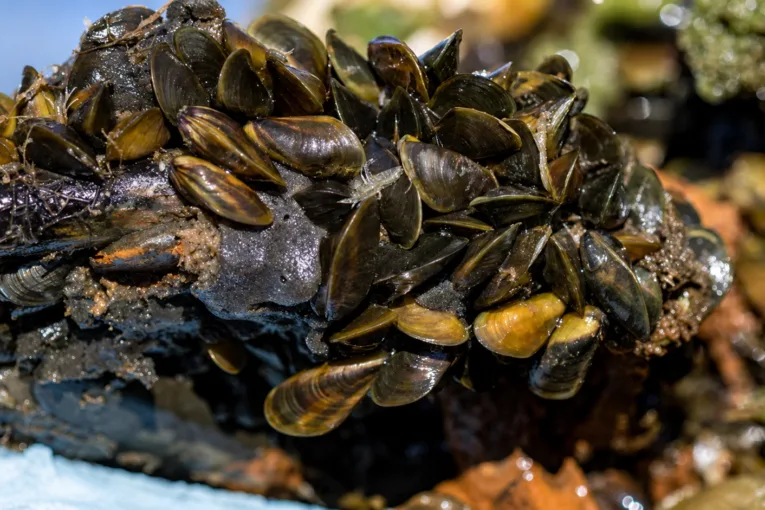
The invasive species first appeared in the California Delta in October 2024 and has continued to spread
Limnoperna fortunei, otherwise known as golden mussels, have wreaked havoc on local infrastructure as they invade California waters.
First recorded in the Sacramento-San Joaquin River Delta in October 2024, the small mollusks — 1 to 2 centimeters in size — have posed a risk to water infrastructure with their rapid growth and colonization. According to the North American Invasive Species Management Association (NAISMA), they can outcompete other native filter feeders, smothering habitats and disrupting ecosystems.
San Joaquin, Kern, Yolo and Sacramento counties have all declared local emergencies in reaction to the species’ spread.
A major concern is the continuing spread of the species through California aqueducts, where successful treatment programs are nullified by the flow of water and travel of the mussels’ veligers — their larvae.
The mussels’ threat to infrastructure largely lies in their ability to colonize in layers and block pipes and pumps, among other water infrastructure. The Delta serves as a critical source of drinking water, agricultural production, economic activity and recreation for the region.
In May, Rep. Vince Fong secured $5 million for Community Project Funding for the San Joaquin Valley Golden Mussel Watercraft Inspection Program. This program would create a watercraft inspection and prevention program to combat the mussels’ spread.
“The growing threat posed by the golden mussel demands urgent action,” Fong said. “This investment confronts this problem head on by strengthening early detection, expanding monitoring capabilities, and equipping local agencies with the tools needed to stop this invasive species.”
The California Department of Water Resources has outlined its three-pronged strategy to protect the State Water Project from golden mussels with immediate, midterm and long-term action plans.
Short-term plans include the continuing “Clean, Drain, Dry” campaign for boaters, inspection and monitoring of waters, increased maintenance of facilities and infrastructure, as well as low-dose copper treatments. Long-term treatments include research on golden mussels and engineering solutions.
Copper treatments have already found early success in Kern County, where high-dose treatments killed adult mussels and low-dose treatments managed the veligers.
However, continued and heavy treatments will require further review and approval under the California Environmental Quality Act.
One place that has drawn questions and criticism over its response is Lake Oroville.
After an assessment declared the species a low risk to the reservoir, protections the lake had in place, such as inspections and decontamination, are no longer required.
The end of the protective measures can be seen as fiscally responsible, given the $6.5 million cost of maintaining a rigorous inspection program for the lake. Other preventive and less rigorous measures that are also less expensive could include ultraviolet light disinfection systems.
Continuing efforts to combat the invasive species are important because they risk harming the water infrastructure that so many California residents rely on. The damage inflicted by golden mussels runs the risk of costly repairs and maintenance, affecting water flow and, in turn, the agricultural communities that rely on Delta waters, as well as disrupting flood management systems.
To comment please go to one of these social media platforms:
Facebook: https://www.facebook.com/DavisVanguard
LinkedIn: https://www.linkedin.com/company/peoples-vanguard-of-davis-inc/
Instagram: https://www.instagram.com/davisvanguard/
X: https://x.com/davisvanguard
Bluesky: https://bsky.app/profile/vanguardnewsgroup.bsky.social
Subscribe to the Vanguard News letters. To make a tax-deductible donation, please visit davisvanguard.org/donate or give directly through ActBlue. Your support will ensure that the vital work of the Vanguard continues.
