
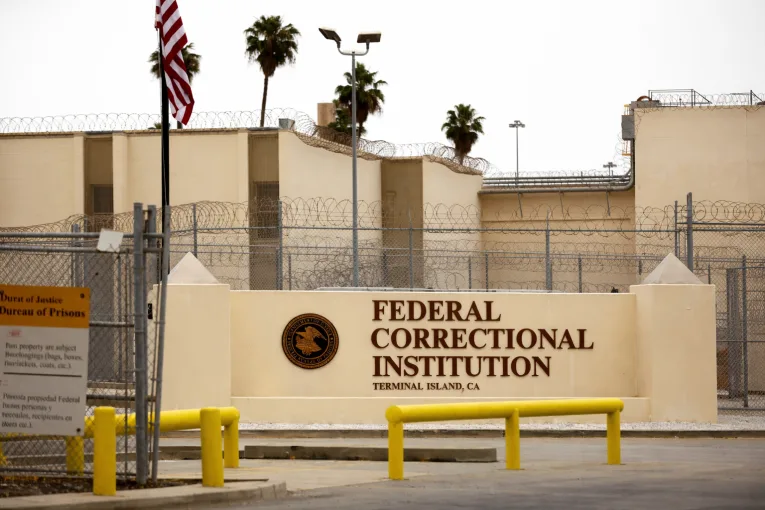
WASHINGTON — More than half a million people are currently under federal correctional control as expanded immigration detention, increased federal prosecutions and growing community supervision drive rising confinement rates, according to a report released July 23 by the Prison Policy Initiative (PPI).
According to the report, approximately 588,000 people are under some form of federal correctional control. This includes individuals in federal prisons, U.S. Marshals custody, ICE detention and federal community supervision.
The PPI reports that this combined total of people in confinement and under community supervision exceeds half a million and continues to grow.
The report attributes much of the recent increase to the expansion of immigration enforcement under the Trump administration. According to the PPI, Congress approved “funding for ICE to expand detention capacity…almost double the current level,” which increases the number of individuals who could be held in federal immigration detention.
The PPI also highlights the role of the U.S. Marshals Service in federal immigration enforcement. The organization states that “every county with a U.S. Marshals contract” may still house individuals facing immigration-related criminal charges, even if local sanctuary policies are in place.
This streamlines the process of prosecuting immigration-related matters — which were once treated primarily as civil issues — as criminal offenses.
According to the report, federal prosecutors have increasingly pursued immigration-related criminal offenses in recent years. The PPI states that the Trump administration projects federal jail bookings will increase from fewer than 100,000 people in fiscal year 2024 to approximately 250,000 by fiscal year 2027.
This includes nearly 110,000 people booked on immigration-related criminal charges.
Immigration-related offenses are not the only targeted issue, as the Trump administration intends a return to a “war on drugs.”
The PPI explains that “people facing federal drug charges tend to be detained…for longer than others” because they are unable to afford release or because prosecutors seek detention. However, this can “exacerbate the harmful impacts of pretrial detention” by placing additional strain on individuals and contributing to the growth of the federal correctional system.
Beyond rising detention rates, the report raises concerns about the financial costs of the federal detention system.
ICE spends about $222 per day to detain each person in custody, while community supervision programs cost only a fraction of that amount. The PPI states that “both immigration and criminal courts could opt for much less costly community agenda” compared with ICE’s detention mechanisms.
Despite those alternatives, the report highlights that federal investment in detention facilities continues to expand.
These federal detention facilities additionally have numerous reports of “abuse and cruelty, inedible food and medical neglect” that commonly lead to “costly lawsuits.” This raises the PPI’s concerns about how public funds are being allocated to these systems.
The PPI also emphasizes that a lack of transparency has made it increasingly difficult for the public to monitor the federal detention system. Its report states that ICE regularly “fail[s] to publish congressionally-mandated semi-monthly reports summarizing statistics on detention,” limiting public access to information.
The report concludes by urging federal, state and local policymakers to increase transparency within the federal detention system while limiting collaboration with federal detention agencies.
The PPI ultimately argues that addressing “…the injustice of ICE and civil immigration enforcement” with their “lack of transparency and accountability” is necessary to slowing the growth of the federal correctional system.
Tags: Prison Policy Initiative, Federal Detention, ICE, Immigration Enforcement, Federal Prisons, Criminal Justice
