
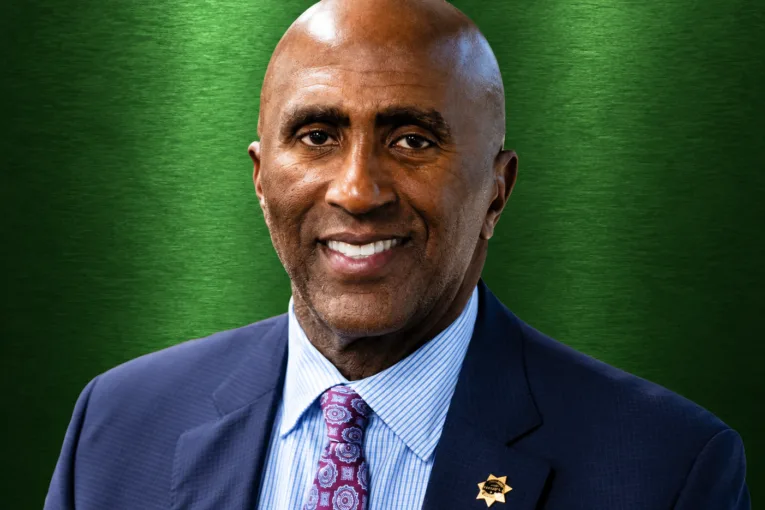
SACRAMENTO, Calif. — Sacramento County Sheriff Jim Cooper sharply criticized California’s parole system this week after his office recently learned that a man convicted of a series of violent sexual offenses more than two decades ago is living in Sacramento County, questioning how someone sentenced to three life terms plus 51 years could be out of prison.
But records from the California Board of Parole Hearings provide important context to Cooper’s criticism: Lloyd Clinton Edwards did not simply have his sentence reduced to 26 years. He became eligible for parole consideration, underwent a formal parole suitability hearing, was found suitable for release and then had that decision affirmed by the full Board of Parole Hearings following gubernatorial review.
Perhaps most significantly, Edwards was released in April 2022 and, according to the Sacramento County Sheriff’s Office itself, has remained compliant with parole and has had no reported negative law enforcement contacts since his release more than four years ago.
The Sheriff’s Office said it only recently learned that Edwards was living in Sacramento County, apparently prompting Cooper’s criticism years after Edwards was released.
There is no indication in the Sheriff’s Office account that a new arrest, parole violation or other adverse law enforcement contact triggered the scrutiny. Instead, Cooper’s concern centers on the fact that Edwards was released at all and is now living in Sacramento County.
“Why the hell is he out? Why is he in my county?” Cooper told FOX40.
Edwards, now 47, was convicted in Butte County in 2002 for crimes stemming from violent sexual attacks against young women in Chico approximately two years earlier.
According to FOX40, Edwards was convicted of crimes including rape, kidnapping and assault and was sentenced to three life terms plus 51 years.
“Three life terms plus 51 years. How in the hell does that turn into 26 years? You got to ask yourself that,” Cooper told FOX40. “And that’s not okay.”
But a life sentence with the possibility of parole does not necessarily require someone to remain incarcerated for life. Under California law, people serving indeterminate life sentences can become eligible for consideration by the Board of Parole Hearings after reaching an applicable parole eligibility date.
California Department of Corrections and Rehabilitation records identify Edwards as CDCR No. T50476. He entered state prison on April 19, 2002.
Historical inmate information lists Edwards’ parole eligibility date as September 2019.
That distinction is significant because becoming eligible for parole does not mean someone is automatically released. Instead, eligibility allows the person to appear before the Board of Parole Hearings, which determines whether the individual is suitable for release.
Board records show Edwards was scheduled for an initial parole suitability hearing in January 2020 but waived the hearing for one year.
His initial suitability hearing ultimately took place Nov. 30, 2021.
Official Board of Parole Hearings records show that the panel granted parole.
That decision was not the end of the review process.
Board records show Edwards’ case was subsequently referred by the governor under Penal Code section 3041.1, which permits the governor to request that the full Board review a parole decision involving a person convicted of an offense other than murder.
On April 19, 2022, the full Board of Parole Hearings considered whether to affirm the November 2021 decision granting Edwards parole.
According to the Board’s published en banc decisions, the motion was to “affirm the panel’s November 30, 2021 decision to grant parole, as articulated in the panel’s proposed decision.”
The motion was approved by a majority of commissioners present.
Edwards was subsequently released on parole in April 2022.
The Vanguard has requested the transcript from Edwards’ Nov. 30, 2021 parole hearing, which should provide additional information about the evidence considered by commissioners and their reasons for determining that Edwards was suitable for release.
Under California’s parole system, the seriousness of the original offense is part of the Board’s consideration, but the parole inquiry is not limited to reconsidering the punishment imposed decades earlier.
The Board evaluates whether an incarcerated person currently poses an unreasonable risk to public safety, considering relevant information that can include the person’s criminal history, institutional behavior, rehabilitation, psychological evaluations, insight into the underlying offenses and plans for release.
That distinction is largely absent from Cooper’s criticism.
“When you try to rape them with a razor blade and you punch in the face and threaten her, and then a short time later you take two women who are giving you a ride, force them off and brutally rape one of them. No, you don’t get a second chance,” Cooper told FOX40. “I’m not willing to roll the dice on that. Not at all.”
Cooper also argued that Edwards’ release undermined the finality victims believed they had received from the original sentence.
“These victims had finality. ‘Hey, this guy was sentenced. He’s never coming out, never coming out whatsoever,’” Cooper said. “And he’s out 26 years later.”
But whether the original sentence legally meant Edwards would never be released is a different question from whether victims believed that would occur.
California distinguishes between life sentences with the possibility of parole and life without the possibility of parole. For people serving parole-eligible life sentences, becoming eligible permits consideration for release but does not guarantee it.
The publicly available parole records therefore provide additional context to Cooper’s question about how three life sentences plus 51 years resulted in Edwards being released.
Edwards was not released simply because he had served a predetermined number of years.
He first became eligible for parole consideration. A parole panel then conducted a suitability hearing and granted parole in November 2021. Following gubernatorial referral, the full Board considered the decision and voted in April 2022 to affirm the grant.
And the subsequent four years provide another piece of information relevant to the public-safety question at the center of the parole process.
According to the Sacramento County Sheriff’s Office, Edwards remains under parole supervision and has been compliant, with no reported negative law enforcement contacts since his April 2022 release.
That amounts to more than four years in the community without a reported adverse law enforcement contact.
The absence of reported violations does not establish what Edwards’ future conduct will be, nor by itself does it determine whether the Board made the appropriate decision in 2021. It does, however, provide relevant information for evaluating the risk assessment that preceded his release.
Cooper nevertheless argued that the nature of Edwards’ crimes means he should not have received another opportunity outside prison.
“One was an attempted rape. One was an actual rape. He’s a registered sex offender under Megan’s Law for a reason,” Cooper told FOX40.
Edwards declined to answer questions from the television station.
FOX40 reported that CDCR had not responded to its request for an explanation of why Edwards was granted parole.
The Board’s own records, however, establish that the release resulted from more than the passage of time.
Edwards became eligible for consideration, appeared before a parole panel in November 2021 and received a grant of parole. The case was subsequently referred by the governor for additional review, and the full Board voted in April 2022 to affirm the grant.
What remains unknown is precisely why commissioners concluded Edwards no longer posed an unreasonable risk to public safety.
The requested hearing transcript should provide substantially more information about that determination, potentially including Edwards’ prison disciplinary history, rehabilitation and programming, psychological risk assessment, insight into his crimes, release plans and the commissioners’ stated reasoning.
Until that record is available, the publicly available documents establish a more complicated picture than the question of how three life sentences became 26 years.
Edwards was serving a sentence that permitted eventual parole consideration, received that consideration through California’s parole process, had the grant subjected to additional review and has now spent more than four years in the community without a reported negative law enforcement contact.
The Sheriff’s Office’s recent discovery that Edwards lives in Sacramento County explains why Cooper is raising the case now. But according to the information released by his own office, Edwards came to the sheriff’s attention not because of a new crime or reported parole violation, but despite more than four years of reported compliance in the community.
To comment please go to one of these social media platforms:
Facebook: https://www.facebook.com/DavisVanguard
LinkedIn: https://www.linkedin.com/company/peoples-vanguard-of-davis-inc/
Instagram: https://www.instagram.com/davisvanguard/
X: https://x.com/davisvanguard
Bluesky: https://bsky.app/profile/vanguardnewsgroup.bsky.social
Subscribe to the Vanguard News letters. To make a tax-deductible donation, please visit davisvanguard.org/donate or give directly through ActBlue. Your support will ensure that the vital work of the Vanguard continues.
