
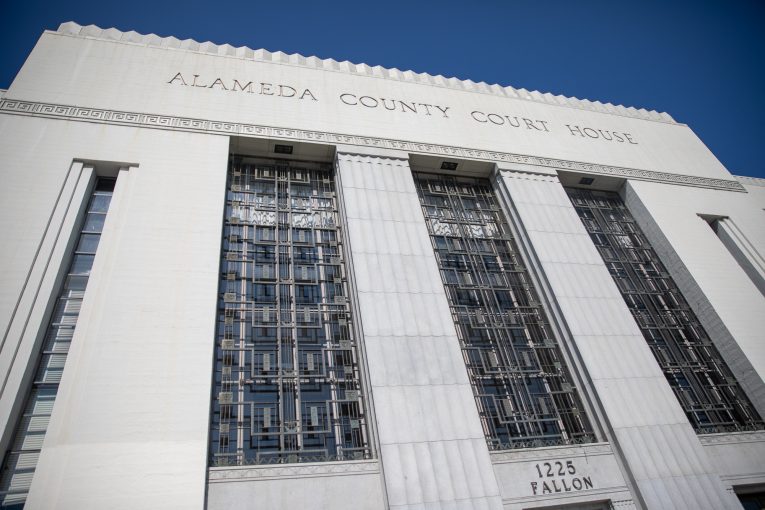
ALAMEDA COUNTY, Calif. — An Alameda County judge reportedly sealed the entire murder case involving the killing of Jonathan McKinsey, a transgender New York Times executive who was fatally shot in Dublin, California, on Sept. 26, restricting public access to court records, including the order authorizing the sealing.
According to an Oct. 18 report by the New York Post, the restrictions extend beyond investigative records and charging documents to include the judicial order explaining the decision, raising questions about the public’s constitutional right to access criminal proceedings.
The case involves two people accused of McKinsey’s killing. While courts may seal specific records to protect witnesses, preserve confidential information or safeguard an accused person’s right to a fair trial, sealing an entire criminal case raises broader concerns about transparency and judicial accountability.
According to the New York Post, Shouyong Zhang and Shili Chen, both 77 and identified as McKinsey’s mother-in-law and father-in-law, respectively, were charged with murder in connection with the Sept. 26 killing at the Dublin Sports Grounds.
Prosecutors allege the killing involved lying in wait and was connected to divorce proceedings and a custody dispute involving the couple’s daughter and grandchild.
According to the report, investigators recovered a suspected murder weapon from Chen, who declined to speak with investigators. Zhang reportedly admitted to shooting McKinsey.
Records from the couple’s divorce proceedings, which remain publicly accessible, include allegations by McKinsey that his in-laws engaged in transphobic behavior, including an incident in which homophobic slurs were allegedly directed at his daughter.
The divorce proceedings also contain allegations of abuse and harassment involving the family. Those allegations have not been established as the motive for the killing.
The Mercury News reported that the criminal complaint, police declarations and other documents were withheld from public access, including the sealing order itself.
The restrictions reportedly also prevent the public from identifying the judge presiding over the criminal case, making it difficult to examine the judicial decision authorizing the sealing or determine whether potential conflicts of interest exist.
The First Amendment provides a qualified right of public access to criminal proceedings, while California law generally requires courts to make specific findings before sealing judicial records.
Under California Rules of Court, Rules 2.550 and 2.551, courts considering the sealing of records must determine whether an overriding interest supports the restriction, whether that interest would likely be prejudiced without sealing and whether the proposed restriction is narrowly tailored.
Courts must also consider whether less restrictive means are available to protect the identified interest. The application of these rules depends on the type of record and proceeding involved.
The U.S. Supreme Court has recognized a qualified First Amendment right of public access to criminal proceedings. In Press-Enterprise Co. v. Superior Court (1986), the court addressed constitutional protections for access to preliminary hearings and the circumstances under which proceedings may be closed.
The reported sealing has drawn criticism from attorneys specializing in public access to judicial proceedings.
Matthew Cate, a Bay Area attorney who handles public access cases, questioned the breadth of the restrictions.
“That’s not supposed to happen that way. I can’t imagine what would justify sealing an entire case file,” Cate said, according to the Mercury News.
David Loy, legal director of the First Amendment Coalition, described the sealing as an “egregious” departure from the presumption of public access to criminal court records.
“Court records are presumptively open to the public and every sealing should be the exception rather than the rule,” Loy told the Mercury News.
Loy also raised concerns about withholding the identity of the presiding judge, noting that the public cannot evaluate potential conflicts of interest without knowing which judicial officer is overseeing the proceedings.
The reported restrictions extend to the judicial explanation for sealing the case, preventing members of the public and journalists from reviewing the court’s stated justification or determining whether alternatives to comprehensive sealing were considered.
The precise scope of the restrictions remains unclear, including whether hearings, docket entries or other proceedings remain accessible.
According to the Mercury News, Alameda County court officials confirmed the existence of a sealing order but declined to comment further.
The court has not publicly explained the legal basis for the reported restrictions, leaving unresolved questions about the scope of the order and its compliance with constitutional and state-law protections governing public access to criminal proceedings.
To comment please go to one of these social media platforms:
Facebook: https://www.facebook.com/DavisVanguard
LinkedIn: https://www.linkedin.com/company/peoples-vanguard-of-davis-inc/
Instagram: https://www.instagram.com/davisvanguard/
X: https://x.com/davisvanguard
Bluesky: https://bsky.app/profile/vanguardnewsgroup.bsky.social
Subscribe to the Vanguard News letters. To make a tax-deductible donation, please visit davisvanguard.org/donate or give directly through ActBlue. Your support will ensure that the vital work of the Vanguard continues.
