
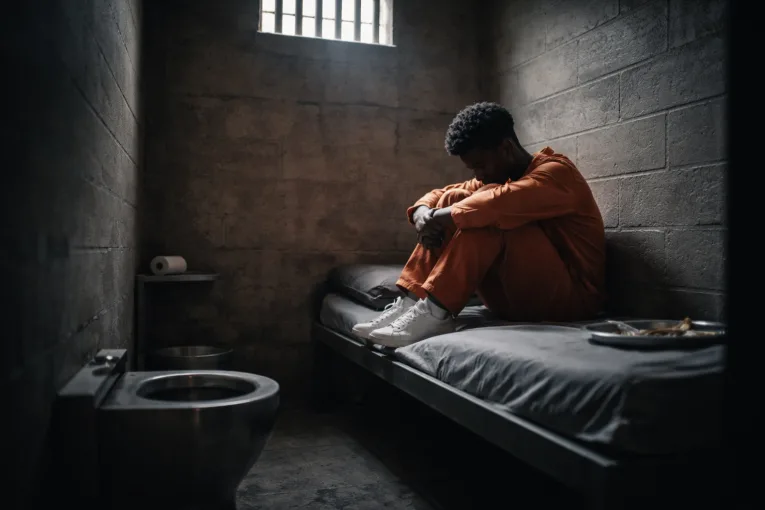
SACRAMENTO, Calif. — California’s chief probation officers are warning that violent juvenile crime is “surging” and blaming Gov. Gavin Newsom and recent juvenile justice reforms, but state data show juvenile arrests declined in the most recent year, remain below pre-pandemic levels and are dramatically lower than historical highs.
The Chief Probation Officers of California, or CPOC, issued a sharply worded statement arguing that Newsom has weakened public safety by signing legislation restricting juvenile detention and limiting probation terms.
“Violent crime by young people in California is climbing, and in his final legislative session, Governor Newsom took a series of actions to make the problem worse,” CPOC said.
But data from the nonpartisan Legislative Analyst’s Office and the California Department of Justice present a considerably more complicated picture.
The LAO acknowledges that juvenile felony arrests increased substantially after reaching historic lows during the COVID-19 pandemic.
In 2025, there were 348.2 felony arrests for every 100,000 California youth ages 10 to 17, 60% higher than in 2021.
But the LAO cautions that 2021 represented an unusual low point after years of declining arrests and the extraordinary conditions created by the pandemic.
“The precise reasons for this notable drop are not clear,” the LAO said.
The agency noted that research on the broader pandemic-era decline in arrests pointed to reduced mobility and changes in police enforcement patterns, factors the LAO said could also have reduced juvenile arrests.
As pandemic conditions subsided, changes in mobility, policing or other factors could similarly have contributed to rising arrest rates, according to the LAO.
Most significantly, the LAO describes the overall trend under the heading, “Despite Recent Increases, Juvenile Arrest Rates Remain Relatively Low.”
“Juvenile felony and non-felony arrest rates decreased by about 7 percent between 2024 and 2025,” the LAO reported.
The agency added that juvenile arrest rates in 2025 remained below pre-pandemic levels and substantially below the highs recorded during the past two decades.
The 2025 juvenile felony arrest rate was 77% lower than its 2007 peak, while the non-felony arrest rate was 90% below its 2007 peak, according to the LAO.
The California Department of Justice reported the same recent downward movement.
“Juvenile arrests decreased 7.0%, from 32,874 in 2024 to 30,568 in 2025,” DOJ reported in its annual statewide criminal justice statistics.
Of the 30,568 juvenile arrests in 2025, 46.7% involved felony offenses, 52.1% involved misdemeanors and 1.2% involved status offenses, according to DOJ.
That recent decline is absent from CPOC’s press release, which instead highlights the increase from the pandemic-era low.
CPOC also characterizes the nearly 60% increase as occurring “since the state closed the Division of Juvenile Justice.”
The chronology is more complicated.
Newsom signed Senate Bill 823 in 2020, beginning the process of shifting responsibility for youth previously eligible for commitment to the state Division of Juvenile Justice to counties.
DJJ largely stopped accepting new youth after June 30, 2021, but the state agency itself continued operating for another two years.
The California Department of Corrections and Rehabilitation announced on June 30, 2023, that the remaining youth had been transferred to counties and DJJ operations had ceased.
The state therefore did not close DJJ in 2021, the year CPOC uses as the baseline for its nearly 60% increase.
There are, however, significant increases in some measures of serious juvenile offending.
CPOC says juvenile homicide arrests have increased more than 80% since 2019 and points to a 120% increase over two years in youth adjudicated for serious offenses.
The state’s Office of Youth and Community Restoration confirms the latter increase.
The number of youth adjudicated for offenses covered by Welfare and Institutions Code section 707(b) increased from 1,459 in fiscal year 2021-22 to 3,216 in 2023-24, an increase of about 120%.
Section 707(b) includes numerous serious offenses, including murder, attempted murder, certain sexual offenses, robbery and specified assaults.
But the state report also found the statewide increase was disproportionately driven by Los Angeles County.
Los Angeles County went from 224 section 707(b) adjudications in 2021-22 to 1,290 in 2023-24, a 476% increase.
All other California counties combined experienced a 56% increase, from 1,235 to 1,926, according to the Office of Youth and Community Restoration.
The report therefore confirms a substantial increase in serious adjudications while showing that the statewide 120% figure does not reflect a uniform trend across California.
CPOC goes further than describing the statistics, arguing that legislation Newsom signed this year will exacerbate juvenile violence.
The organization specifically targets SB 1009, authored by Sen. Josh Becker, D-Menlo Park.
CPOC says the measure “ties the hands of courts in detaining serious and violent juvenile offenders, regardless of crime, requiring placement in our communities.”
The official Senate Public Safety Committee analysis describes a more nuanced legal standard.
Under SB 1009, courts must generally release a youth unless they find by clear and convincing evidence that the youth violated a juvenile court order, escaped from a juvenile court commitment, poses an immediate and urgent danger to themselves or another person, or is likely to flee the court’s jurisdiction.
The legislation also prohibits detention in juvenile hall unless the court finds a less restrictive alternative unsuitable.
Becker said the purpose is to reserve detention for situations in which it is actually necessary.
“California has long recognized that detention should be the exception, not the rule,” Becker said when the measure advanced through the Senate Public Safety Committee. “My bill strengthens the legal safeguards to ensure young people are only detained when truly necessary for safety, while expanding opportunities for courts to reconsider detention and prioritize community-based alternatives whenever possible.”
Newsom signed SB 1009 on Sept. 30.
CPOC also criticizes AB 1886, authored by Assemblymember Sade Elhawary, D-Los Angeles, arguing the legislation “limits how long youthful offenders, regardless of crime and regardless of rehabilitative progress, can stay on probation.”
CPOC states that California law now “caps juvenile probation terms at 12 months, even for serious and violent offenses.”
The legislation establishes a 12-month baseline for certain youth but provides a process through which a court may extend probation.
“If the court extends probation at the noticed hearing, the court shall schedule and hold subsequent noticed hearings for the ward pursuant to subdivision (b) not less frequently than every six months for the remainder of the wardship period,” the legislation states.
Elhawary described the measure differently during an Assembly Public Safety Committee hearing.
“It establishes a twelve month baseline for probation unless a court finds a specific reason to extend it,” Elhawary said. “It also requires regular court review and ensures probation conditions are reasonable, age appropriate, and focused on helping young people succeed.”
CPOC is not an independent research organization. It is the professional association representing chief probation officers in California’s 58 counties and advocates before the Legislature on legislation and state funding affecting probation departments.
CPOC itself has previously explained that its membership is publicly funded.
“As an Association, the Chief Probation Officers of California is supported by membership paid by county tax dollars,” the organization states in a longstanding policy explaining why it does not endorse candidates for elective office.
CPOC has repeatedly advocated for additional state funding for probation and opposed legislation that limits probation departments’ detention or supervisory authority.
In its latest statement, CPOC also criticized Newsom for shifting juvenile justice funding away from counties, failing to fund requests for secure behavioral health beds, declining to provide the level of Proposition 36 funding sought by probation officials and proposing reductions to pretrial services and probation funding.
“We warned Governor Newsom this would happen. It happened,” CPOC Executive Director Karen Pank said. “This year, he had the bills on his desk and the budget in his hands to start fixing it. He has exacerbated the juvenile justice crisis and failed to make our communities safer. Every family in California deserves better than that.”
CPOC argues that the current juvenile justice population is older and includes more youth accused or adjudicated of serious violence than the system historically served.
“This isn’t a mystery. California knows how to do this right, because we did it,” Pank said. “Between 2000 and 2019, juvenile felony arrest rates dropped 73 percent while nearly 90 percent of youth were safely served in their communities. That worked because judges and probation professionals had the time, discretion, and tools to do their jobs. Since 2020, the state has stripped those tools away.”
The state data confirm that California experienced increases in juvenile felony arrests after the extraordinary lows reached during the pandemic, as well as significant increases in some categories of serious juvenile offending.
But the data do not establish that juvenile crime is currently increasing across the board or that the juvenile justice reforms cited by CPOC caused the post-pandemic increase.
Instead, the LAO describes a longer trend in which juvenile arrests declined dramatically for more than a decade, reached unusually low levels during the pandemic, increased beginning in 2022 and declined again in 2025.
Nor does the LAO attribute the increase to the closure of DJJ or changes limiting juvenile detention.
“There is no consensus among researchers as to why juvenile arrest rates consistently declined between 2007 and 2021,” the LAO reported.
The latest statewide numbers therefore present a considerably different picture from CPOC’s assertion that violent juvenile crime is presently “surging.”
California has experienced concerning increases in certain categories of serious youth offending, but overall juvenile arrest rates fell in the most recent year, remain below their pre-pandemic levels and stand far below the historical highs California experienced two decades ago.
To comment please go to one of these social media platforms:
Facebook: https://www.facebook.com/DavisVanguard
LinkedIn: https://www.linkedin.com/company/peoples-vanguard-of-davis-inc/
Instagram: https://www.instagram.com/davisvanguard/
X: https://x.com/davisvanguard
Bluesky: https://bsky.app/profile/vanguardnewsgroup.bsky.social
Subscribe to the Vanguard News letters. To make a tax-deductible donation, please visit davisvanguard.org/donate or give directly through ActBlue. Your support will ensure that the vital work of the Vanguard continues.
