
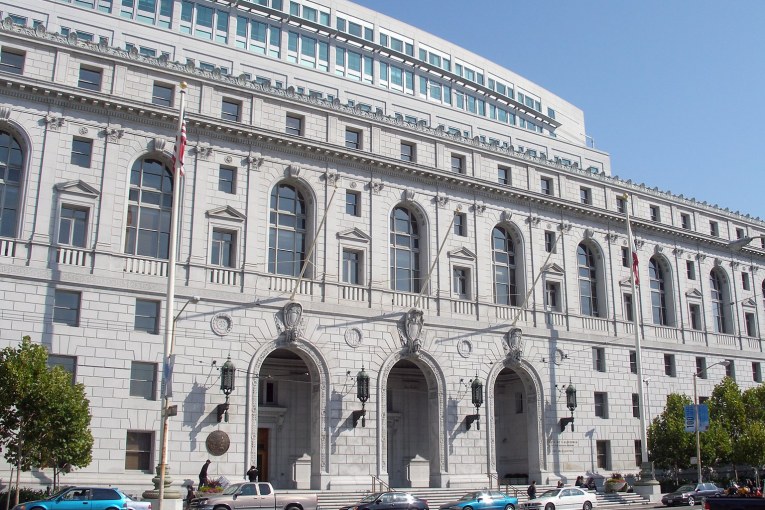
SACRAMENTO, Calif. — The California Supreme Court has opened a new phase in Gov. Gavin Newsom’s effort to commute every death sentence in the state to life imprisonment without the possibility of parole, inviting legal briefs from interested parties and establishing a schedule for arguments over the governor’s constitutional authority to grant sweeping clemency.
In an order issued Monday, Nov. 9, Chief Justice Patricia Guerrero invited prosecutors, defense organizations, legal scholars, victims’ families and other interested parties to submit arguments addressing the legal questions raised by Newsom’s request.
The court established a Nov. 24 deadline for applications and proposed amicus briefs, with the governor permitted to submit a consolidated response by Dec. 4.
The order does not decide whether Newsom can proceed with the commutations. Instead, it creates a process for the justices to consider the legal basis for the governor’s request before making a recommendation under the California Constitution.
At issue is Newsom’s proposal to replace the death sentences of approximately 548 incarcerated people with life imprisonment without the possibility of parole. The proposed action would not release anyone from prison or make them eligible for parole.
The governor announced his request Nov. 5, arguing that California’s death penalty system has been undermined by racial disparities, geographic inconsistencies, wrongful convictions and decades of delays.
Under Article V, Section 8 of the California Constitution, the governor must obtain a recommendation from the state Supreme Court before granting clemency to a person who has been twice convicted of a felony.
Newsom’s request raises an unusual question: whether the court can approve a broad exercise of clemency based on systemic defects in capital punishment rather than evaluating each affected person’s circumstances individually.
The court’s Nov. 9 order invites briefing from interested persons and organizations as amici curiae, or friends of the court, rather than formally designating them as parties to the proceeding.
That procedural decision may shape the legal arguments the justices ultimately consider.
The order specifically asks for briefs addressing the legal issues raised by the governor’s request, suggesting that the court’s immediate focus is the scope and legality of executive clemency rather than a broader referendum on the death penalty itself.
However, the order does not expressly exclude arguments concerning public policy, victims’ interests or individual cases when those considerations are relevant to the legal questions.
Several organizations have already submitted filings supporting the governor’s proposal.
In a joint brief, the California Appellate Project, Habeas Corpus Resource Center and Office of the State Public Defender argue that the court’s role is limited to determining whether the proposed commutations would constitute an abuse of the governor’s discretion.
The organizations contend that California’s longstanding problems administering capital punishment provide ample justification for the governor’s proposed action.
They cite research documenting racial disparities in death sentencing, significant differences among counties in the application of capital punishment and the risk of wrongful convictions.
The brief points to a 2024 study examining more than 27,000 California murder and manslaughter convictions between 1978 and 2002, which found significant racial and ethnic disparities in capital charging and sentencing decisions.
It also cites research examining California death sentences between 1987 and 2019 that identified geographic variations in death sentencing and disparities associated with the race of defendants and victims.
The organizations argue that these problems are systemic and cannot be adequately addressed through individual appeals alone.
Their legal argument relies heavily on the California Supreme Court’s 2018 procedures for reviewing clemency requests.
Under those procedures, the court does not determine whether a governor should grant mercy in a particular case. Rather, the court examines whether sufficient grounds exist to support the proposed exercise of executive clemency.
The organizations argue that Newsom’s request satisfies that standard because the problems he identifies extend across California’s capital punishment system.
They also cite decisions from other states upholding broad grants of clemency, including an Illinois Supreme Court ruling that sustained former Gov. George Ryan’s decision to commute death sentences in 2003.
A separate submission from 19 scholars of law, history, philosophy and government similarly argues that mass clemency is deeply rooted in American constitutional history.
The scholars include UC Berkeley School of Law Dean Erwin Chemerinsky, Harvard Law School professor Carol Steiker and Stanford Law School professor Robert Weisberg.
Their filing traces the executive clemency power to early American history, including President George Washington’s pardons following the Whiskey Rebellion.
The scholars also point to more recent examples of governors commuting entire death row populations, including actions in Illinois, Oregon, Colorado, Maryland and New Jersey.
In December 2024, President Joe Biden commuted the death sentences of 37 people in federal custody, another example cited in the filing.
The scholars argue that categorical grants of clemency have historically been used when executive officials concluded that the death penalty was being administered unfairly or inconsistently.
California, they note, has the nation’s largest death row population and has not granted capital clemency in decades.
Opposition to Newsom’s proposal is also emerging in the Supreme Court proceedings.
On Nov. 6, the Criminal Justice Legal Foundation filed a motion seeking to unseal the governor’s request for a recommendation and its supporting record.
The San Bernardino County District Attorney’s Office filed a separate motion seeking access to the same materials.
The Criminal Justice Legal Foundation’s filing identifies Kent S. Scheidegger as counsel, while the San Bernardino County District Attorney’s Office filing identifies Assistant District Attorney Robert P. Brown.
The docket does not establish that the court has ruled on either motion.
The governor’s submission also includes a confidential record lodged with the court on Nov. 5.
Deputy Solicitor General Zach ZhenHe Tan informed the court that he would serve as counsel of record for Newsom.
The dispute over access to the governor’s supporting materials could become an additional issue as prosecutors and other interested parties prepare their legal submissions.
Although California voters have repeatedly retained the death penalty, the state has not carried out an execution since 2006.
Newsom imposed an execution moratorium in 2019, and his proposed commutations would go further by replacing existing death sentences with life without parole.
The proposed action would not itself repeal California’s death penalty statute or prevent prosecutors from pursuing capital punishment in future cases.
The supporting organizations argue that the governor’s authority to commute sentences is a separate constitutional power that does not depend on legislative repeal or voter approval.
The California Appellate Project, Habeas Corpus Resource Center and Office of the State Public Defender also contend that a broad commutation would not impair public safety because the affected individuals would remain incarcerated for life without parole.
The court’s decision to solicit briefing now places those arguments, along with potential challenges from prosecutors and other interested parties, before the justices.
Applications and proposed amicus briefs must be filed by Nov. 24, with Newsom’s consolidated response due Dec. 4. The court has not announced when it will decide whether to recommend the proposed commutations.
To comment please go to one of these social media platforms:
Facebook: https://www.facebook.com/DavisVanguard
LinkedIn: https://www.linkedin.com/company/peoples-vanguard-of-davis-inc/
Instagram: https://www.instagram.com/davisvanguard/
X: https://x.com/davisvanguard
Bluesky: https://bsky.app/profile/vanguardnewsgroup.bsky.social
Subscribe to the Vanguard News letters. To make a tax-deductible donation, please visit davisvanguard.org/donate or give directly through ActBlue. Your support will ensure that the vital work of the Vanguard continues.
