
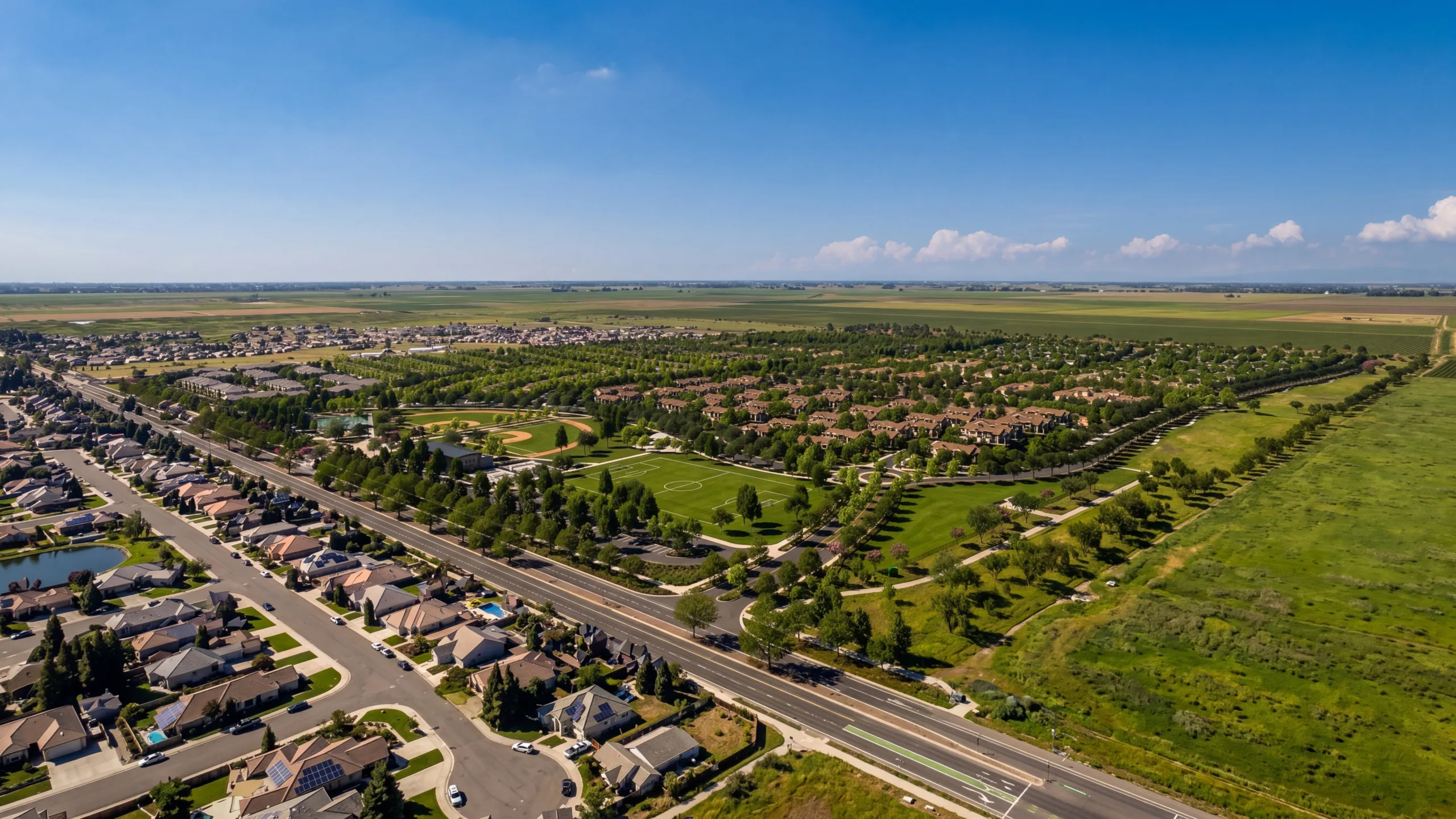
DAVIS, Calif. — With the Nov. 3 election approaching, the debate over Measure W and the proposed 1,250-home Willowgrove development has increasingly focused on how Davis can accommodate future housing needs while preserving agricultural land and maintaining the voter approval requirements established under Measure J/R/D.
Coverage this week examined housing affordability, the limited production of ownership housing, the availability of infill development sites and the implications of continued restrictions on peripheral growth.
Regional news organizations have also examined the proposal, including its affordable housing commitments, agricultural mitigation measures and the absence of an organized opposition campaign.
The discussion comes four months after Davis voters narrowly rejected Village Farms, another peripheral housing proposal, by a margin of 50.6% to 49.4%.
Unlike Village Farms, Willowgrove has received unanimous approval from both the Davis Planning Commission and City Council and has encountered no comparable organized opposition campaign.
Measure W would authorize General Plan amendments allowing the approximately 232-acre Willowgrove development to proceed northeast of Davis, adjacent to the Wildhorse neighborhood and north of East Covell Boulevard.
The proposal includes 1,250 homes, at least 250 deed-restricted affordable units, a $6.8 million contribution toward additional affordable housing, parks, recreational facilities and transportation improvements.
Housing Affordability and the City’s Limited Ownership Market
One of the week’s contributions came from longtime Davis real estate professional Leslie Blevins, who examined local housing prices and the implications of limited homeownership opportunities.
In an Oct. 21 Vanguard commentary, Blevins reported that 260 single-family homes had sold in Davis so far in 2026 at an average price of $988,601.
Condominiums, townhomes and half-plexes sold for an average of $545,404, illustrating the difference between detached housing and smaller ownership properties.
Blevins also examined historical construction figures, reporting that Davis built 703 single-family homes between 2009 and 2023, an average of fewer than 50 annually.
In 2023, the city issued only one single-family building permit, while approximately two-thirds of residential units constructed since 2009 were rental apartments.
Blevins argued that limited ownership opportunities can also affect the rental market because households unable to purchase homes may remain in rental properties longer.
She pointed to the 2025 UC Davis apartment survey, which reported a 3.5% vacancy rate and a 1.8% decline in average rents, as evidence of changes in the rental market following additional apartment construction.
Her commentary also examined Willowgrove’s housing mix, including its deed-restricted affordable units, condominiums, townhomes and detached homes.
Although supporters describe approximately 43% of the proposed homes as affordable or attainable, the project guarantees 250 deed-restricted affordable units, representing 20% of the total development. Other smaller market-rate homes would not carry the same income-based restrictions.
Can Infill Meet Davis’ Future Housing Needs?
The question of where Davis can accommodate additional housing was examined in an Oct. 24 Vanguard opinion piece addressing the relationship between infill development, peripheral growth and the city’s future housing requirements.
The commentary examined projections of approximately 7,300 additional housing units and the feasibility of accommodating that growth within the existing urban footprint.
Davis has identified opportunities for infill and redevelopment, but the availability of land designated for housing does not necessarily establish that every identified property can be developed within the anticipated planning period.
Potential obstacles include infrastructure requirements, redevelopment costs, fragmented ownership, financing constraints and the economic feasibility of multifamily construction.
Increasing allowable density can create additional development capacity, but actual housing production depends on whether projects receive financing, necessary approvals and sufficient market demand to proceed.
The commentary also examined the implications of continued rejection of peripheral development proposals without identifying alternative sites and strategies capable of meeting projected housing needs.
That discussion is closely connected to Measure J/R/D, which requires voter approval for certain changes to the General Plan that would convert agricultural or open-space land to urban uses.
The voter approval requirement has been a defining feature of Davis land-use policy since 2000, while California’s expanding housing requirements have introduced additional legal and planning considerations.
Regional News Coverage Examines Measure W
Regional news organizations have also examined Willowgrove as the election approaches, with reporting addressing the development’s housing commitments, infrastructure requirements and differences from the Village Farms proposal rejected in June.
On Oct. 14, Capital Public Radio published a report titled Will Davis voters embrace Measure W this fall after rejecting housing plans in June?
The report contrasted Willowgrove with Village Farms, which generated extensive debate over environmental impacts and affordable housing commitments.
Capital Public Radio also reported that Willowgrove is the first development in Davis to have an approved subdivision map before voters decide whether to authorize the project.
Austin Heyworth, a spokesperson for the Yes on Measure W campaign, told the station that the advance planning could allow construction to begin in 2027, with the first homes potentially available in 2028.
Those dates remain contingent on voter approval, remaining governmental requirements and the development schedule.
On Oct. 13, CBS Sacramento reporter Darrielle Fair examined Measure W in a report featuring Davis City Attorney Inder Khalsa and Mayor Donna Neville.
Khalsa described the city’s process for presenting the project to voters and discussed the developer’s financial commitments, including the $6.8 million affordable housing contribution and infrastructure funding.
The report also addressed the project’s agricultural mitigation requirements and noted that the land proposed for development would require annexation approval from the Yolo County Local Agency Formation Commission before becoming part of the city.
CBS Sacramento reported that Willowgrove would provide a range of housing types, community recreational facilities and improvements intended to address traffic generated by the project.
A separate Oct. 12 report by Daniel Hennessy for Abridged examined the development’s history and the agreements negotiated between the city and Davis Eastside LLC.
The Abridged voter guide explained the baseline project features included in the measure and the requirements governing changes to those commitments.
Under Measure J/R/D, baseline project features approved by voters cannot be substantially changed without returning to the electorate.
The Sacramento Business Journal also examined Willowgrove in an Oct. 8 report by Ben van der Meer, focusing on the developer’s efforts to obtain voter authorization as ballots began arriving.
The Sacramento Bee published an Oct. 1 voter guide and an Oct. 8 report by Daniel Lempres examining the City Council’s approval of the agricultural mitigation agreement.
The California Aggie, in an Oct. 6 article by Cole Taylor, focused on the absence of formal opposition and the project’s commitments to provide housing for people with intellectual and developmental disabilities.
The Aggie interviewed Beth Foraker, director of the UC Davis Redwood SEED Scholars Program, who discussed the importance of including housing designed for people with intellectual disabilities in new residential developments.
The regional reporting has generally concentrated on the project’s features, the contrast with Village Farms and the unusually limited organized opposition. Much of that coverage appeared earlier in October, with the most recent identified regional report published Oct. 14.
Agricultural Preservation and the Cost of Peripheral Growth
Agricultural preservation remains another issue in the Measure W election.
On Oct. 6, the Davis City Council approved a mitigation plan that would permanently protect 374 acres of Bullseye Farms property if Willowgrove receives voter approval.
The arrangement would satisfy the city’s requirement to preserve two acres of agricultural land for every acre converted to urban development.
Willowgrove would convert approximately 187 acres of agricultural land, with the mitigation property protected through a permanent conservation easement involving the city and Yolo Land Trust.
The mitigation agreement would preserve farmland elsewhere, but it would not eliminate the conversion of agricultural land within the Willowgrove development site.
The project also includes agricultural buffers, habitat improvements, more than three miles of bicycle and pedestrian trails and a commitment to plant at least 2,500 trees.
Measure J and the Changing Political Environment
The Measure W campaign has unfolded differently from previous elections conducted under Measure J/R/D.
Unlike the June election over Village Farms, no argument against Measure W was submitted for the official voter information guide, and no comparable organized opposition campaign has emerged publicly.
The absence of organized opposition does not establish how voters will decide the measure. Concerns about traffic, farmland conversion, neighborhood impacts and the pace of development remain part of the broader discussion.
Former Davis Councilmember Dan Carson and community activist Elaine Roberts Musser previously argued that approving housing projects through the existing voter approval process could demonstrate that Measure J/R/D remains compatible with California’s housing requirements.
They warned that continued rejection of housing proposals could increase pressure for state legislation limiting local restrictions on residential development.
Their argument referenced AB 2676, legislation that passed the Assembly but did not advance through the Senate.
The legislation did not become law, and there has been no official determination that rejection of Willowgrove would automatically invalidate or override Measure J/R/D.
The discussion nevertheless reflects the relationship between Davis’ local growth policies and California’s continuing efforts to increase housing production.
Fiscal Implications and Development Commitments
The financial implications of Willowgrove remain another component of the discussion.
An updated analysis by BAE Urban Economics, released in September, projected that the development would generate a General Fund surplus with a 15-year net present value of approximately $12.15 million to $12.52 million under the scenarios examined.
The revised analysis removed an earlier assumption that the city would need to construct a fourth fire station and incorporated anticipated revenue from a special tax intended to support park maintenance.
Those projections depend on assumptions about future municipal revenues, service costs and the pace of development. The analysis was commissioned by Hefner Law rather than directly by the city.
The project would also include at least 20 affordable units intended for people with intellectual or developmental disabilities, a community park with athletic facilities and an indoor gymnasium, and transportation improvements on East Covell Boulevard and surrounding roadways.
The baseline project features and development agreements establish commitments that would govern the proposal if voters authorize the General Plan changes.
The Final Days Before the Election
With nine days remaining before the Nov. 3 election, Davis voters will decide whether to authorize the General Plan amendments necessary for Willowgrove to proceed.
The week’s coverage examined the city’s limited production of ownership housing, the relationship between housing availability and affordability, and the feasibility of accommodating projected growth through infill and redevelopment.
Regional reporting has provided additional information about the project’s infrastructure commitments, agricultural mitigation, housing for people with disabilities and the development schedule proposed by its supporters.
The election will determine whether Willowgrove receives the voter authorization required under Measure J/R/D, although additional governmental approvals and development requirements would remain.
The city’s longer-term questions about housing production, agricultural preservation, infill capacity and the operation of Measure J/R/D will continue beyond the November vote.
To comment please go to one of these social media platforms:
Facebook: https://www.facebook.com/DavisVanguard
LinkedIn: https://www.linkedin.com/company/peoples-vanguard-of-davis-inc/
Instagram: https://www.instagram.com/davisvanguard/
X: https://x.com/davisvanguard
Bluesky: https://bsky.app/profile/vanguardnewsgroup.bsky.social
Subscribe to the Vanguard News letters. To make a tax-deductible donation, please visit davisvanguard.org/donate or give directly through ActBlue. Your support will ensure that the vital work of the Vanguard continues.