
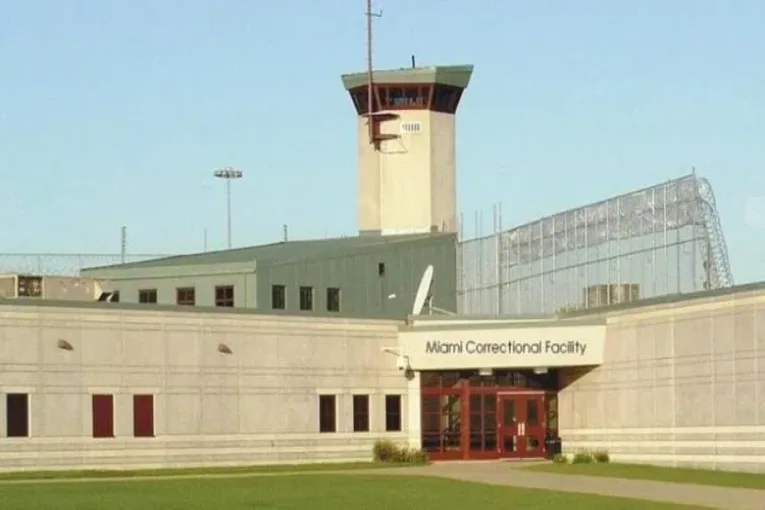
BUNKER HILL, Ind. — A 39-year-old man diagnosed with paranoid schizophrenia has been held in immigration detention since January despite substantial documentary evidence that he was born in Florida and is a U.S. citizen, according to an Associated Press investigation published Tuesday.
Phillip James remains at the Miami Detention Center in Indiana while federal immigration authorities seek to deport him to Jamaica, a country whose officials say they have no record of his birth or citizenship.
The case raises questions about how immigration authorities evaluate citizenship claims when a person’s statements contradict official records and medical professionals have determined that those statements may be influenced by serious mental illness.
According to the AP investigation, James was born in Orange County, Florida, in 1987 to a U.S. citizen mother and a Jamaican father. His attorneys submitted a birth certificate supported by an affidavit from his mother, while AP independently obtained a 1988 court document establishing his paternity that corroborated details of his birth.
James also held a U.S. passport for approximately 15 years, beginning in 2008, when he obtained one using his Florida birth certificate.
In 2023, he received another passport after legally changing his name to Felipe Bella De Campbell Coke through a New York court order.
However, beginning in 2024, James submitted applications for U.S. citizenship and protections against deportation, claiming he had been born in Jamaica in 1992 and had acquired citizenship through adoption by U.S. citizens.
Those claims contradicted his birth records and previous passport applications.
The federal government subsequently revoked his passport and denied his citizenship application. The Department of Homeland Security told AP that his original passport had been issued using a “fraudulent birth certificate,” but did not provide evidence supporting that allegation.
James’ mother told the court that he had experienced mental illness since childhood and had lived in Florida with his father, who died in 2024.
Medical professionals who evaluated James identified his claims about his birthplace and nationality as delusions associated with his diagnosed paranoid schizophrenia, according to reports reviewed by AP.
James has also claimed to be the son of a former Jamaican prime minister and a descendant of a royal family in Lebanon, where he asserts that he holds citizenship.
No evidence has been presented to substantiate those claims.
One psychologist who evaluated James concluded that he was not “a reliable historian due to the serious nature of his mental illness, including a deeply entrenched delusional belief system.”
Despite those findings, immigration authorities relied heavily on James’ statements that he was born in Jamaica and entered the United States unlawfully in 2009, according to AP’s review of court records.
ICE also cited James’ criminal history, including a 2011 conviction for assault with a deadly weapon that resulted in a five-year prison sentence in Florida.
However, records associated with that conviction and other criminal proceedings identified James as a U.S. citizen, providing additional documentary evidence that conflicted with the government’s immigration allegations.
Immigration authorities initiated removal proceedings against James in December 2025 while he was living in New York City.
Following a Jan. 5 immigration court hearing, during which a judge postponed the proceedings, ICE agents arrested James and transferred him to the Miami Detention Center in Bunker Hill, Indiana.
The maximum-security facility, which houses immigration detainees under a state-federal partnership, has faced complaints involving overcrowding and medical neglect. AP reported that at least two detainees have died there.
James initially represented himself in immigration proceedings, where he continued asserting that he was born in Jamaica and held Lebanese citizenship.
Unlike defendants in criminal cases, people facing deportation are not generally guaranteed government-appointed attorneys.
In April, an immigration judge ordered James deported to Jamaica.
According to AP, immigration authorities presented evidence that James had applied for a Jamaican national insurance registration card, although such cards are also available to people who are not Jamaican citizens.
Jamaican authorities have told James’ attorneys that they have no record establishing that he was born in Jamaica or holds citizenship there.
James is now represented by the Bronx Defenders, a nonprofit legal organization that represents people who cannot afford attorneys.
After locating his Florida birth certificate and contacting his mother, his attorneys filed a federal petition seeking his release on Aug. 19.
They are also appealing his removal order to the Board of Immigration Appeals.
U.S. District Judge Damon Leichty is expected to rule on the petition challenging James’ continued detention.
The federal government has not acknowledged any error in the case.
In a Sept. 28 court filing, Assistant U.S. Attorney Brian Irvin described James as a “native of Jamaica and a citizen of Lebanon who entered the United States without admission.”
Irvin also argued that the question of James’ citizenship should be resolved through immigration court rather than by the federal district judge reviewing his detention.
DHS has maintained that ICE does not detain U.S. citizens and that people facing removal proceedings receive due process.
However, immigration attorneys told AP that although U.S. citizens have previously been wrongfully detained by immigration authorities, those detentions typically last hours or days rather than nearly 10 months.
Deborah Fleischaker, a former ICE official who served as the agency’s chief of staff, told AP that the evidence supporting James’ U.S. citizenship appears strong, although the case is complicated.
Fleischaker and other experts said Jamaican authorities would be unlikely to accept James if he is not a citizen, but ICE could still attempt to deport him to another country.
The case also highlights broader concerns about the treatment of people with mental illness in immigration proceedings, particularly when their statements are used to establish facts that contradict official documentation.
Jacqueline Stevens, a Northwestern University professor who has studied the wrongful detention of U.S. citizens by immigration authorities for two decades, told AP that James’ case reflects problems she has encountered in other citizenship disputes.
Stevens said immigration authorities sometimes accept evidence supporting deportation while discounting conflicting documentation, even when mental illness or disability may affect the reliability of a person’s statements.
Her assessment underscores the central question raised by James’ detention: whether federal immigration authorities have adequately examined the evidence of his U.S. citizenship before continuing efforts to remove him from the country.
To comment please go to one of these social media platforms:
Facebook: https://www.facebook.com/DavisVanguard
LinkedIn: https://www.linkedin.com/company/peoples-vanguard-of-davis-inc/
Instagram: https://www.instagram.com/davisvanguard/
X: https://x.com/davisvanguard
Bluesky: https://bsky.app/profile/vanguardnewsgroup.bsky.social
Subscribe to the Vanguard News letters. To make a tax-deductible donation, please visit davisvanguard.org/donate or give directly through ActBlue. Your support will ensure that the vital work of the Vanguard continues.
