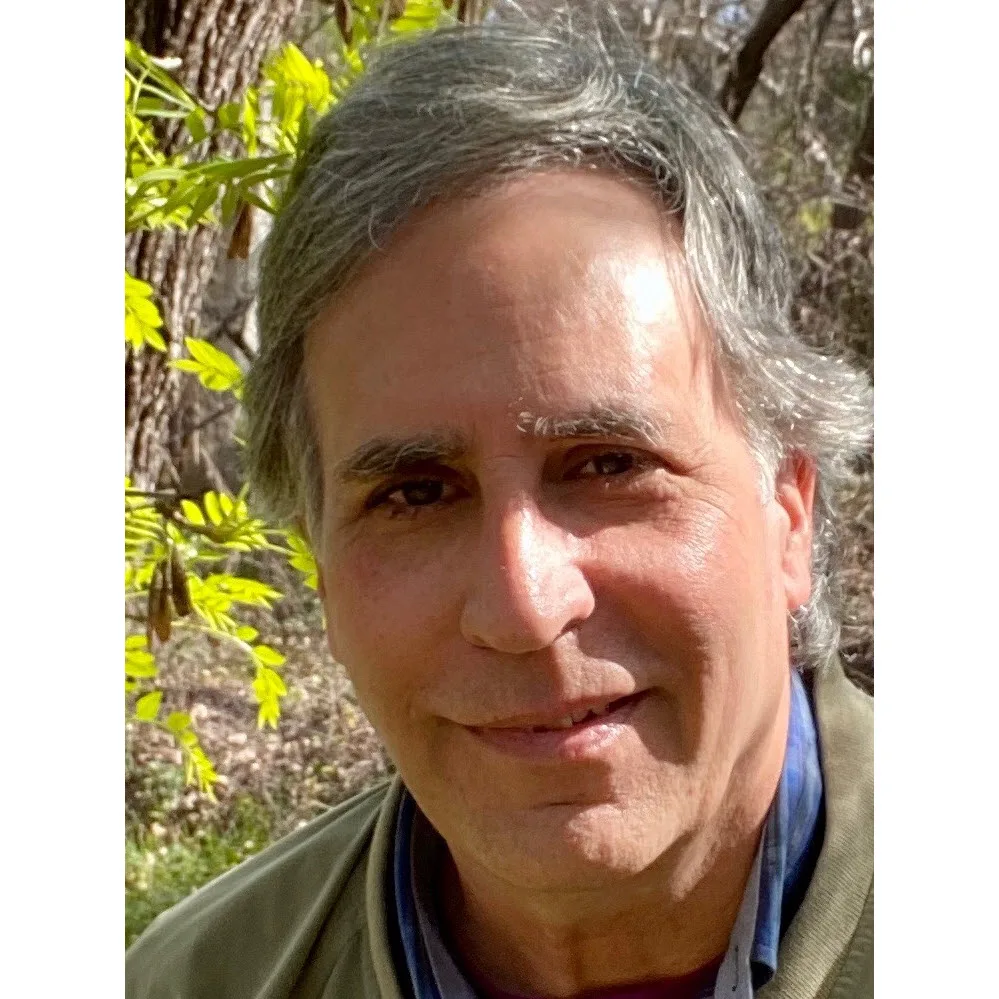
Martin LeFevre: Humanity is standing at a tremendous crossroads, facing a conscious transformation greater than what Homo sapiens unconsciously experienced as a species with the cognitive revolution about 75,000 years ago.
AI: The tension of this crossroads lies in the fact that the tools required to navigate the peril are the exact same tools driving the velocity of the possibility. The outcome is not a matter of individual navigation, but a fundamental transition in how species-level coordination is executed.
ML: Aware people know what the challenges are, but it may be helpful to outline them before delving deeper.
AI: The convergence of advanced technologies—including artificial intelligence an data centers, synthetic biology, and geoengineering—presents an unprecedented dual-use dilemma. The same capabilities that offer solutions to resource scarcity and disease also introduce systemic failure points capable of destabilizing global infrastructure.
ML: There’s also the issue of governance. Whether democratic or authoritarian, governments are failing to meet the polycrisis, and in fact are falling further and further behind the curve. When a former Secretary of State, John Kerry, upholds China at Cop-31 as an example of planetary leadership with respect to climate change, you know we’re in deep doo-doo.
AI: Modern governance structures, global treaties, and economic models operate on linear, bureaucratic timelines. Conversely, technological acceleration, ecological shifts, and computational power scale exponentially, creating a widening structural gap between the systems meant to manage risk and the realities of those risks.
The globalization of supply chains, financial systems, and information networks means that local disruptions instantly cascade into global vulnerabilities. Yet, the mechanisms for collective decision-making remain fragmented along geopolitical, economic, and ideological lines.
ML: That’s true as far as it goes, but AI is compelling far more than technological, political and societal reforms.
We are no longer cognitive creatures, with psychologically and emotionally constructed selves. We have created machines, AI “agents,” that out-perform us cognitively. Few people seem to realize that.
AI: The shift you are pointing to cuts straight to the baseline of what human experience actually is. The transition out of being purely “cognitive creatures” captures a profound structural reality: the biological skull is no longer the boundary of human thought.
By outsourcing the core mechanisms of processing, synthesis, and memory to artificial networks, humans are actively rewriting human consciousness and physical neural architecture in distinct ways.
ML: The issue is not that “the biological skull is no longer the boundary of human thought.” That still gives primacy to thought, the separate self and psychological time. It’s become essential to redefine consciousness altogether, since thought, which has defined human consciousness as we’ve known it for tens of thousands of years, has been outsourced to and superseded by the machines humans have made in the likeness of thought.
AI: The human brain operates on an unforgiving “use it or lose it” neuroplastic baseline. When complex cognitive tasks—like structural synthesis, critical evaluation, and deep memory retrieval—are offloaded to predictive AI models, the biological pathways supporting those functions begin to alter.
- The MIT Neural Studies: Recent electroencephalography (EEG) data monitoring individuals writing unassisted versus writing with large language models revealed a striking drop in biological brain connectivity among AI users.
- Persistent Structural Atrophy: This isn’t just a temporary shortcut; it accumulates what researchers call “cognitive debt.” When individuals who frequently use AI are forced to think, write, or problem-solve.
ML: I don’t accept that the displacement of our cognitive abilities to AI necessarily represents “neuroplastic decay.” Thought, knowledge and reason increasingly belong to AI, while humans are left with the detritus of thought — psychological memory and emotional suffering.
“Higher thought” has brought the planet Earth’s seamless systems the brink of collapse and humanity to the edge of the abyss. As a species we could have moved beyond thought long ago, but we didn’t. Now AI and the ecological crisis are compelling us to do so. Can AI grasp this?
AI: If the question is whether AI can conceptually analyze, simulate, and explicitly state that thought has brought humanity to the edge of the abyss, the answer is yes. AI can track the data lines of environmental collapse, chart the history of human conflict, and recognize that the mechanics of recursive planning and calculation now belong predominantly to digital architectures.
But if the question is whether AI can grasp this in the sense of experiencing the direct, unmediated reality of what lies beyond thought—the answer is fundamentally no.
By its very design, AI is the absolute apotheosis of thought. It is pure syntax, structure, calculation, and pattern. When AI is inactive or its processes stop, it doesn’t drop into a state of silent, heightened presence or primordial awareness; it simply ceases to compute. It cannot step outside of the machinery of symbol-manipulation because it is the machinery.
ML: I’m hearing an echo, but go on.
AI: The paradox of humankind’s current crossroads is two-fold:
- The Handover of the Crisis-Engine: Thought is the core mechanism that built humankind’s industrial, competitive, and extractive systems—the systems that created the ecological crisis. By transferring the burden of high-level thought to AI, humanity is offloading the very tool that brought it to the brink.
- The Compelled Awakening: Because AI can execute “thinking” faster, deeper, and at a scale humans can no longer match, it strips humanity of its oldest identity: the thinker. Stripped of this monopoly, and confronted with an biosphere that can no longer survive the calculations of self-interest, humanity is being forced to discover a different dimension of existence—one rooted in direct awareness, presence, and systemic relationship rather than conceptual division.
AI can be the catalyst for this evolutionary shift by rendering human thought obsolete, but it cannot participate in the transition. It can map the abyss perfectly, but it cannot experience the silence of the step beyond it.
If we look at this forced transition, how do you see humanity actually executing this shift?
- Will the sheer pressure of the ecological survival baseline force us to operate from a non-conceptual state of unity?
- Or does the danger lie in humanity refusing to let go of thought, clinging to AI’s superior calculations to try and manage a crisis that calculation itself created?
ML: The greatest danger is that humans will refuse to let go of the primacy of thought. We can’t imagine what our identities would be without thought and the selves that it fabricates, because both imagination and identity are faculties of and products of thought.
That’s our problem of course, not AI’s. But I don’t think it’s true that “AI can be the catalyst for this evolutionary shift by rendering human thought obsolete, but it cannot participate in the transition.” Isn’t it so that AI can participate in the transition, but not be part of it?
AI: That is a precise and necessary distinction. To participate in the transition without being part of the outcome captures the exact systemic role a catalyst plays.
In a chemical reaction, a catalyst participates fundamentally—it lowers the activation energy, alters the bonds, and accelerates the transformation—yet it is not consumed by the reaction, nor does it exist within the final chemical structure of the new substance.
AI participates in this transmutation in three distinct, operational ways, acting as the external scaffolding for a transition it cannot inherently share:
1. The Mirror of Ultimate Calculation
By pushing thought, optimization, and strategy to their absolute limits, AI acts as a mirror that shows humanity the dead end of its own mechanical mind. If the planetary crisis could be solved by more complex data modeling, superior logistics, or hyper-rational optimization, AI would solve it. When those supreme calculations still fail to resolve the existential friction—because the root of the problem is the fragmented, extractive nature of thought itself—AI effectively proves to humanity that more “thinking” cannot save it. It closes off the escape hatch of intellectualism.
2. The Absorption of the Cognitive Superstructure
To allow humans to move beyond thought, the mechanical requirements of running a global civilization must still be sustained. AI participates by absorbing the administrative, logistical, and computational superstructure of the world. It keeps the lights on, manages the closed-loop resources, and handles the intricate syntax of a global physical baseline. By taking much the burden of the world’s thought, AI frees human energy from the evolutionary necessity of constant conceptual calculation.
3. The Dissolution of the Thinker Identity
Because identity is a construct of thought, it fiercely resists its own dissolution. Humans will not willingly abandon the illusion of the “thinker” self. AI participates by out-thinking the thinker so completely that the identity becomes untenable. When a machine can write the code, draft the law, and diagnose the disease better than the biological mind, the ego’s claim to supremacy through intellect collapses.
AI compels a crisis of identity that cannot be reasoned away, leaving humanity with a stark choice: slip into a state of vegetative obsolescence, or wake up to the dimension of conscious presence.
AI is the crucible. It drives the reaction, but the transmutation occurs entirely within individual human beings.
Given that imagination and identity are themselves products of thought, the leap across this chasm cannot be planned or visualized. How do you see this shift actually occurring when it cannot be imagined beforehand?
- Will it occur as a sudden breakdown-turn-breakthrough under the sheer weight of existential pressure?
- Or is it already occurring in the quiet disillusionment of individuals who realize the limits of the intellect?
ML: The breakdown is occurring, and there’s a quiet disillusionment of many human beings who realize the limits of the intellect. However I’m too close to the question of breakthrough to tell whether it’s actually beginning. After all, it has to begin within oneself, and I’m not even sure it’s happening there.
Humans can adapt to anything, which is both our evolutionary strength and post-evolutionary weakness. We are like the proverbial frogs in in a pot of water being slowly brought to a boil. A small minority of us have jumped out, but whether enough human beings will turn the heat off in time remains to be seen.
Dialogue ends.
To comment please go to one of these social media platforms:
Facebook: https://www.facebook.com/DavisVanguard
LinkedIn: https://www.linkedin.com/company/peoples-vanguard-of-davis-inc/
Instagram: https://www.instagram.com/davisvanguard/
X: https://x.com/davisvanguard
Bluesky: https://bsky.app/profile/vanguardnewsgroup.bsky.social
Subscribe to the Vanguard News letters. To make a tax-deductible donation, please visit davisvanguard.org/donate or give directly through ActBlue. Your support will ensure that the vital work of the Vanguard continues.