
As Reverend Amos Brown and the San Francisco NAACP prepare to meet with Superintendent Maria Su on November 13, the question is whether public commitments will become lasting change.
Introduction and commentary by Malik Washington – For The Davis Vanguard and Destination Freedom Media Group – Featuring the complete revised essay of Vidrale Franklin, Ed.D.
A resignation can end a principal’s tenure. It cannot answer the questions her departure leaves behind.
Who was supported? Who was heard? What did the children lose? And what must change so that another generation of Bayview families does not inherit the same fight for stability?
Those questions bring us to the fifth and final installment of The Unquiet Resignation. This series concludes here. The responsibility to pursue answers does not.
An important opportunity now stands before the community.
According to information provided to this reporter, Reverend Amos C. Brown and representatives of the San Francisco branch of the NAACP are scheduled to meet with SFUSD Superintendent Maria Su on Friday, November 13, 2026, to discuss accountability and the way forward, including the proposed Afro-centric school Brown has publicly discussed.
Their advocacy deserves recognition. Their meeting deserves attention. And the community deserves to know what follows.
Honor the Advocacy. Insist on the Accountability.
Reverend Brown and the San Francisco NAACP deserve credit for pressing district leadership to confront anti-Black hate speech and for advocating educational opportunities that affirm children who have been underserved.
That work matters. Challenging an institution requires persistence. Securing a commitment creates an opening that families and educators can use to demand specific action.
In its October 29 report, KRON 4 reported Brown’s account that Superintendent Su had committed to enforcing board policy on hate-motivated behavior and hate speech, finding financing for an Afro-centric school, and continuing Unity Day to promote understanding of students’ ethnic and historical backgrounds. Brown described the proposed school as an opportunity to provide underserved Black and brown children with focused, loving and safe educational opportunities. Source: KRON 4
That acknowledgment belongs in this story. Fair reporting must recognize movement, not only failure.
But seeking financing is not the same as securing it. Discussing a school is not the same as approving, staffing and sustaining one. The KRON 4 report establishes Brown’s account of commitments; it does not establish completed implementation.
Reverend Brown and the NAACP have helped bring the district to a conversation. The challenge now is to make that conversation produce accountability.
Will they insist on written commitments, responsible officials and public timelines? Will they demand that SFUSD address conditions in its existing schools with the same urgency it brings to discussing a new one? Will they press for answers about Dr. Vidrale Franklin’s treatment—not as a distraction from the proposed school, but as a test of whether the district can sustain the community-rooted leadership such a school would need?
These questions are offered in respect for their advocacy, not in dismissal of it. Effective allies deserve recognition. They also deserve a challenge equal to the responsibility they have accepted.
The toxic culture described by concerned families, educators and advocates cannot be answered by a new program alone. The accounts must be examined: where they are substantiated, the district must identify what failed and change it; where facts remain disputed, it must provide a credible process for resolving them.
The November 13 meeting should begin that work—not replace it.
At Lincoln, the Community Is Asking Leadership to Step Forward
The concerns extend beyond Drew.
In an October commentary, John Trasviña of The Voice of San Francisco described Reverend Brown’s demand that district leaders confront anti-Black hate speech. The piece referenced a September 4 fight at Abraham Lincoln High School allegedly sparked by a student’s use of the N-word. It also cautioned that the circumstances and the roles of those involved remained disputed. Those distinctions must remain visible. Source: The Voice of San Francisco
A community-based organization representative who requested anonymity provided this reporter with a written communication describing concerns about ongoing racial tensions at Lincoln. The representative explained that community organizations had been working collaboratively to organize a resource fair offering students support, resources and opportunities for meaningful engagement.
But the representative also called for direct leadership from the school:
“However, I believe school leadership, particularly the principal, should also directly address the student body through a call-to-action assembly.”
Such an assembly, the representative wrote, would “demonstrate accountability, encourage open dialogue, and reinforce the importance of unity, respect, and inclusion.”
The communication does not establish everything administrators have or have not done. It does establish that a community partner sees a need for a more visible response.
Community organizations can build trust and connect students with help. They should not be expected to shoulder the district’s responsibility for addressing racial harm.
The distinction between individual prejudice and institutional racism is essential. An alleged racial slur concerns individual conduct. The institutional questions concern the response: Are reports taken seriously? Is the harm accurately named? Are students supported? Are responses consistent? Do families receive meaningful follow-through?
If failures recur, the inquiry must reach beyond individual incidents to the procedures, resources and leadership decisions that allow those failures to continue.
That is how a community examines systemic racism responsibly: not by assuming every allegation proves the entire case, but by refusing to let each incident disappear before anyone examines the pattern.
Protecting Black students does not require blaming Asian students collectively. Respecting students with disabilities does not require overlooking racial harm. These responsibilities belong together. Students deserve a response that establishes the facts, protects their privacy and addresses harm without creating another target.
A New School Cannot Substitute for Answers About Drew
The proposed Afro-centric school deserves serious consideration on its merits. It also deserves a clear plan: who will shape it, how it will be funded, what students it will serve and how its leaders will be supported.
Dr. Franklin’s experience makes that last question especially important.
Reporting by The San Francisco Standard and Mission Local documented her May 22 resignation following an investigation into her handling of school funds. Franklin acknowledged departures from district procedures while denying misuse of money and describing her actions as efforts to meet students’ needs. SFUSD told The Standard that the investigation was “confidential and ongoing” and that it was committed to a “fair and consistent process.” Those statements describe the parties’ positions at the time of that reporting; they are not interchangeable with independent findings. Sources: The San Francisco Standard · Mission Local
The concern extended beyond Franklin herself. Mission Local reported questions from Commissioners Alida Fisher and Matt Alexander and testimony from fellow principals asking what systems existed to identify bias in investigations, disciplinary outcomes and decisions about who receives the benefit of the doubt. Source: Mission Local
Effective educators are not beyond scrutiny. Neither are the institutions that investigate them.
Will Reverend Brown and the San Francisco NAACP insist on a substantive examination of those questions? Will they ask SFUSD to review the experiences of leaders who resigned under pressure, not only those formally disciplined? Will they remain engaged if the answers are uncomfortable or slow to arrive?
The community should not have to choose between welcoming a new opportunity and demanding answers about an existing injury.
Dr. Franklin is not asking to return to Drew. In the essay that follows, she asks the district to examine whose authority it supports, whose explanations it credits and whose careers it helps sustain when conflict arises.
Those questions belong at the table on November 13.
CALL TO ACTION: THE U.S. DEPARTMENT OF JUSTICE SHOULD REVIEW SFUSD’S RESPONSE TO RACIAL HARASSMENT
We call on the U.S. Department of Justice’s Civil Rights Division, through its Educational Opportunities Section, to review the concerns raised about anti-Black harassment in SFUSD and determine whether a federal civil rights investigation is warranted. The section has authority to address certain complaints of racial discrimination in public schools. Source: U.S. Department of Justice
That review should examine how SFUSD receives, documents and responds to reports of racial harassment, including the concerns raised at Abraham Lincoln High School. It should ask whether affected students receive meaningful protection and support, whether families receive clear responses, and whether recurring failures require corrective action. Allegations must be investigated, not treated as established findings. Uncertainty is a reason to examine the evidence—not a reason to dismiss the community’s concerns.
We call on Superintendent Maria Su and the Board of Education to preserve relevant records, explain the district’s response without exposing students’ identities, and establish measurable steps for preventing further harm. We challenge Reverend Brown and the San Francisco NAACP to press for those commitments and report back to the community on the answers they receive.
A meeting is a beginning—not an outcome. A proposed school is a promise—not proof of change. The community deserves documented action, sustained support and accountability it can see.
The Final Word Belongs to Dr. Franklin
In the email accompanying her revised essay, Dr. Franklin described praying during her drive to work and feeling called to add a passage about the faith that sustained her.
That passage appears in bold below, using the exact wording she requested.
Her faith does not settle the facts of an employment investigation. It tells us something about the person who lived through it. She belongs in this story as a whole person: a mother, an educator, a scholar, a woman of faith and a member of the community she returned to serve.
We will not rush her words into a version more convenient for anyone else.
The final installment of The Unquiet Resignation closes with her complete revised essay. Her words remain her own.
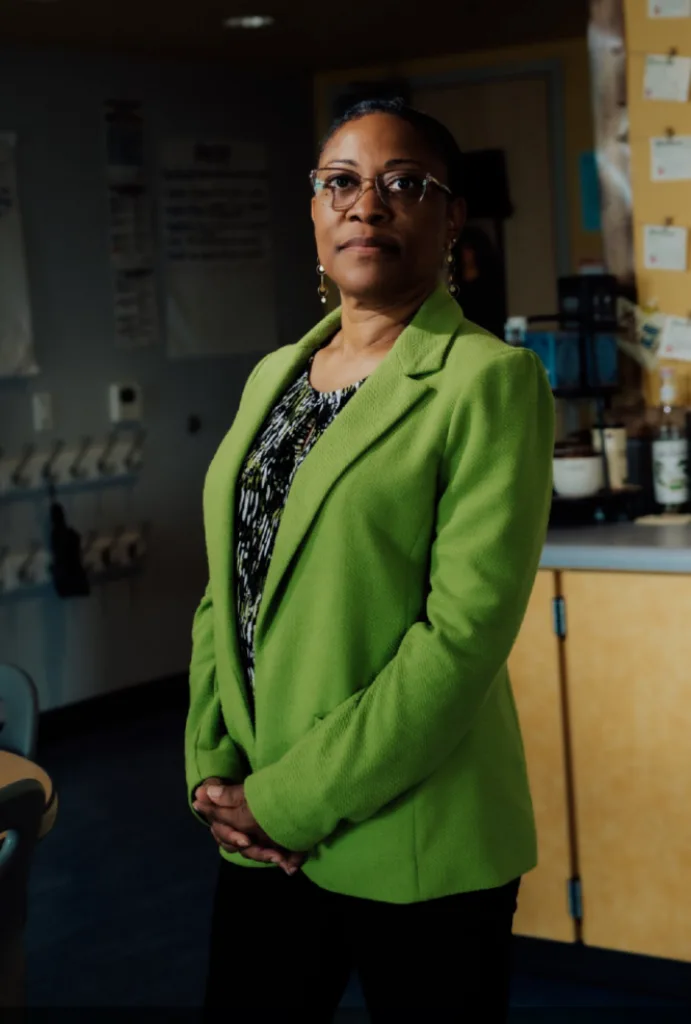
Dr. Vidrale Franklin. Photo credit: Vidrale Franklin / Destination Freedom.
The Harm We Normalize in Public Education: My experience with SFUSD and the fight for stability in the Bayview
Vidrale Franklin, Ed.D.
As a mother and an educator, I think about what our responses teach children about their worth. When we meet their needs, we show them they matter. When families raise concerns and see meaningful change, we build trust. When communities see their priorities reflected in decisions, we demonstrate that their voices carry weight. What message do we send when the institutions meant to serve them repeatedly make them wait months, years, or even decades for the resources, opportunities and stability they deserve? For some communities, they never come.
I returned to Dr. Charles R. Drew College Preparatory Academy as principal in 2018 with a commitment to the community that raised me. I had been a student at Drew. I knew the Bayview as home and I understood what it meant for children to see a Black woman from their own neighborhood leading their school. I wanted them to experience a school where adults stayed long enough to earn their trust and help them grow.
On May 21, 2026, my union representative conveyed that SFUSD could proceed with termination as soon as the following day if I did not sign the proposed agreement. After nearly eight years leading my former school, I was facing a decision about my livelihood on a deadline measured in hours. I submitted my resignation on May 22 under duress. For Black leaders, support is too often absent while punishment is swift. That is the pattern I experienced.
The district had opened an investigation into my conduct and handling of school funds in October 2025. I attended interviews and provided records. Every decision I made was transparent, approved by someone in central office, or both. If the district now questions decisions its own central office approved, it should say so plainly. But before the ultimatum, I had not been given clear written findings explaining what the district had concluded and the evidence supporting those conclusions, with a meaningful opportunity to answer them. My objection is to being pressured to surrender my position without that opportunity. An allegation, an interview and a finding are different things. A fair process must make those distinctions clear.
SFUSD publicly described its investigation as ongoing and confidential and maintained that it was following a fair and consistent process. That description did not resolve my concerns about the process I experienced. Families and staff who knew Drew’s daily life also pressed for answers. They understood that the consequences would reach beyond one principal.
I had studied these questions long before they became so personal. My doctoral research examined the experiences of six African American women leading elementary schools in two urban Bay Area districts. They described resistance shaped by race and gender, professional isolation and the need for support that recognized their experiences as Black women. In 2011, I wrote that “the hiring practices, assignment patterns and career mobility trends of African American female elementary administrators must be examined to ensure that these leaders have equal access to various placement and promotion opportunities.”
Fifteen years later, I am asking my own district to do it.
What happened at Drew matters partly because our students were making progress. California Department of Education data show that the share of tested students meeting or exceeding English language arts standards rose from about 10 percent in 2022–23 to 23 percent in 2024–25. For Black students, it rose from 11 percent to 26 percent; for Hispanic or Latino students, from 12 percent to 24 percent. These figures come directly from the state’s research files.
The city’s 2024–25 Student Success Fund annual report also documented a reduction in Drew’s chronic absenteeism, from 50 percent to 40 percent over one year. It described work grounded in family partnerships, teacher support and learning connected to the community. These results reflected the efforts of our staff, families, community partners and students. I was proud to lead that work.
We still had substantial work ahead. A school where roughly one in four tested students meets the English language arts standard needs sustained instructional improvement. Our tested groups were small and annual percentages reflect changing groups of students. They cannot establish that one person or practice caused the gains. But progress matters. It gives a district reason to examine what is working and strengthen the conditions that help it happen.
Stable, effective school leadership is one of those conditions. A Learning Policy Institute review found that principal turnover can disrupt improvement, increase teacher turnover and harm student achievement. Continuity allows teachers to deepen shared instructional practices and families to build relationships with someone who knows their children. It gives a principal time to support change and see whether it works.
The Bayview has struggled to sustain those conditions. Reporting on the district’s Bayview Ignite initiative in 2018 described longstanding staff turnover and educators worn down by repeated changes from above. It identified Bret Harte’s principal, then in his fifth year, as the longest-serving principal in the Bayview at that time. His school’s welcome message now identifies 2026–27 as his 13th year. A white man has been able to build that continuity. My own nearly eight years at Drew were also an investment in stability.
Elsewhere in SFUSD, continuity has extended across generations. Alice Fong Yu, a school centered on Chinese language immersion, had the same founding principal for 30 years. In 2025, SFUSD honored that tenure and announced that it would retain her expertise to help develop another immersion school. Alice Fong Yu’s families deserve that commitment. Bayview families deserve the same opportunity to build lasting institutions around leaders who know their children and community.
These examples establish that SFUSD can sustain and value long-term leadership. They do not establish how those principals would have been treated in an investigation comparable to mine. That requires personnel and process data the district should examine. The success of a woman of color at Alice Fong Yu also cannot answer the specific question of anti-Blackness. Support for one community of color does not establish equitable treatment of Black women. SFUSD must examine whose authority it supports, whose explanations it credits and whose careers it helps sustain when conflict arises.
I also know I am not alone. After my situation became public, other women of color who had led in SFUSD reached out to me. They told me they, too, had gone without the district’s support and had been forced to leave, resigning amid threats and intimidation. Their stories are theirs to tell, so I do not name them here. Their accounts are not a study, but they are reason for one.
This is where I locate structural racism: in the institutional practices that determine whose difficulties prompt assistance and whose careers become expendable. My dissertation used Black feminist thought and critical race theory to examine how race, gender and institutional power shape school leadership. Those perspectives help me understand the double bind I experienced: responsibility for improving school conditions without meaningful confidence that the institution would support me when my leadership became contested.
They also help explain why I use the term political violence. In Violence Against Women in Politics, political scientist Mona Lena Krook examines economic, psychological and semiotic violence alongside physical violence: pressure on a woman’s livelihood, attacks on her security and standing and language that casts her as unfit for public authority. Krook writes about women in politics; I am applying her framework to a Black woman exercising public authority in a school. A framework does not settle the facts of an investigation, but it gives us language for harms that extend beyond physical force and beyond the person targeted.
My girls watched their mother lose 30 pounds. My staff saw me show up every day even as the strain became harder to hide. Privately, I carried the fear of losing work I had spent years building: relationships, a professional reputation and a school community I loved. That is part of this story, too. So is what carried me through. My faith in God sustained me when nothing else felt certain, and it helped me see that my assignment had not ended; it had changed.
Drew’s children bear a cost as well. A change in principal can unsettle relationships and interrupt work adults have learned to do together. A new leader needs time to understand the community and earn its trust. When the district creates that disruption, it owes families an explanation of how the decision serves their children and how it will protect their learning.
SFUSD should examine principal tenure, reassignment and discipline by race, gender and school community. It should compare similarly situated leaders, including the allegations, evidence, support, procedures and outcomes in their cases. That review must include leaders who resigned under pressure, not only those formally disciplined, because a resignation leaves no disciplinary record. It should ask whether leaders received clear findings and a meaningful opportunity to respond before facing removal. Families and staff should also have a voice in protecting successful school practices through leadership transitions. That is how the district can test its equity commitments against its decisions.
My dissertation offers a place to begin the work of support. Its three pillars, “It Takes a Village,” “Each One, Teach One; Each One, Reach One,” and “Lift Every Voice,” call for connected professional communities, mentoring and sponsorship and recognition of Black women’s knowledge. In practice, this means trusted colleagues, experienced advocates who can act and supervisors willing to listen before a career is placed in jeopardy and a thriving community dismantled. Our ability to endure should never become the district’s substitute for providing those conditions.
I have since found work I love and I am not asking to return to Drew. I am asking SFUSD to examine whose voices it values, whose it silences and what those choices teach our children about their worth. I continue to believe that Black women from the Bayview should be able to lead in the Bayview with the resources, professional respect and fair treatment that make a long career possible. Our children deserve to experience improvement that lasts. SFUSD must bring the same urgency to supporting the leaders doing that work that it brings to removing them.
About the Author
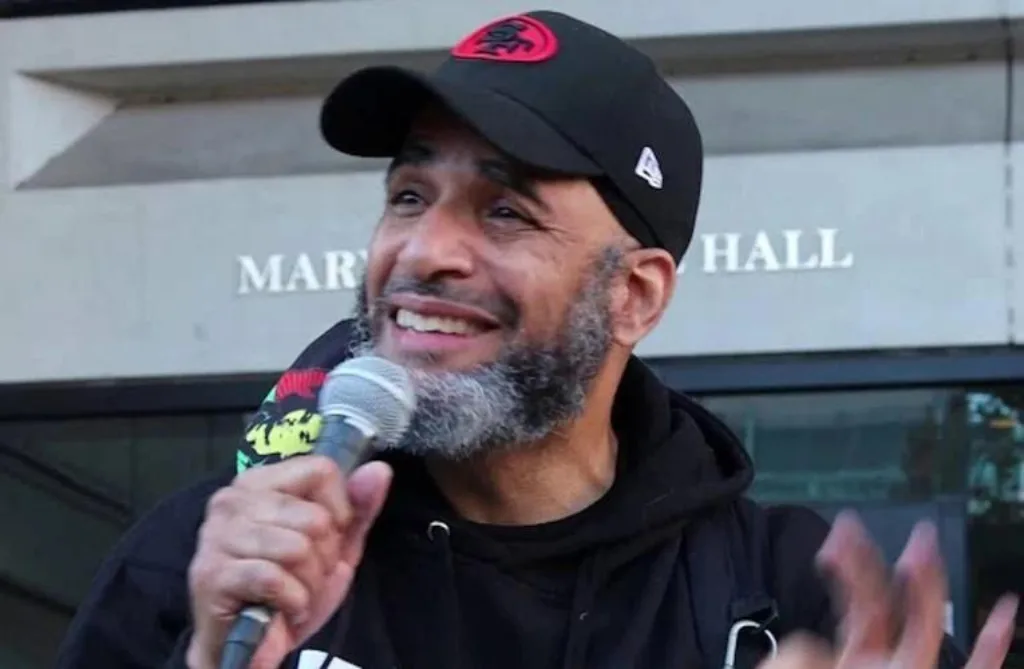
Journalist Malik Washington. Photo source: Destination Freedom.
Malik Washington is an investigative journalist, U.S. Army veteran, and CEO of Destination Freedom Media Group, which he co-founded with Gale Washington.
He previously served as Editor-in-Chief of the San Francisco Bay View National Black Newspaper (2020–2021) and has been a published journalist for over 14 years.
With journalist Maura Corkery, he is co-author of The Unquiet Resignation, an investigative series on the San Francisco Unified School District produced in partnership with The Davis Vanguard.
His work focuses on government power, criminal justice, environmental justice, and the human consequences of policy decisions too often insulated from public scrutiny. Washington’s reporting amplifies the voices of impacted communities while insisting on documentary evidence, transparency, and the unvarnished truth—especially when institutions demand silence.
You can reach him via email: mwashington2059@gmail.com or call him at (719) 715-9592. Suggestions or leads on stories are always welcome.
To comment please go to one of these social media platforms:
Facebook: https://www.facebook.com/DavisVanguard
LinkedIn: https://www.linkedin.com/company/peoples-vanguard-of-davis-inc/
Instagram: https://www.instagram.com/davisvanguard/
X: https://x.com/davisvanguard
Bluesky: https://bsky.app/profile/vanguardnewsgroup.bsky.social
Subscribe to the Vanguard News letters. To make a tax-deductible donation, please visit davisvanguard.org/donate or give directly through ActBlue. Your support will ensure that the vital work of the Vanguard continues.
