
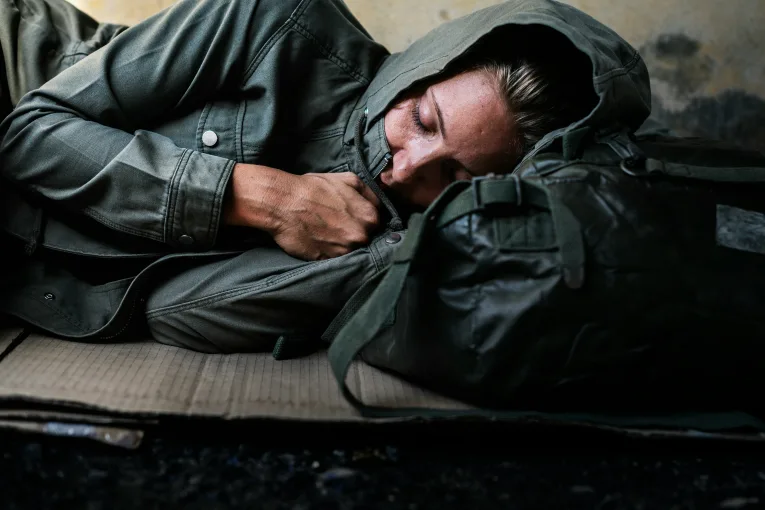
DAVIS, Calif. — The Davis City Council’s unanimous decision last week to move toward closing the L Street Daytime Respite Center raises a key question: what is the city’s larger strategy for addressing homelessness, and how does it intend to move people from the streets into permanent housing?
The Nov. 17 council discussion, a memorandum from Mayor Donna Neville and Vice Mayor Gloria Partida, and the city’s recent announcement of a restructured Community Response Team clearly indicate that Davis is reconsidering how it delivers homelessness services.
The new approach clearly places greater emphasis on mobile outreach, partnerships with nonprofit organizations, emergency shelter and responses to concerns about downtown encampments and public spaces.
But a central question remains unresolved: How will those changes translate into more people obtaining stable housing, particularly permanent supportive housing for individuals experiencing chronic homelessness and complex behavioral health challenges?
The council established Feb. 26, 2027, as the earliest potential closure date for the L Street facility and directed staff to return Dec. 15 with a more detailed expenditure plan and an assessment of whether some services could be relocated to the City Hall modular building.
The decision leaves open the possibility that some daytime respite services will continue elsewhere. It also creates an opportunity to examine whether the city’s existing homelessness programs are organized around a coherent strategy for moving people into housing.
According to the city’s staff report, Davis spends approximately $569,000 annually on the respite center, including about $266,000 from the General Fund and $303,000 in grant funding.
Combined with outreach and shelter expenditures, the city’s annual commitment approaches $1.55 million.
Vice Mayor Partida questioned whether those resources were producing sufficient results and suggested that shifting spending toward other services, including additional overnight shelter, might provide greater benefits.
Mayor Neville similarly raised the possibility of expanding hotel-based shelter, outreach and partnerships with existing service providers.
Councilmember Bapu Vaitla, however, questioned whether other providers could adequately replace the low-barrier daytime services offered at L Street.
A key issue was the relationship between the respite center and Paul’s Place, operated by Davis Community Meals and Housing.
City officials reported that 83 of 101 individuals using the respite center also accessed services at Paul’s Place, suggesting substantial overlap between the two programs.
A daytime respite center provides a location where people can escape extreme weather, access basic necessities, rest and connect with assistance. Other facilities may serve some of the same individuals while operating under different rules, schedules and service models.
Councilmember Josh Chapman pressed for a more detailed accounting of what services would replace those currently offered at L Street, how much they would cost and how the city would measure their effectiveness.
The compromise approved by the council requires staff to develop a more complete plan before the transition proceeds.
That discussion, however, focused heavily on the organization and financing of immediate services, rather than the longer-term question of how Davis intends to reduce the number of people experiencing homelessness.
Emergency shelter, outreach and respite services perform different functions from permanent housing.
A shelter bed can provide immediate safety. A respite center can offer essential daytime services. Outreach workers can connect individuals with assistance and help them navigate complicated systems.
But none of those interventions, by itself, guarantees that someone will obtain a permanent place to live.
The city’s announcement of its Community Response Team offers another indication of how Davis is changing its approach as the team represents a restructuring of the city’s previous Homeless Outreach Team, combining traditional outreach and housing navigation responsibilities with a more explicit focus on downtown conditions.
Its responsibilities include responding to encampments, addressing loitering concerns, coordinating cleanup activities, assisting businesses and supporting special events.
The team is assigned to downtown on Monday mornings and throughout Tuesdays and Thursdays, while continuing to operate the city’s non-congregate winter shelter and respond to homelessness-related calls elsewhere in Davis on other weekdays.
The restructuring may improve coordination and responsiveness, but it also raises questions about how staff time will be divided between addressing the immediate effects of homelessness and helping individuals obtain housing.
Resolving a complaint about an encampment does not necessarily mean that the people living there have obtained housing. Similarly, an outreach worker may spend weeks or months assisting an individual with documentation, benefits, treatment referrals and housing applications without producing an immediate change in downtown conditions.
Measuring the team’s success therefore requires more than tracking contacts, complaints or encampment responses.
The city would also need to examine how many people obtain shelter, how many transition into permanent housing and how many remain housed over time.
In June 2024, the city adopted a three-year Homeless Strategic Plan identifying inadequate housing options, insufficient behavioral health treatment and fragmented service delivery as major obstacles to addressing homelessness.
The plan called for improved coordination among service providers, expanded housing opportunities and increased access to permanent supportive housing, particularly for people with complex behavioral health needs and older adults.
It also embraced a Housing First approach, which prioritizes access to housing without requiring individuals to complete treatment or meet other prerequisites before obtaining a place to live.
Permanent supportive housing is particularly important because it addresses a population for whom temporary shelter and conventional housing assistance may not be sufficient.
The model combines long-term affordable housing with ongoing supportive services, including case management, behavioral health care, assistance obtaining benefits and help maintaining stable tenancy.
For people experiencing chronic homelessness, especially those living with serious disabilities or other substantial barriers to housing, permanent supportive housing can provide the stability needed to address problems that are difficult to manage while living on the street.
Davis Community Meals and Housing operates Paul’s Place, which includes 18 permanent supportive microhousing units, 10 transitional housing units and a resource center.
The organization also operates supportive housing at Creekside Apartments and Cesar Chavez Plaza.
Creekside includes 90 apartments and an on-site supportive services coordinator, although the total number of apartments should not be confused with the number of units specifically reserved for people experiencing homelessness.
What remains less clear is how many additional permanent supportive housing opportunities Davis intends to create, how many existing units become available annually and whether the city has a funding and development strategy capable of meeting the need.
If the city expands outreach and temporary shelter without increasing permanent housing opportunities, it may improve immediate conditions for some individuals without substantially changing the number of people experiencing homelessness.
Conversely, a coordinated system that connects outreach, emergency shelter, housing navigation and permanent housing could create more effective pathways out of homelessness.
According to the staff report, Davis supports eight year-round shelter beds through Davis Community Meals and Housing at an annual cost of approximately $223,000, along with five reserved beds at Fourth & Hope costing approximately $129,500.
The city also allocates approximately $100,000 for emergency winter shelter and supports safe parking programs, including eight general spaces and six spaces designated for students.
Hotel-based non-congregate shelter is another component of the city’s response, with additional capacity under discussion.
A safe parking space does not provide the same stability as a shelter bed. A temporary hotel room does not offer the long-term security of an apartment. And permanent supportive housing requires sustained investment not only in buildings but also in services that help residents remain housed.
The question is whether Davis has enough capacity at each stage to move individuals from emergency assistance into permanent housing.
For example, the city could report how many individuals have moved from homelessness into permanent housing since the plan was adopted, how many received permanent supportive housing placements and how many have maintained their housing.
It could also identify the number of additional units in development, the expected timeline for completion and the funding needed to provide ongoing supportive services.
Those figures would help distinguish between changes in service delivery and measurable progress toward reducing homelessness.
Permanent supportive housing requires available land or existing buildings, capital financing, affordable rents and long-term operating support.
Although local nonprofit organizations and Yolo County play significant roles in delivering services, the city has responsibilities through land-use planning, housing approvals, funding decisions and coordination with regional agencies.
The city cannot necessarily finance or operate every component of permanent supportive housing on its own. But it can identify the capacity needed, establish development priorities and work with housing providers and county agencies to expand available options.
While the facility’s annual budget is approximately $569,000, much of that funding comes from grants that may carry restrictions on how the money can be spent.
Closing the facility therefore would not automatically free the entire amount for other homelessness programs.
The expenditure plan requested for December should clarify how much funding can be redirected, what existing obligations remain and whether the city intends to invest any available resources in housing navigation, supportive services or additional housing capacity.
The council will also need to determine what happens to individuals who depend on low-barrier daytime services.
Even a housing-centered strategy requires immediate assistance for people who remain unhoused, particularly during periods of extreme heat, cold or rain.
The question is not necessarily whether Davis should prioritize permanent housing instead of respite services, but how it can provide essential assistance while expanding the opportunities for people to leave homelessness.
The city has already identified many of the elements of such a system: outreach, emergency shelter, housing navigation, behavioral health services and permanent supportive housing.
What has not yet emerged from the current discussion is a clear accounting of how those elements work together, how much capacity exists and what outcomes the city expects to achieve.
The Dec. 15 meeting will provide an opportunity for the council to move beyond the immediate question of where daytime respite services should operate.
To comment please go to one of these social media platforms:
Facebook: https://www.facebook.com/DavisVanguard
LinkedIn: https://www.linkedin.com/company/peoples-vanguard-of-davis-inc/
Instagram: https://www.instagram.com/davisvanguard/
X: https://x.com/davisvanguard
Bluesky: https://bsky.app/profile/vanguardnewsgroup.bsky.social
Subscribe to the Vanguard News letters. To make a tax-deductible donation, please visit davisvanguard.org/donate or give directly through ActBlue. Your support will ensure that the vital work of the Vanguard continues.
