
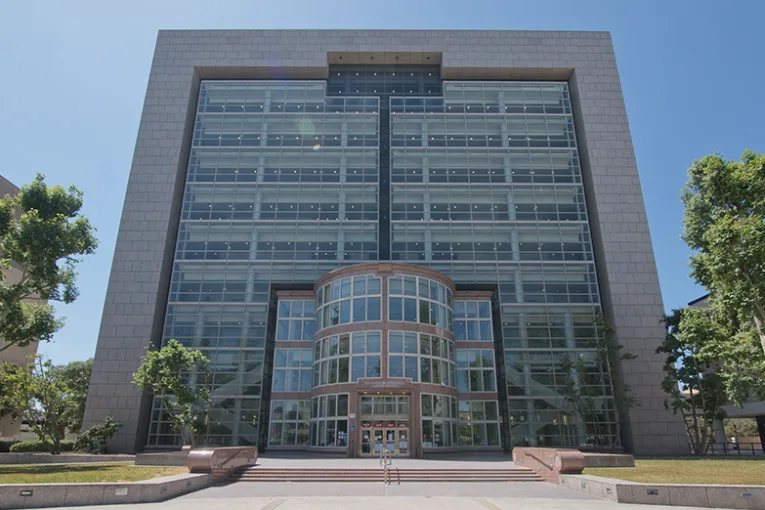
LOS ANGELES — During a preliminary hearing Monday in Los Angeles County Superior Court, Deputy Public Defender Elizabeth Ligon challenged a warrantless police entry and search of a shared apartment, arguing that officers violated the accused’s Fourth Amendment rights by relying on consent from an absent co-occupant rather than obtaining a search warrant.
The first witness testified that she lived in the apartment with the accused, her fiancé, although his name was not listed on the lease.
She described an argument over infidelity that occurred May 28, after she attended a two-hour hypnotherapy appointment and went directly to work, leaving her unable to pick him up as planned.
She said the argument continued verbally after she returned home shortly after midnight.
The following day, the witness and her mother went to the police station. They reported that the accused had shoved her against a wall to prevent her from entering or leaving a bedroom and had held a firearm to her head.
However, during her testimony, the witness said the accused had never pointed a firearm at her or threatened to kill her.
She attributed her earlier statements to being upset and experiencing what she described as a psychiatric episode. She testified that she had not been taking her prescribed medication at the time but was taking it at the time of the hearing.
The witness also testified that the firearm was unregistered and had been purchased with her money.
She said the couple had never fired it but sometimes brought it with them on trips, including road trips, and that they had completed firearm training.
After reporting the incident, the witness signed a consent form authorizing officers to search the apartment, identified the firearm’s location and provided police with a key.
She was not present when officers subsequently entered the apartment and conducted the search.
A Los Angeles Police Department officer testified as the second witness, stating that he and approximately five other officers approached the apartment carrying a shield.
The officers knocked and announced themselves. When the accused did not open the door, they entered the apartment, announced themselves again and encountered him coming out of a hallway.
The officer testified that the accused cooperated with police and was arrested and removed from the apartment.
Officers subsequently located the firearm inside a nightstand drawer, where it was stored with an extended magazine.
The witness’s mother also requested an emergency protective order, which a judge granted.
Ligon challenged the legality of the police entry and search, emphasizing that officers had neither a search warrant nor an arrest warrant.
She argued that officers had sufficient time to obtain judicial authorization and that the fiancée’s consent did not automatically resolve the accused’s Fourth Amendment rights as an occupant of the apartment.
Ligon emphasized that the accused was inside the residence when officers arrived and did not open the door in response to their knocks.
When questioned about the decision to enter without a warrant, the officer said, “As a preliminary police officer, we go off probable cause,” adding that his supervisor made the decisions.
Ligon cited two cases addressing Fourth Amendment protections: Georgia v. Randolph and People v. Perez.
In Georgia v. Randolph, the U.S. Supreme Court considered whether police could search a shared residence without a warrant when one occupant consented but another occupant, who was physically present, expressly objected.
The court ruled in 2006 that consent from one occupant could not override the express refusal of another occupant who was present and objecting to the search.
The ruling established an exception to the general principle that a person with common authority over a shared residence may consent to a search.
However, the Supreme Court subsequently clarified in Fernandez v. California that the exception applies to an occupant who is physically present and expressly objects. An occupant’s presence alone does not necessarily invalidate another resident’s consent.
In People v. Perez, a 2026 California Court of Appeal decision, officers responding to a report of a man with a firearm approached an apartment and ordered the accused to come outside at gunpoint.
The officers lacked a warrant or exigent circumstances, and the appellate court concluded that the accused had been unlawfully seized while inside the residence.
The court ruled that the Fourth Amendment violation required suppression of certain evidence.
Ligon maintained that the central issue in the present case was whether police could enter a private residence without obtaining judicial authorization when the accused was inside and had not consented to their entry.
Deputy District Attorney Lianna Margaryan countered that the search was lawful because the fiancée had signed a consent form, reported being threatened by the accused and was the apartment’s leaseholder.
Margaryan argued that the written consent authorized officers to enter and search the residence even though the consenting occupant was not physically present when the search occurred.
Ligon responded that the accused’s presence inside the apartment should take precedence over consent provided by an absent co-occupant.
She argued that the circumstances would have been different had the accused not been present when officers arrived.
The defense sought to suppress the evidence obtained during the search, arguing that the officers violated the Fourth Amendment’s protection against unreasonable searches and seizures.
The Fourth Amendment generally requires police to obtain a warrant before entering a private residence, unless officers have valid consent or another recognized exception to the warrant requirement applies.
The dispute centered on whether the fiancée’s consent was sufficient under those exceptions and whether the accused’s failure to answer the door affected the officers’ authority to enter.
Judge Alicia Blanco continued the hearing, indicating that she anticipated resolving the suppression motion by the end of the day, although proceedings could resume the following morning if necessary.
To comment please go to one of these social media platforms:
Facebook: https://www.facebook.com/DavisVanguard
LinkedIn: https://www.linkedin.com/company/peoples-vanguard-of-davis-inc/
Instagram: https://www.instagram.com/davisvanguard/
X: https://x.com/davisvanguard
Bluesky: https://bsky.app/profile/vanguardnewsgroup.bsky.social
Subscribe to the Vanguard News letters. To make a tax-deductible donation, please visit davisvanguard.org/donate or give directly through ActBlue. Your support will ensure that the vital work of the Vanguard continues.
