
I recently had a conversation with a friend of mine who lives overseas. She has never been to America and is therefore very interested in hearing my take on all kinds of different subjects pertaining to life here in the U.S.
The other day, while we were on the phone, we arrived at the subject of the dynamics between African Americans and the police. She is outraged by what she has heard and seen in the media about how Black and brown men and women are treated by the authorities in America.
She asked me about my own thoughts and feelings on the American criminal legal system, and particularly my feelings toward the police, assuming that I most likely hated them myself, given that I am Black and have experienced the animosity that has persisted for generations between people of color and the authorities in this country. I also happen to be incarcerated in a maximum-security prison.
She was surprised by my answer.
You see, when I came to prison, I made a commitment to myself that I was going to do everything in my power to use the time I had to better myself in every possible way. So I began to search within myself, taking stock of every aspect of my character and who I was, good, bad and otherwise.
In the process of this journey of self-searching, I found that so much of my poor behavior was rooted in bitterness, anger and my propensity to blame everything and everyone else for my own wrongdoing. I began to notice how I especially seemed to blame the authority figures in my life, and their injustices and mistreatment of me, for my drift into criminal and rebellious behavior.
And the deeper I went into this, the more I realized that the only way for me to move forward and become better and more whole was to find a way to unravel this tight knot of indignation and bitterness I had for any kind of authority in my life.
It did not take long for me to realize that the only way I could accomplish this was through forgiveness, which I could only arrive at through understanding.
I began with my father, since the wounds I received from the brokenness of our connection constituted my first feelings of disdain for authority, and also because they went the deepest. I was only able to forgive him by humanizing him.
As children, we often make the mistake of seeing our parents as godlike figures, only to face a great disillusionment when we grow older and begin to recognize that they are flawed and fallible human beings. This can and often does become resentment.
But when we mature further and are forced to recognize our own fallibility, we often see the parallels between ourselves and our parents. We gain a deeper understanding of them, and this ultimately opens the door to forgiveness and reconciliation.
This is a formula that is essential to use far beyond our closest relationships. But much like an algebraic equation, while the formula remains the same, it becomes more difficult to apply as more unknowns enter the equation.
To solve it, we have to find the value of x.
We are familiar with our family and friends. And we know their value. But who is Officer So-And-So to me? What value does he have in my life? Why should I respect his authority when he is a complete unknown to me? Why should I respect him when he is part of an oppressive system?
Well, because until I find and recognize his value by humanizing him, I will always have a problem with authority. And having a problem with authority will keep me in rebellion, which contributed to my cycle of criminal behavior.
So I had to find the value of authority and all the figures of authority in my life. I had to become familiar with them.
To do that, I had to begin at the root. I had to ask myself, “Why do I have such a problem with figures of authority?”
As I asked myself this question, I found it wasn’t exactly that simple. Because I didn’t have a problem with all authority figures.
My mother, for instance, has always had authority over me. But she has always led me with love and directed me in a nurturing manner. She had never spoken down to me nor lorded her power over me. I was always glad to obey my mother. I relished pleasing her by submitting to her guidance.
My father, however, expressed his authority as absolute power over me in a way that made me feel like little more than a slave or a pet. It made me feel completely without a choice, like I had no agency.
So it wasn’t that I had a problem with authority. I had a problem with being made to feel powerless.
And my father, even though he never smiled about it, seemed to derive extreme satisfaction from exercising absolute control over me and watching me obey. His hatred for my disobedience was equally extreme. The slightest deviation from his orders sparked within him an inordinate amount of ire. It was something I never understood and found disgusting.
Then, one summer, I went to spend time with my grandfather in Alabama. Afterward, I had a whole new perspective and a much deeper understanding of my father and why he was the way he was.
And this deeper understanding would be the first step on a path toward forgiveness for my father, and ultimately reconciliation. It was a long process. Now my father and I have a strong relationship in a way I could never have imagined having with him when I was a boy.
However, when it came to my interactions with the police, like I said, these were people unknown to me. People whose pasts I knew nothing of, and with whom I did not have any relationship whatsoever.
And so initially, it didn’t even cross my mind to try to apply the same formula to them that I had with my father, because to me, they were unfriendly unknowns and therefore had no value. And without them having any value to me, I didn’t even try to understand them on a deeper level as human beings. Instead, I fell back on assumptions.
My most prevalent assumption about the authorities was that law enforcement was an institution made up of people who were mostly just law-abiding bullies who craved power. That was always the strike against them in my mind as soon as I saw the badge, because I would always wonder, “What the hell kind of a person does one have to be to want to be in authority over people they don’t even know? What does that say about someone? Who do they think they are?”
And I always knew it wasn’t all law enforcement officers who were the bad guys, but the vast majority of the ones I had met were just, at best, suspicious, and at worst, downright assholes. I also knew that I was constantly looked at by police as if they already felt I was a threat.
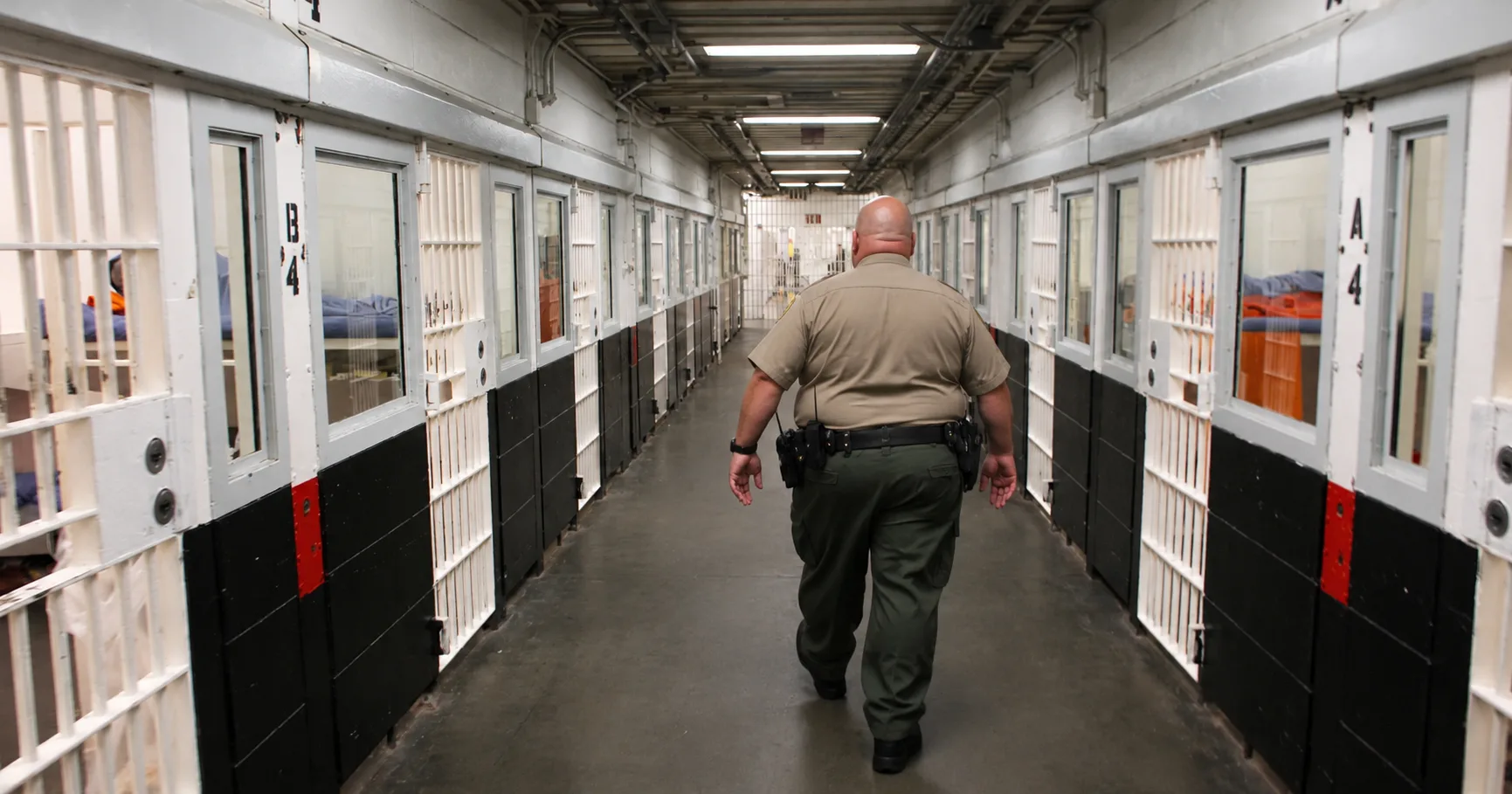
Coming to prison, however, began to show me something I had never really thought of before that really blew my mind. And it is simply this: You can always tell when a correctional officer, or CO, is brand new because they are always so nice.
Interacting with a CO who has just started their career is such a refreshing experience every time. For a moment, you feel less like an inmate and more like a customer. The new COs smile at us. They say, “Yes, sir. No, sir.” They are helpful, engaged, respectful and just kind.
And it’s a pattern. Every time.
I used to operate under the belief that the overwhelming majority of people who wanted these kinds of jobs were narcissistic, power-hungry, sadistic bullies who just craved the satisfaction of being in absolute control over others.
But that is often not the case at the outset.
However, this is the tragic reality: After a while, one of two things ends up happening to these fresh COs. When the animosities that are baked into the division between staff and the incarcerated begin to poison them, they either allow it to change their behavior toward us, or they refuse to allow it to change them and they quit.
Yes, there are the few who find a way to remain as they were without letting this place change them completely, but none of them are ever as kind three months or three decades in as they were on day one.
Environments and systems devoid of kindness, understanding and mutual respect shape us. Whether that’s an authoritarian household, a prison where animosity and division hang like dark clouds over everyone who enters, or even the streets where that same animosity and division persist, even the best and kindest people are changed by that. And they are often changed for the worse.
I explained all of this to my friend on the phone the other day when she asked me about my feelings toward the police. Because I have gained a deeper understanding of what shapes people into worse versions of themselves.
And I can’t really blame them, because I also allowed outside influences to misshape me as well.
I told her I don’t hate the police. Perhaps if I put on a badge and a uniform, and was looked at as the enemy by so many people before they even knew me, or if I was treated like a piece of shit and looked upon with hatred, particularly by a certain group of the same people I vowed to protect, perhaps I would become automatically suspicious of those people too.
Perhaps I, too, would assume they were criminals not just by the color of their skin, but also by the apprehension and hatred in their eyes when they saw my uniform and badge.
It’ll be a long and difficult process for us to repair the systems and cultures here in America that promote these unfortunate dynamics at play between the authorities and people of color.
But what I’ve seen has taught me something: It’s not really anybody’s fault.
Black, brown and blue, we’ve all been misshapen by the warped mold of the animosity that birthed this justice system generations ago.
And to fix it, everyone has a part to play in breaking that cycle.
To comment please go to one of these social media platforms:
Facebook: https://www.facebook.com/DavisVanguard
LinkedIn: https://www.linkedin.com/company/peoples-vanguard-of-davis-inc/
Instagram: https://www.instagram.com/davisvanguard/
X: https://x.com/davisvanguard
Bluesky: https://bsky.app/profile/vanguardnewsgroup.bsky.social
Subscribe to the Vanguard News letters. To make a tax-deductible donation, please visit davisvanguard.org/donate or give directly through ActBlue. Your support will ensure that the vital work of the Vanguard continues.
