
BAKERSFIELD, Calif. — A surge in federal immigration enforcement across California’s Central Valley has sparked accusations of voter intimidation, as increased arrests in Latino communities raise concerns about their potential impact on a closely contested congressional race that could help determine control of the U.S. House of Representatives.
According to an Oct. 31 Reuters report, Immigration and Customs Enforcement agents have intensified operations across the region in recent weeks, generating fear among immigrant families and raising questions about whether the timing of the enforcement campaign could discourage voter participation.
Reuters reported that an anonymous U.S. official, who was not authorized to speak publicly, said the surge in immigration enforcement was planned and directed by the White House. ICE agents were reportedly notified in early October about how the operation would be conducted.
Although federal immigration agents conducted operations earlier this year in major cities such as Minneapolis and Chicago, where hundreds of masked and armed agents participated in enforcement activities, operations in the Central Valley have occurred on a smaller scale.
The region’s geography differs considerably from those metropolitan areas, with smaller cities and towns separated by extensive agricultural land.
Despite the smaller scale, the increase in arrests has been significant.
In Bakersfield, “immigration arrests jumped from one a day for much of the year to nearly 10 per day in mid-October, according to preliminary Department of Homeland Security data,” Reuters reported.
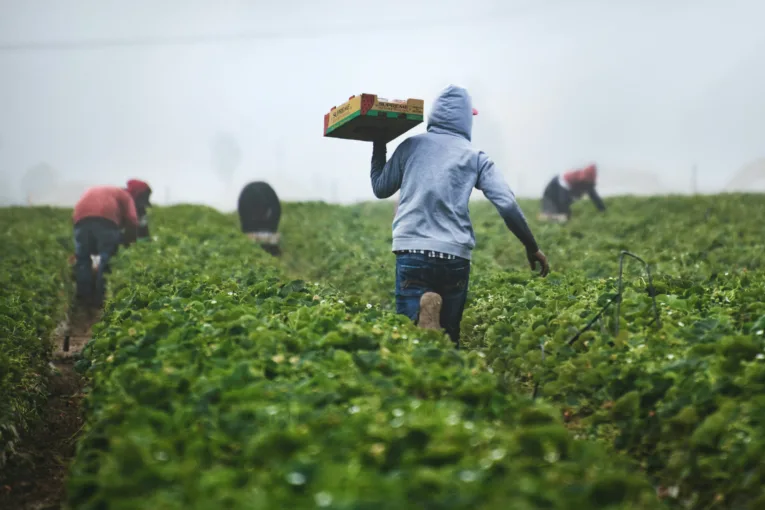
The increase has generated widespread concern among Latino communities, particularly in agricultural towns where immigrant workers and their families are an integral part of the local economy.
The timing of the enforcement campaign has also raised questions about its potential influence on the midterm elections.
Democratic congressional candidate Randy Villegas described the arrests as a “very clear attempt to try and intimidate our communities before this election.”
Republican Rep. David Valadao, meanwhile, urged the Trump administration to concentrate immigration enforcement resources on individuals who pose threats to public safety.
“Anything that drives voters to or away from the polls could matter,” said Thad Kousser, co-director of UC San Diego’s Center for Transparent and Trusted Elections.
The anonymous U.S. official cited by Reuters described the enforcement directive as unusually broad.
“Agents were given the green light to be out and make as many arrests as possible,” the official said.
According to lawyers, immigration advocates, videos and court records cited by Reuters, agents have conducted arrests at homes, schools, gas stations, parking lots and intersections, rather than limiting operations to specific locations or individuals with criminal histories.
The resulting fear has extended beyond undocumented immigrants to U.S. citizens whose family members may lack legal immigration status.
Maribel Ramirez, a local farmworker, told Reuters that some young Latino citizens were reluctant to participate in the election because they feared voting could expose relatives to immigration enforcement.
According to Ramirez, “they are scared to vote, fearing it could expose the addresses of family members without legal status.”
Ramirez also expressed opposition to Republican candidates, urging voters to support alternatives.
The enforcement operations have affected businesses in Bakersfield, where some owners have reported fewer customers and reduced activity on local streets.
Some businesses have begun offering delivery services to accommodate residents who are afraid to leave their homes.
The consequences of the enforcement campaign therefore extend beyond electoral participation, affecting economic activity and daily life throughout the Central Valley.
The congressional race has also become a focal point for disagreements over federal immigration policy.
Villegas has criticized Valadao for supporting legislation that increased funding for immigration enforcement, arguing that the congressman bears responsibility for the administration’s expanded operations.
Valadao and his supporters have defended immigration enforcement efforts, maintaining that federal authorities should prioritize individuals with criminal backgrounds.
However, the United Farm Workers Foundation has disputed claims that those targeted by the operations are primarily individuals with criminal histories.
Elizabeth Strater, vice president of the foundation, told Reuters that some of the detained farmworkers had no criminal records and that “some [detainees] had legal work authorization.”
Reuters also documented the detention of two siblings who were reportedly not the individuals immigration agents had initially sought.
According to the report, agents detained the brother and sister despite the apparent mistaken identification, leaving their family distraught.
The sister’s children reportedly broke into tears after learning that their mother had been taken into custody.
The account illustrates the consequences of the enforcement campaign for families in the Central Valley, as concerns persist about its effects on immigrant communities and participation in the upcoming election.
To comment please go to one of these social media platforms:
Facebook: https://www.facebook.com/DavisVanguard
LinkedIn: https://www.linkedin.com/company/peoples-vanguard-of-davis-inc/
Instagram: https://www.instagram.com/davisvanguard/
X: https://x.com/davisvanguard
Bluesky: https://bsky.app/profile/vanguardnewsgroup.bsky.social
Subscribe to the Vanguard News letters. To make a tax-deductible donation, please visit davisvanguard.org/donate or give directly through ActBlue. Your support will ensure that the vital work of the Vanguard continues.
