
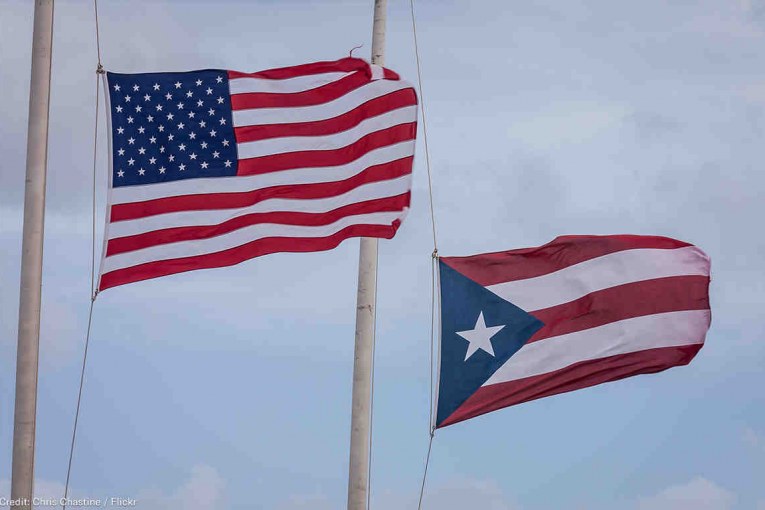
SAN JUAN, Puerto Rico — Armed U.S. Immigration and Customs Enforcement agents entered the grounds of San Antonio de Padua Parish in Río Piedras on Oct. 24 while pursuing two immigrants, raising concerns about student safety and the potential impact of Puerto Rico Senate Bill 1062 on immigration enforcement at schools.
The parish grounds are used by students, and the incident has intensified concerns about immigration enforcement near educational facilities as Puerto Rico lawmakers consider legislation intended to protect immigrant students.
ICE activity has escalated in Puerto Rico. According to Pasquines, the agency reported in July 2025 that it had detained 445 people, 72% of whom were Dominican citizens.
On Jan. 20, 2025, then-acting U.S. Secretary of Homeland Security Benjamine Huffman rescinded federal guidelines limiting immigration enforcement operations near schools, churches, hospitals and other locations previously designated as sensitive areas.
“Criminals will no longer be able to hide in America’s schools and churches to avoid arrest,” the Department of Homeland Security stated.
The enforcement policy drew criticism from Puerto Rico officials. Gov. Jenniffer González-Colón described the operations as “unnecessary,” while Archbishop Eusebio Ramos Morales declared, “We say it very clearly: Enough!” in response to the events at San Antonio de Padua Parish.
Although Homeland Security Investigations Special Agent González Ramos maintained that ICE had no plans to enter schools, Secretary of Education Eliezer Ramos reported that schools with large populations of foreign-born students, particularly students from the Dominican Republic, experienced absenteeism rates between 20% and 60% by the end of January 2025.
“Schools are a sacred place of protection for our children,” Ramos said.
In February 2025, the Puerto Rico Department of Education established a protocol intended to better protect immigrant students.
The protocol stipulated that no minor could be detained without a court order, schools could not share student information without authorization, and no minor could be questioned without the involvement of a parent or guardian or, in certain cases, a representative from the student’s home country.
The original version of SB 1062, also known as the Educational Equity Act for Immigrant Students in Puerto Rico, sought to codify these protections into law. The legislation aimed to establish a “fear-free environment” in which students could access education regardless of their immigration status.
The legislation drew heavily from Plyler v. Doe, a 1982 U.S. Supreme Court decision holding that states could not deny undocumented children access to public K-12 education. However, the ruling did not establish when or under what circumstances immigration agents could enter school property.
SB 1062 would prohibit schools from requesting Social Security numbers or immigration information during enrollment, require a signed judicial warrant before immigration officials could access certain school facilities, and prohibit bullying or discrimination based on immigration status.
The judicial warrant requirement is particularly significant because ICE uses two types of administrative immigration warrants: Form I-200, which authorizes ICE officers to arrest individuals suspected of violating immigration law, and Form I-205, which authorizes the removal of individuals subject to final removal orders.
Neither warrant is issued by a judge. Both are issued by immigration authorities.
California law and guidance provide another example of how states can establish protections for school campuses. Under California guidance, immigration agents generally cannot enter a school’s nonpublic areas without a valid judicial warrant, judicial subpoena or court order.
California also recommends that school policies identify which areas of a campus are public and which are nonpublic.
That issue is relevant to the incident at San Antonio de Padua Parish, where ICE agents reportedly “even searched the bathrooms.”
Clarifying which areas of a school campus are public and nonpublic could affect the circumstances under which ICE agents may legally enter school property without a judicial warrant.
However, Article 7 of SB 1062, which outlines requirements for immigration enforcement interventions at schools, was substantially revised by the Senate Government Committee and the Committee on Education, Arts and Culture on Oct. 29.
The original section required school officials to notify the secretary of education after a court order naming a student was issued. The secretary could then evaluate the proposed intervention in consultation with the Puerto Rico Department of Justice before the order was executed.
The original language also required students to be kept “in a safe place at the school” while officials verified the order and provided for parental and legal representation during immigration-related proceedings.
According to Sen. María de Lourdes Santiago Negrón, amendments to Article 7 would have allowed ICE to enter schools using administrative orders issued by the agency rather than warrants issued by a judge.
Although the Senate-approved text states that “an administrative order alone” does not authorize school officials to permit ICE access to nonpublic areas, it makes consultation with the Puerto Rico Department of Justice optional and changes the requirements for parental accompaniment.
The revised language also removes the original requirement that students remain in a safe location while officials verify an immigration order.
These changes have drawn criticism from public figures and advocacy groups. Former U.S. Secretary of Education and Puerto Rico native Miguel Cardona criticized the prospect of immigration enforcement in schools, calling it “a crime.”
The Puerto Rico Senate approved SB 1062 on Nov. 5, with 20 senators voting in favor and four voting against it. The legislation now awaits further consideration in the Puerto Rico House of Representatives.
To comment please go to one of these social media platforms:
Facebook: https://www.facebook.com/DavisVanguard
LinkedIn: https://www.linkedin.com/company/peoples-vanguard-of-davis-inc/
Instagram: https://www.instagram.com/davisvanguard/
X: https://x.com/davisvanguard
Bluesky: https://bsky.app/profile/vanguardnewsgroup.bsky.social
Subscribe to the Vanguard News letters. To make a tax-deductible donation, please visit davisvanguard.org/donate or give directly through ActBlue. Your support will ensure that the vital work of the Vanguard continues.
