
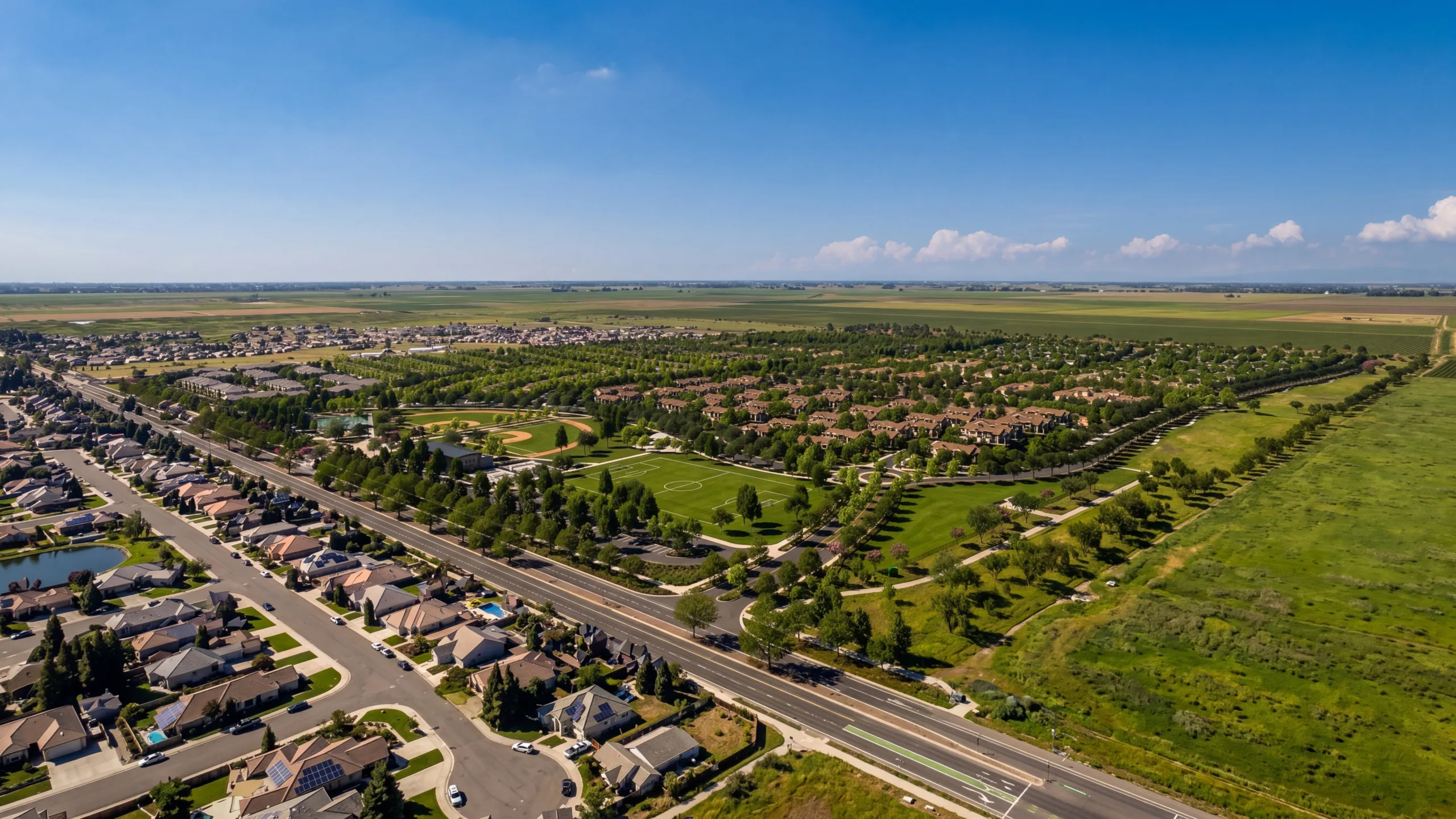
DAVIS, Calif. — The overwhelming approval of Willowgrove earlier this month marks what could represent a significant turning point in Davis’ long-running debate over housing and growth. After years of contentious Measure J elections, voters have demonstrated that they are willing to overwhelmingly approve a substantial peripheral housing project when they believe it meets the community’s needs.
But while Willowgrove represents an important step forward, it does not solve Davis’ housing crisis. Nor does it eliminate the challenges facing the city’s schools, its affordable housing obligations or the long-term planning decisions that will shape Davis through 2050.
If anything, the passage of Willowgrove changes the conversation from whether Davis can approve housing to how it will accommodate the additional growth that is still necessary.
For several years, I have warned that Davis’ failure to accommodate its housing obligations could eventually put its voter-approval requirement at risk. HCD identified Measure J as a potential constraint on housing development in its 2021 review of the city’s Housing Element.
In March, I wrote in a Vanguard analysis that continued rejection of large housing projects could expose the city to state intervention or litigation challenging the local growth-control ordinance.
I argued that if Davis cannot meet its housing obligations because its own voter-approval process blocks the projects necessary to do so, the state could conclude that the process is interfering with California housing law.
The passage of Willowgrove not surprisingly substantially changes that calculation.
With roughly 73% of voters supporting the project, Davis has demonstrated that Measure J will not be see by the state as an absolute barrier to peripheral development. The community has approved a project with 1,250 homes, including 250 deed-restricted affordable units, through the very process that critics have warned could prevent the city from meeting its housing obligations.
That does not make Measure J immune from future legal challenges particularly if this is seen as a one-off, nor does one successful election erase the city’s housing production shortfalls.
But it does make the argument that Measure J categorically prevents housing development considerably harder to sustain – particularly in the short-term.
For the foreseeable future, I would argue that Willowgrove makes a direct state challenge to Measure J unlikely, particularly if the city can demonstrate that the project is moving toward construction.
That is an important achievement for residents who want both additional housing and continued local oversight of peripheral development.
Yet the passage of Willowgrove alone does not solve or even alter the housing problem.
In an analysis published in May, I examined the city’s ability to meet its affordable housing requirements under the current RHNA cycle.
Davis has an obligation to accommodate approximately 930 homes for lower-income households during the 2021-2029 planning period. Yet through 2025, the city had permitted only about 30 units in those income categories.
Willowgrove’s 250 deed-restricted affordable units would represent a substantial improvement, but even if every one of those homes were built and counted during the current cycle, the city would remain hundreds of units short of its lower-income housing target.
Moreover, voter approval does not mean those units have been constructed. Financing, permits and the actual development schedule will determine how much of Willowgrove’s affordable housing can be delivered before the current cycle ends.
This is where the defeat of Village Farms in June continues to be problematic for the city in a variety of ways.
Village Farms would have provided approximately 360 deed-restricted affordable homes, along with additional land and financial contributions for affordable housing development.
Together, Village Farms and Willowgrove would have provided a pathway toward approximately 610 affordable units, a substantial portion of the city’s remaining need.
With Village Farms rejected, that pathway has narrowed considerably and the alternative is not simply to build more housing downtown.
As I have previously documented, Davis has limited opportunities for large-scale infill development, particularly projects capable of producing substantial numbers of deed-restricted affordable units.
Smaller developments, accessory dwelling units and downtown redevelopment can contribute to the overall housing supply, but they have not demonstrated the capacity to deliver affordable housing at the scale the city needs.
There is also a critical difference between identifying potential development sites and actually building homes. Much of the city’s projected infill capacity depends on private property owners, market conditions, financing and infrastructure improvements.
The city cannot simply assume that every theoretically available infill site will produce housing within the next few years.
And the challenge does not end in 2029.
At an October General Plan workshop, city planners identified a need for at least 7,300 additional housing units through 2050, including the current housing cycle and projected future obligations.
As the Vanguard reported, the draft planning framework identifies potential capacity for approximately 3,000 homes within existing city limits and another 18,000 in surrounding planning areas.
Those figures represent theoretical development capacity, not approved projects or guaranteed construction.
They also demonstrate the scale of the challenge.
Even with Willowgrove, Davis will need to identify additional sites for thousands of homes over the coming decades. Some can and should be accommodated through downtown redevelopment, increased density along transportation corridors and other infill opportunities.
But the city’s own planning process suggests that peripheral development will remain an essential part of the discussion.
That brings us to another challenge Willowgrove will help address but cannot resolve on its own: declining school enrollment.
In April 2025, Davis Joint Unified School District Superintendent Matt Best warned that without additional housing, the district could face school closures, program reductions and significant changes to school boundaries.
The district’s projections indicated that Willowgrove could generate somewhat more than 300 students over approximately eight years.
That is meaningful, but the district has been losing roughly 100 students annually, and those additional students would arrive gradually as homes are constructed and occupied.
Even if Willowgrove delivers its projected enrollment gains, those gains could be overwhelmed by continued declines elsewhere in the district.
In fact, district officials previously warned that approving only one of the two major peripheral projects might not be enough to prevent school closures.
The district’s presentation suggested that approving both Village Farms and Willowgrove could eventually stabilize enrollment, while approving neither could lead to the closure of two or three schools.
With only Willowgrove approved, the district may still face difficult decisions about school consolidation, attendance boundaries and the sustainability of existing programs.
There is, however, another important lesson from Willowgrove that should shape future housing proposals.
Willowgrove provides a potential model for how peripheral projects can succeed under Measure J.
The development team engaged in extensive public outreach, incorporated community feedback and presented voters with a relatively detailed project rather than asking them to approve a broad conceptual plan.
Perhaps most importantly, Willowgrove completed a vesting tentative subdivision map before the election.
That gave voters a clearer understanding of the project’s layout and reduced uncertainty about what would ultimately be constructed.
Former Planning Commissioner Eileen Samitz, who opposed Village Farms but supported Willowgrove, emphasized that feature in her commentary ahead of the election.
“This is the first time in Davis history that a project has offered a completed subdivision map before the Measure J/R/D vote, allowing the community to see the final project design before it is approved,” Samitz wrote.
That represents a very important lesson for future developers.
One of the recurring criticisms of peripheral projects has been that voters are asked to approve a development without sufficient certainty about its ultimate design.
A completed subdivision map, together with binding baseline project features and a detailed development agreement, can help address those concerns.
Willowgrove also benefited from a commitment to build the project in a single phase, with affordable housing and infrastructure improvements integrated into the development schedule.
Its housing mix includes smaller townhomes intended to provide more attainable ownership opportunities, alongside deed-restricted affordable housing.
Not every aspect of Willowgrove can be replicated elsewhere. Different sites have different environmental constraints, infrastructure needs and neighborhood impacts.
But the broader approach — detailed planning, early community engagement, clear commitments and greater certainty about what voters are approving — offers a useful framework.
That brings us back to Village Farms.
The June election was remarkably close. The proposal fell short by just 270 votes in the final count, receiving approximately 49.4% support.
That is not the result of a community overwhelmingly rejecting the concept of housing on the site.
It is evidence of a divided electorate, with a substantial number of voters willing to support the project despite the opposition campaign.
The question now is whether Village Farms could return with a revised proposal that addresses enough of the concerns raised during the campaign to secure approval.
There were legitimate differences between Village Farms and Willowgrove, including location, environmental conditions, traffic patterns and infrastructure challenges. Those differences cannot be dismissed simply because Willowgrove passed.
But some of the objections to Village Farms involved the degree of certainty about the final development plan.
A revised proposal that incorporates a completed subdivision map before the election, locks in key design features and addresses concerns about infrastructure, flooding and neighborhood impacts could present voters with a materially different choice.
The developers would also benefit from examining Willowgrove’s approach to public engagement and the way it built support among residents who had opposed previous projects.
That will not guarantee success and some opponents object to development at the Village Farms location regardless of the design, and others have concerns that may be difficult or impossible to resolve.
Still, when an election is decided by fewer than 300 votes, relatively modest changes in public support can alter the outcome.
Village Farms does not necessarily need to reinvent itself. It may need to identify the specific shortcomings that cost it support and determine whether those problems can be addressed through a more detailed and responsive proposal.
The affordable housing component remains especially important. Without Village Farms or another development capable of producing hundreds of lower-income units, Davis faces a substantial gap between its housing obligations and the projects likely to deliver those homes.
The same is true of school enrollment. Willowgrove helps, but the district’s projections indicate that additional family-oriented housing will be necessary if Davis hopes to stabilize enrollment over the longer term.
The lesson of Willowgrove is not that Davis has solved its housing challenges, but that voters have demonstrated a willingness to approve substantial new housing when a project addresses community concerns and provides clear commitments.
But with hundreds of affordable homes still needed in the current housing cycle, thousands of additional units anticipated through 2050 and school enrollment continuing to decline, Davis cannot afford to treat Willowgrove as the end of the conversation.
The next question is whether the city, developers and residents can build on what worked at Willowgrove to address the housing needs that remain.
To comment please go to one of these social media platforms:
Facebook: https://www.facebook.com/DavisVanguard
LinkedIn: https://www.linkedin.com/company/peoples-vanguard-of-davis-inc/
Instagram: https://www.instagram.com/davisvanguard/
X: https://x.com/davisvanguard
Bluesky: https://bsky.app/profile/vanguardnewsgroup.bsky.social
Subscribe to the Vanguard News letters. To make a tax-deductible donation, please visit davisvanguard.org/donate or give directly through ActBlue. Your support will ensure that the vital work of the Vanguard continues.
